
Reviewed · BUCHAREST COMMUNISM TOURS
Snagov Monastery, Ceaușescu Mansion, & Village Museum – 6h
Snagov Monastery is the surprise in this six-hour Bucharest tour: about 40 minutes outside the city, it sits on an island and is known for the tomb associated with Dracula. From there, the route turns to the former home of dictator Nicolae Ceaușescu, then back into the capital for traditional houses, grand public buildings, and Revolution Square.
I like two things in particular: the sharp contrast between the stops, from modest rural homes to a leader’s private residence, and the private guide-driver, who can adjust the route for your group. The city portion also gives you a useful sweep of landmarks without needing to plan separate transport.
The main consideration is time. The tour is advertised as six hours, but the listed stop times add up to about seven hours, before allowing for the drive to Snagov. Confirm how the timing works before you book, especially if you have a firm return deadline.
- Snagov’s island setting adds a quiet, unexpected stop beyond the city, with a monastery tomb associated with Dracula.
- The Village Museum gathers traditional Romanian homes and structures from across the country in one open-air visit.
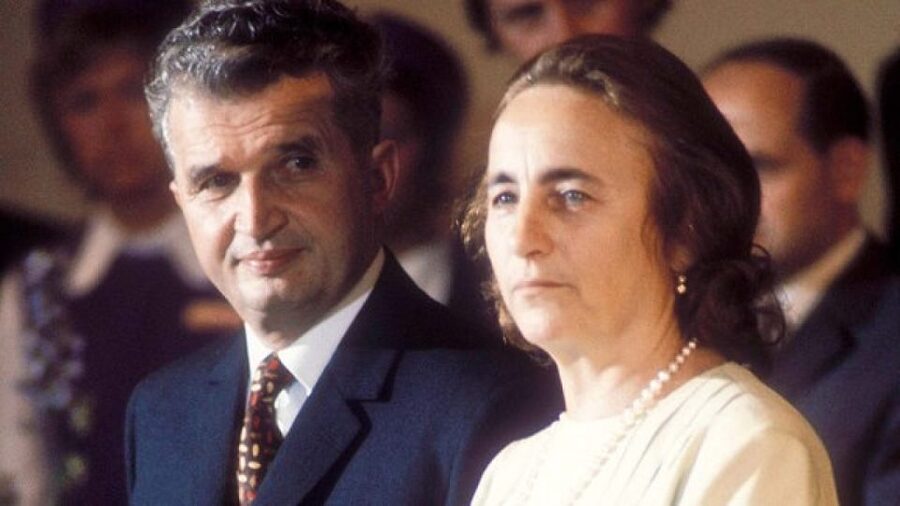
- The Ceaușescu residence offers a close look at the private home of Nicolae and Elena Ceaușescu and their children.
- The private car and guide-driver keep the day flexible and make the out-of-town stop practical.
- The central Bucharest route connects Calea Victoriei, Revolution Square, the Athenaeum, CEC Palace, and the Palace of the Parliament.
- Budget for extras: the tour costs $254 per person, with about €17 per person in entrance fees and food and drinks not included.
From village life to a dictator’s home
This tour works best as a series of contrasts. You begin with Romanian village architecture, head out of Bucharest to an island monastery, and return to the capital for a visit to the Ceaușescu family home and a sweep of central landmarks. Instead of spending a whole day on one theme, you get a broad introduction to Romania’s rural traditions, communist-era history, and urban architecture.
The private format is a real advantage on a route with several stops and a drive beyond the city. You travel only with your own party in a car or minibus, and a licensed guide-driver stays with you throughout. The guide languages offered are Romanian, English, Italian, French, Spanish, and German.
There is room to change the daily itinerary, even after the tour has started. That flexibility matters if you want to spend more time at a particular stop or need to adjust the city portion. It does not remove the need to keep an eye on the clock, though. The listed visit times add to roughly seven hours, while the overall duration is given as six. Ask how the schedule is managed before setting your expectations.
Traditional houses at the Village Museum
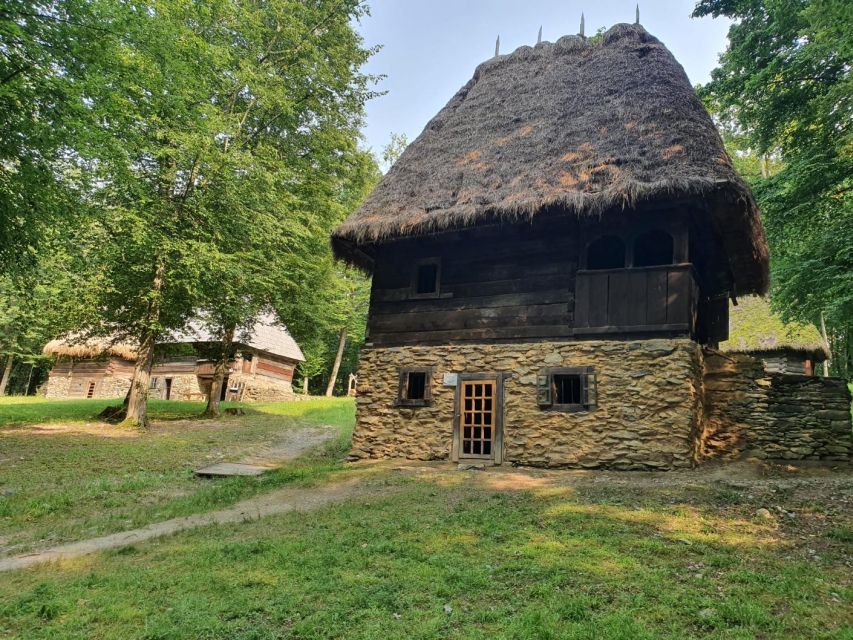
The Dimitrie Gusti National Village Museum gives you a quick way to see architectural traditions from different parts of Romania without making separate trips around the country. The houses and other structures are made from materials including wood, adobe, and stone. The collection also includes national symbols such as a mill and a wooden church.
The value here is not just in looking at old buildings. The visit introduces how Romanian villagers shaped homes and daily life around local materials and their surroundings. You get a sense of a modest, practical way of living, along with the social and spiritual traditions attached to it.
Allow about an hour for this stop. That is enough for an introduction, but you may need to keep moving if you like reading every detail or lingering over the buildings. The guide can help you make sense of what you are seeing, which is especially useful when the range of styles and structures feels broad.
The museum is a good opening stop because it gives you a human-scale counterpoint to the grand residences and state buildings later in the day. If you are most interested in the history of the Ceaușescu period, the village visit may feel less central. But it adds cultural context and keeps the tour from becoming only a succession of political landmarks.
More communism tours around Bucharest:
- Bucharest: Palace of Parliament Tickets and Guide
★ 4.3 · 3,182 reviews - Bucharest: Palace of Parliament Tickets and Guided Tour
★ 4.4 · 1,877 reviews - Bucharest: Parliament Palace Skip-the-line Ticket
★ 4.2 · 1,518 reviews
The island monastery at Snagov
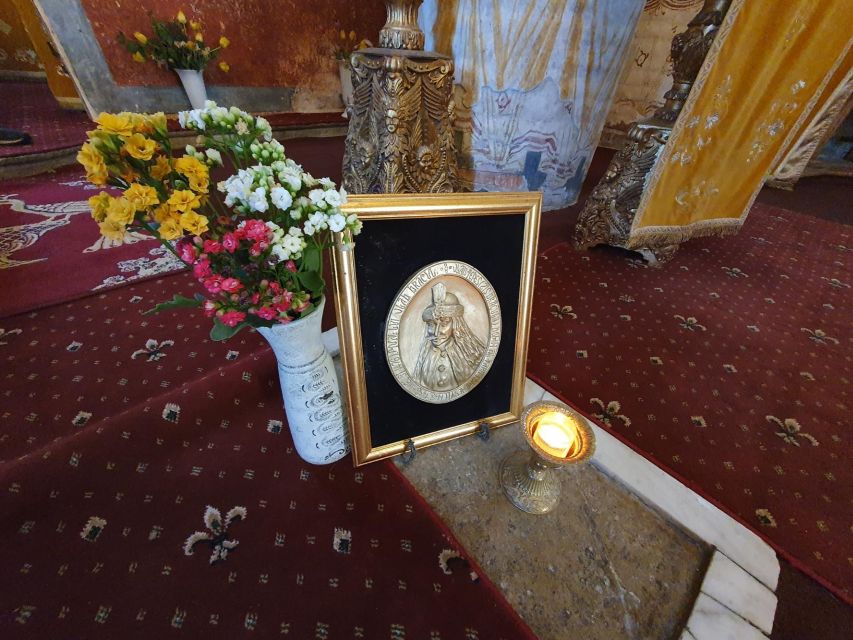
Snagov Monastery is about 40 minutes outside Bucharest, and its island setting makes it one of the more unusual stops on the route. The monastery is associated with the tomb of Dracula, giving the visit an immediate point of interest even if you are not usually drawn to religious sites.
You are scheduled for about an hour here, including a guided visit and time for photos. The trip out of the city is part of the experience, but it also takes time from a compact day. Ask whether the drive is included in the six-hour total and how much time is usually available at the monastery.
This stop brings a different mood from the city. The itinerary describes scenic views along the way, and the monastery’s position on an island gives you a change of pace after the Village Museum. The Dracula connection is the headline, but the visit also gives you a chance to see a monastery rather than only hearing about Romanian history through political buildings.
If this is the stop you most want to enjoy, tell your guide early. The route is flexible, and a private tour gives you a better chance of shaping the day around your interests than a fixed group departure. Just remember that more time at Snagov may mean less time for shopping or walking in central Bucharest.
Inside the Ceaușescu family residence
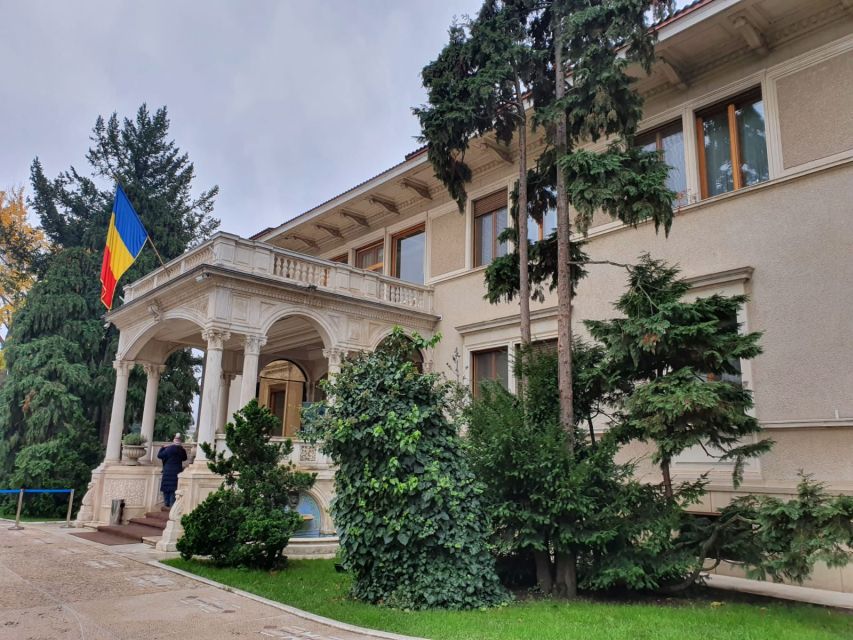
The Ceaușescu Mansion, also called the Spring Palace, was the private home of Nicolae and Elena Ceaușescu and their children for roughly a quarter century, from 1965 to 1989. The residence was built in the mid-1960s and enlarged between 1970 and 1972.
That private setting makes the visit a compelling contrast with the political power associated with the Ceaușescu name. You are not seeing only a public office or a state building. You are entering the former family residence, a place designed for private life and shaped by architects and designers, including Aron Grimberg-Solari and Robert Woll.
The visit is scheduled for about an hour, with time for a guided tour and a walk through the property. The house’s design and landscaping give you a different way to consider the Ceaușescu era: not just through speeches and public monuments, but through the domestic world of the ruling family.
Entrance fees are not included in the tour price. The estimated total for fees across the itinerary is about €17 per person, so include that in your budget. The tour advertises skip-the-line access, but you should still check any current entry arrangements when confirming your plans.
Calea Victoriei and the city’s many layers
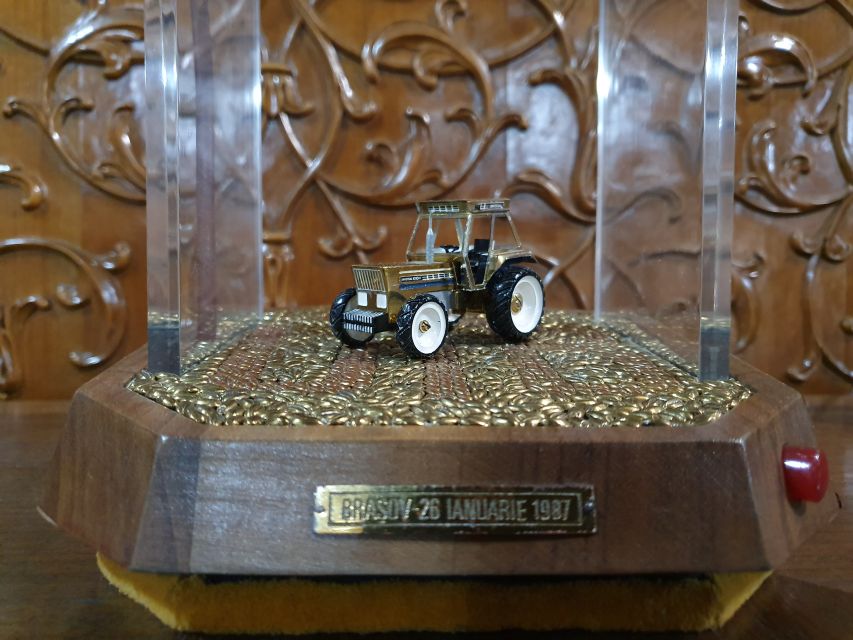
Calea Victoriei is the longest city stop, with about an hour and a half for guided sightseeing and free time. The avenue is presented as a place where contrasting chapters of Bucharest’s history sit close together: the Royal Palace on one side, and the former Central Committee of the Romanian Communist Party and Revolution Square nearby.
The route also takes in a mix of old Orthodox churches, museums, theatres, shops, restaurants, and other city landmarks. You may have time to browse or buy souvenirs during the free portion, but the exact balance between walking, explanation, and shopping depends on the pace of the day.
I like this stop as the bridge between the Ceaușescu residence and the wider story of the capital. You can see how different eras occupy the same central streets, rather than treating royal, communist, and contemporary Bucharest as separate subjects. The guide’s explanations are especially useful here, since the buildings are more meaningful when you understand how they relate to one another.
Calea Victoriei is also where timing can get tight. It has more allocated time than any other single city stop, but the complete route includes several additional landmarks. If shopping matters to you, make that clear to your guide rather than assuming there will be a long, unstructured break.
More monastery trips around Bucharest:
- 3-Castle: Peles,Bran,Rasnov,Sinaia Monastery from Brasov w pickup
★ 5.0 · 274 reviews - Peles Castle, Bran Castle, Rasnov Fortress and Sinaia Monastery Tour from Brasov
★ 5.0 · 55 reviews - Small Group Tour to Mogosoaia Palace & Snagov Monastery
★ 4.4 · 41 reviews - Sacred Monasteries Private Tour: Snagov, Țigănești & Căldărușani
★ 5.0 · 32 reviews
Revolution Square, the Athenaeum, and CEC Palace
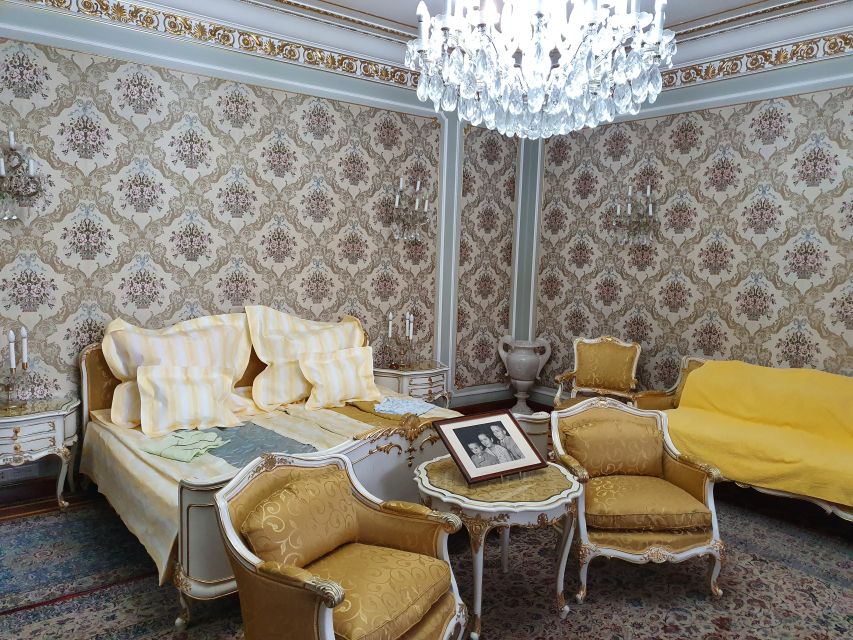
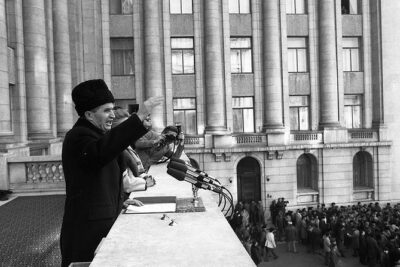
Revolution Square gives you a focused look at the events of December 1989. You will see the former Central Committee building, connected with the Romanian Communist Party, and learn about the revolution that removed Ceaușescu from power. The scheduled visit is about 30 minutes, so expect a concise explanation and sightseeing rather than a long museum-style stop.
The Romanian Athenaeum follows, with another half hour for a guided visit and walk. It is identified as an architectural landmark, and seeing it in person adds a cultural note to a route otherwise shaped by political and domestic history.
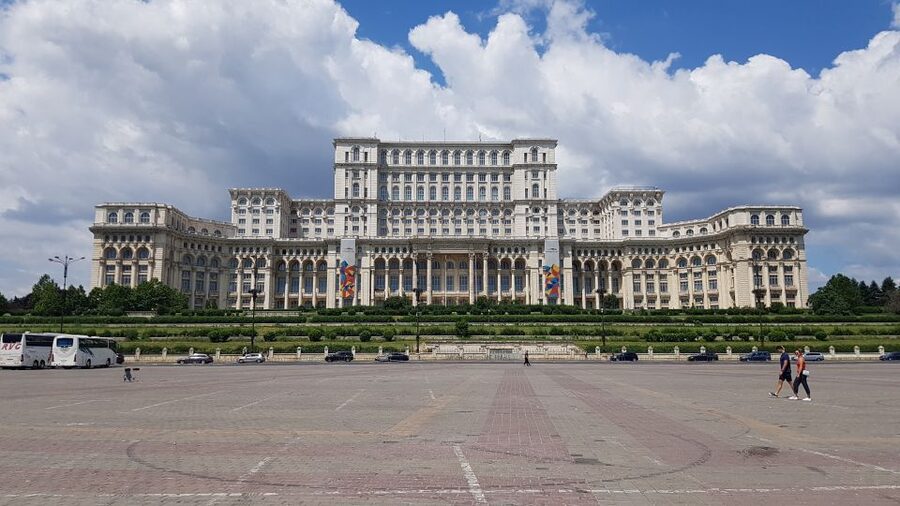
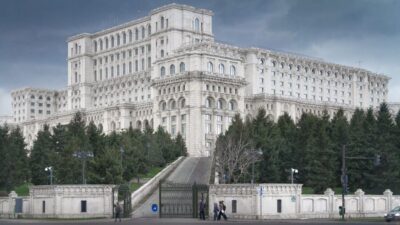
CEC Palace comes next, with about 15 minutes for a break, photographs, and sightseeing. That is a short stop, so think of it as a quick look rather than a detailed visit. The schedule also includes the Palace of the Parliament, with about 30 minutes for a photo stop and guided sightseeing.
Taken together, these stops give you a broad view of Bucharest’s public face: landmarks associated with music and architecture, the political upheaval of 1989, and the imposing scale of state buildings. You will not have unlimited time at each one. If a particular site is a priority, ask the guide whether the route can be adjusted.
What $254 per person includes
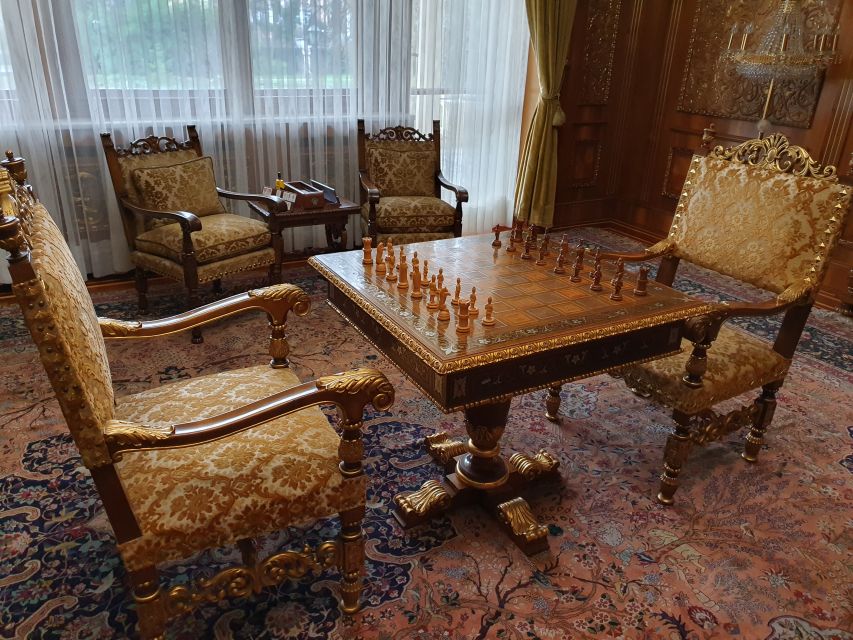
At $254 per person, this is not a budget sightseeing option. The price is easier to justify if you value having a private car and guide-driver for a multi-stop day that includes an out-of-town visit. The car, fuel, parking, and road tolls are covered, and the tour is reserved for your own group.
That setup saves you from arranging separate transport between the Village Museum, Snagov, the Ceaușescu residence, and the central landmarks. It also gives you a direct way to ask questions and request changes as the day unfolds. The value is strongest for a small group or family that would otherwise need to coordinate several rides and guides.
The total cost is higher than the quoted tour price alone. Entrance fees are estimated at about €17 per person, and food and drinks are excluded. Check whether the price makes sense for your group size, then add those extras before comparing it with other ways to see Bucharest.
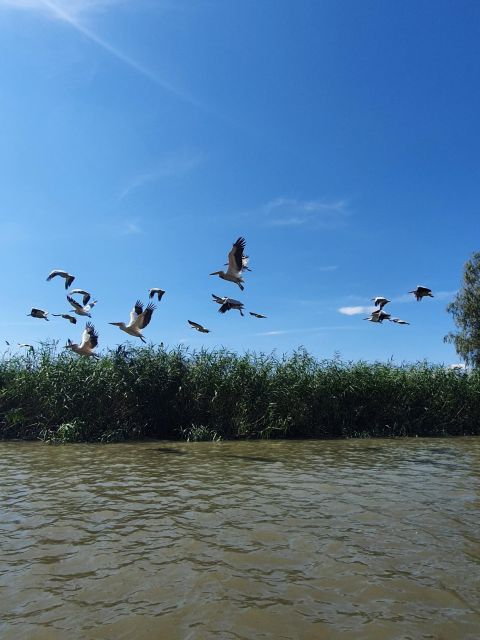
The tour has a five-star rating from three bookings, with feedback emphasizing a well-informed guide and the strong contrasts between communist-era buildings, older city architecture, and the quiet setting around the lake. That is a small sample, not a guarantee of a particular guide or day, but it points to the tour’s central strength: the experience depends on someone who can connect the places rather than simply drive between them. No individual guide name is provided.
Timing, comfort, and who should book
The tour lasts six hours, with pickup in Bucharest and a return to the city. The driver will hold a sign with your last name. You can choose from a tourism car or minibus, and the vehicle is for your party alone.
The biggest practical question is the schedule. The listed stops add up to roughly seven hours: one hour each at the Village Museum, Snagov, and the Ceaușescu Mansion; 90 minutes on Calea Victoriei; and additional time at Revolution Square, the Athenaeum, CEC Palace, the Palace of the Parliament, and Bucharest. Since Snagov is about 40 minutes outside the city, confirm how travel time and stop times fit into the stated six hours.
I would choose this tour if you want a broad, guided introduction to Bucharest and are drawn to both rural traditions and the history of the communist period. It suits people who appreciate context and want the convenience of a private vehicle, particularly if Snagov is high on their list.
It is less suitable if you want a slow, in-depth visit at every site or prefer to explore the city entirely on foot. The itinerary covers a lot, and some stops are brief. Before booking, decide which places matter most to you and ask how the guide can prioritize them.
Should you book this Bucharest tour?

Book it if you want a private, varied day that links the Village Museum, Snagov Monastery, the Ceaușescu family residence, and central Bucharest landmarks. The combination is unusual, and having a guide-driver makes the distant monastery practical within a short visit.
Pause before booking if your schedule is rigid or if you prefer to spend several hours at one museum or historic site. Confirm the discrepancy between the six-hour duration and the roughly seven hours of listed stop times, then add the entrance fees and meals to your budget. If the timing works for you, this is a useful way to see how rural life, political history, and city architecture intersect in and around Bucharest.
FAQ
How long is the tour?
The tour is listed as six hours. The individual stop times add up to roughly seven hours, so confirm how the schedule is handled before booking.
What is the price?
The price is $254 per person.
Is the tour private?
Yes. The car or minibus is reserved for you and your friends or family.
Which languages are available?
The guide-driver is available in Romanian, English, Italian, French, Spanish, and German.
Is pickup included?
Yes. Pickup is in Bucharest, and the driver will hold a sign with your last name.
Are entrance fees included?
No. Entrance fees are estimated at about €17 per person.
Are food and drinks included?
No. Food and drinks are not included.
Can the itinerary be changed?
The tour offers flexibility to change the daily itinerary, including after the tour has started.
How far is Snagov Monastery from Bucharest?
Snagov Monastery is about 40 minutes outside Bucharest.
More museum visits around Bucharest
- Bucharest: Museum of Senses Entry Ticket
★ 4.2 · 364 reviews - Communism in Bucharest – Landmarks, Museum & Communist Appetizers
★ 5.0 · 111 reviews - Bucharest: Entry ticket at the Museum of Communism
★ 4.6 · 57 reviews - Bucharest: Museum of Communism Ticket with Communist Coffee
★ 4.6 · 52 reviews
Recently added around Bucharest
- Snowmobiles, Sky Lift & Winter Sports – Private Tour★ 5.0 · 9 reviews
- Private Transfer and 3H Tickets to Therme Bucharest★ 4.5 · 10 reviews
- Day Trip from Bucharest to Dracula Castle, Brasov and Peles Castle Sinaia★ 5.0 · 10 reviews
- Day Trip Through Brasov in Transylvania and Bran, Peles, and Rasnov Castles★ 4.0 · 9 reviews
- 2-Day Small-Group Tour to Dracula’s Castle, Rasnov Fortress, Peles Castle, Sighisoara and Libearty Brown Bear Sanctuary with Overnight in Brasov★ 4.5 · 9 reviews
- Slavery in Romania Myths and Truths About Gypsies★ 5.0 · 8 reviews
- The Real Story of Gypsies – Slavery in Romania★ 5.0 · 7 reviews
- Premium 8-Day Private Culinary Vacation in Romania★ 5.0 · 11 reviews
Bucharest Communism Tours, compared.


Parliament Senate Entry Tickets and Guided Tour
Read our review →
Bucharest Essential Tour: Old Town, Calea Victoriei & Communism
Read our review →Browse the lists this tour appears in