Reviewed · BUCHAREST TOURS
The Real Story of Gypsies – Slavery in Romania
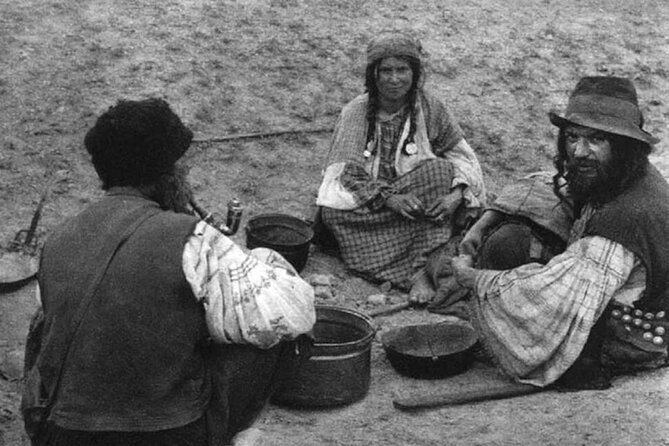
Bucharest’s Roma story is not confined to a museum: this three-hour walk links a former slave-market site, a Holocaust memorial and a shop selling work made by Roma craftspeople. I like that the route pairs difficult history with a present-day look at Roma craft, and that its small group limit of 15 people should leave room for questions.
The subject is serious, and the route is a city walk rather than a museum visit, so you should expect brief stops and time on your feet. The tour costs $30.04 per person; its value depends on how much you want a guided account of Roma history woven into central Bucharest.
- A short route with a clear arc: The walk moves from a former slave-market site toward a contemporary Roma craft shop.
- Seven named stops: Sites include Stirbei Palace, the Romanian Athenaeum, Cismigiu Park and the Holocaust Memorial.
- About 80 minutes of walking: The remaining time is divided among stops, with each listed visit lasting 10 to 15 minutes.
- English-language guiding: You can ask questions along the way, and one guide named in connection with the tour is Mihai.
- A small group cap: No more than 15 people can join.
- A practical booking detail: The walk starts at 10:00 am, and free cancellation is available up to 24 hours beforehand.
A difficult history, told on Bucharest’s streets
This tour puts the history of Roma slavery and persecution at the center of a city walk. Rather than treating Roma culture as a side note, it connects that history to places in central Bucharest and ends with an opportunity to see work by Roma artisans.
That structure matters. You move between sites that carry different meanings: a place linked to the trade in human lives, civic and cultural landmarks, a memorial, and a shop where Roma craftspeople make and sell their work. The route gives you several ways to consider how the past shaped Roma identity and how Roma culture continues today.
The tour title uses the term Gypsies, an old label that appears in historical discussion and in the title itself. The route description identifies the community as Roma. If you are booking, expect the guide to address the history and impact of slavery, discrimination and genocide, rather than offering a light overview of Bucharest.
The route begins in the Amzei area
The meeting point is Teatrul Ion Creangă, Sala Mare, at Strada Piața Amzei 13. The tour is described as starting at Romana Square, while the specific meeting address is in the Amzei area, so use the street address when planning your arrival rather than relying on the broader area name.
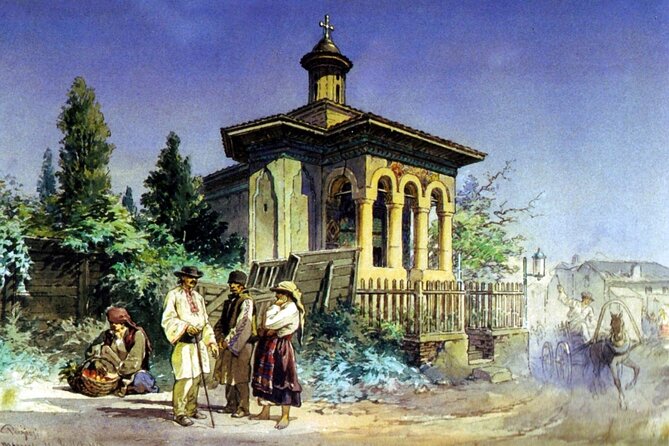
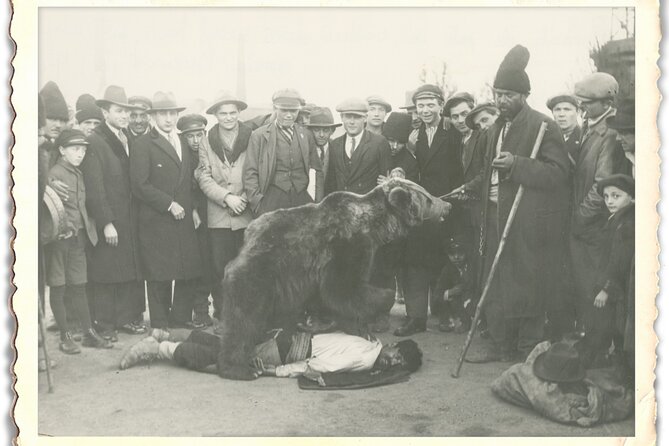
From there, the first listed stop is Platoul Piata Amzei, identified as the site of an old slaves market. The 15-minute visit introduces the trade in human lives and its continuing effect on Roma identity. It is a compact opening, but it sets the terms for the walk: this is not just a sightseeing route, and the history is not treated as distant or abstract.
The site itself is free to visit, as are the other listed stops. The fee is for the guided experience, not entry to a ticketed attraction. No separate museum admission is listed.
More Bucharest tours around Bucharest:
- Bucharest: Dracula’s Castle, Peles Castle, & Brasov Old Town
★ 4.5 · 17,858 reviews - Bucharest: Dracula Castle, Peles Castle & Brasov Old Town
★ 4.6 · 10,891 reviews - Bucharest: Dracula’s Castle, Peleș Castle & Brașov Day Trip
★ 4.5 · 5,919 reviews
Stirbei Palace and the Romanian Athenaeum
At Palatul Stirbei, the group stops for about 10 minutes. The palace was built in 1835, and its owner was involved in an important moment in Roma history in Romania. The tour gives this building a specific historical connection, making it more than a quick look at a handsome old facade.
The stop is brief, so you may want to keep questions focused. The value here lies in tying a prominent Bucharest building to the wider story of Roma life and slavery, rather than studying the palace’s architecture in depth.
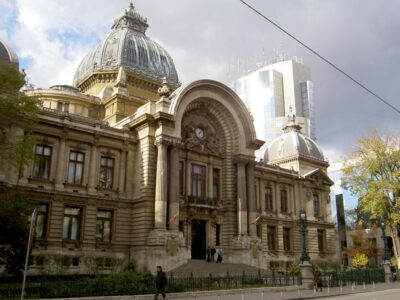
The route then passes the Romanian Athenaeum, the city’s well-known cultural landmark. You spend about 15 minutes here discussing how the arts have shaped perceptions of the Roma community. That subject adds another layer to the walk: public images of a community can be shaped not only by laws and political events, but also by cultural representation.
You should not expect a concert or an interior visit based on the information provided. The stop is about the Athenaeum as a symbol and the role of the arts in how Roma people have been viewed.
A pause in Cismigiu Park
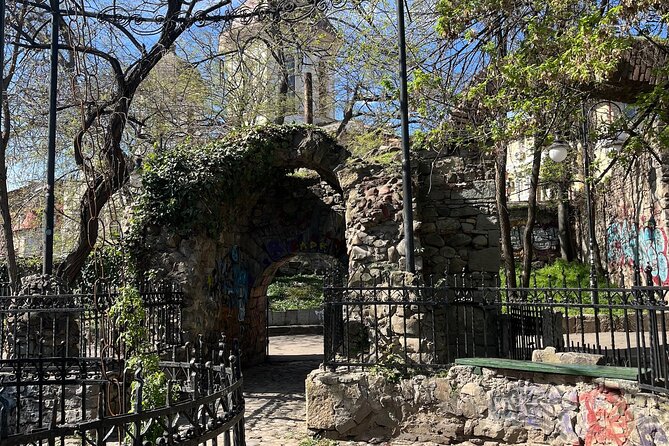
Cismigiu Park offers a change of pace after the early stops. The route includes a 15-minute stroll through Bucharest’s oldest and largest garden, using the setting to discuss truths and myths about Roma history.
A park stop can make a serious walk easier to absorb. It offers a calmer stretch between sites, while keeping the conversation focused on the tour’s central subject. Still, the scheduled visit is short, so treat it as a guided pause rather than time for a long independent walk or rest.
The distinction between myth and history is useful here. Roma communities have often been discussed through outside assumptions. A guide-led conversation can help you separate those inherited stories from the historical record, though the stop’s limited time means you should ask about any subject you especially want to understand.
The Holocaust Memorial and a painful chapter
The Holocaust Memorial is the walk’s most somber stop. The group spends about 15 minutes at this landmark, remembering the victims of the Holocaust in Romania, including thousands of Roma people killed through persecution and genocide.
This part of the walk gives the route a clear connection to the consequences of state violence. It also makes the earlier discussion of slavery and Roma identity part of a longer history of persecution, rather than an isolated event. Allow yourself a little mental space for this stop; the subject is weighty, and the pace of a walking tour does not provide the same quiet reflection as a longer museum visit.
The tour description identifies the memorial as an important landmark, but does not promise a detailed visit to an exhibition or an extended ceremony. The guide’s explanation and your questions will shape how much context you get in the time available.
Same starting point, a different day out:
- Bucharest: Palace of Parliament Tickets and Guide
★ 4.3 · 3,182 reviews - Bucharest: Day Trip to Dracula Castle, Peles Castle & Brașov
★ 4.4 · 3,049 reviews - Bucharest to Dracula Castle, Peles Castle and Brasov Guided Tour
★ 4.5 · 2,933 reviews - Bucharest: Palace of Parliament Tickets and Guided Tour
★ 4.4 · 1,877 reviews
Iuliu Maniu and the language of the past
The walk also stops at the Iuliu Maniu Statue for about 15 minutes. This stop points to a significant moment in Roma history, at a time when Roma people were still commonly called Gypsies.
The stop’s description does not spell out the event in detail, so this is a good place to ask the guide what happened and why the statue matters to the story. That is one reason the group cap is useful: with no more than 15 people, a question can be easier to fit into the conversation than on a large bus tour.
The language around Roma history deserves care. The tour’s title uses an older term, while Roma is the community name used in its description. The historical label may come up when discussing past records and public attitudes, but it should not be mistaken for the preferred name of the community today.
Ending with Roma-made copper work
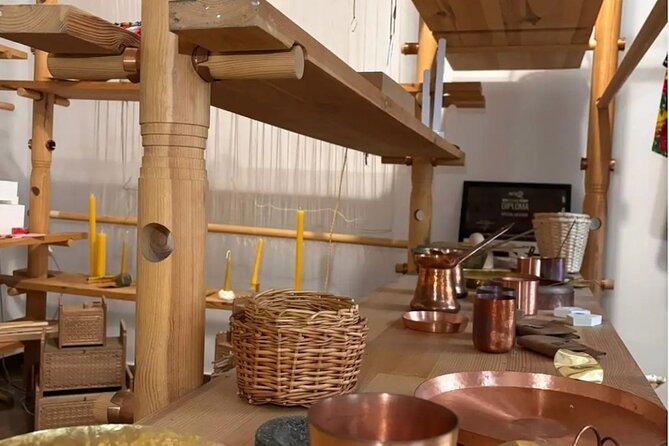
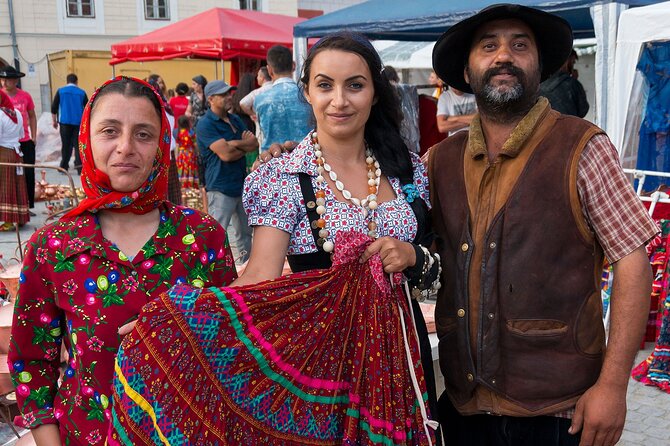
The final stop is Mesteshukar ButiQ, also called MBQ, at Bulevardul Mihail Kogălniceanu 12. The shop sells products made by Roma craftspeople, and the tour offers a chance to see copper work and learn about traditions that continue in Roma culture.
This ending is a strong choice for a route centered on persecution. It leaves you with a present-day example of Roma skill and enterprise, rather than concluding only with tragedy. You can see the work itself and consider the role of craft in cultural continuity.
The stop is listed as about 15 minutes, so it is not a long shopping visit. The description does not specify whether purchases are expected or included in the price. Think of it first as a chance to encounter Roma-made products and learn about the craft, with buying something as a personal choice.
Three hours on foot, with time for questions
The tour lasts about three hours. The listed stops add up to roughly 100 minutes, and about 1 hour 20 minutes is allocated for walking. That balance means you should expect a steady city walk broken up by short talks, not long visits at each landmark.
Wear shoes you are comfortable walking in, and plan for an outdoor experience. The tour is described as suitable for most people and near public transportation, but no exact walking distance, surface details or accessibility information is given. If you have a mobility concern, confirm the route conditions with the provider before booking.
The tour is offered in English and starts at 10:00 am. The group is limited to 15 people, a sensible size for a subject that benefits from discussion. The feedback associated with the tour highlights clear English and willingness to answer questions; Mihai is one named guide. Guide assignment may vary, so do not assume he will lead your departure.
Is $30.04 a fair price?
At $30.04 per person, you are paying for a three-hour guided walk through seven stops, with no listed admission charges at those locations. The main value is not access to paid attractions. It is the guide’s ability to connect distinct places to Roma history, explain difficult subjects clearly, and make room for questions.
If you want a broad survey of Bucharest’s main sights, this is not the best match. The Romanian Athenaeum and Cismigiu Park feature in the route, but the focus is Roma history, not a general introduction to the city. You will get more from the price if you are specifically interested in the history of slavery, persecution, cultural representation and Roma craft.
The small group size adds practical value, but the short duration at each stop also sets a limit. If you want a long museum visit or extensive time at the memorial, you may prefer to explore those subjects further on your own. This walk gives you a guided framework and a city route, not a full course in Romanian history.
Who should book this walk?
I would consider it if you want to understand a part of Romania’s past that can be overlooked in a standard city tour. It suits curious visitors who are comfortable discussing slavery and genocide, and who value a guide-led account over a checklist of famous sights.
It may also appeal if you want to see a working example of Roma craft at the end of a history-focused route. The final shop visit gives the walk a present-day counterpoint, though the short schedule means it is only an introduction.
Think twice if you want a leisurely outing with long breaks, or if you prefer to visit historical sites without a set pace. The route includes about 80 minutes of walking and seven short stops. For a focused half-day introduction to Roma history in central Bucharest, though, the itinerary is purposeful and the group cap is reassuring.
Booking and cancellation notes
The tour is offered in English, uses a mobile ticket and is usually booked about 10 days in advance. Confirmation is provided at booking. It is near public transportation, and the provider states that most people can participate.
You can cancel for a full refund up to 24 hours before the start time. Changes made less than 24 hours before the tour are not accepted, and cancellations inside that window are not refunded. Those terms are worth noting if your Bucharest plans are still shifting.
Should you book it?
Book this tour if you want a focused, guided account of Roma history that connects a former slave-market site, a Holocaust memorial and contemporary Roma craft. Its strongest points are the clear subject, a compact central-city route and a group small enough to support questions.
Skip it if you are after a general Bucharest walk or a slow, in-depth visit to each landmark. At $30.04, it makes the most sense for visitors who want this specific history explained by an English-speaking guide, and who are ready for a serious conversation as well as a city stroll.
FAQ
How long is the tour?
It lasts about three hours. About 1 hour 20 minutes is allocated for walking, with the rest of the time divided among the stops.
What time does the tour start?
The start time is 10:00 am.
Where does the tour meet?
The meeting point is Teatrul Ion Creangă, Sala Mare, at Strada Piața Amzei 13 in Bucharest.
Where does the tour end?
It ends at Mesteshukar ButiQ, at Bulevardul Mihail Kogălniceanu 12.
What language is the tour offered in?
The tour is offered in English.
How many people can join?
The maximum group size is 15 people.
What is the price?
The listed price is $30.04 per person.
Are admission tickets included?
All seven listed stops have free admission. No separate paid admission is specified.
Can I cancel for a refund?
Yes. You can cancel for a full refund up to 24 hours before the tour’s start time. Cancellations made less than 24 hours in advance are not refunded.
Recently added around Bucharest
- Snowmobiles, Sky Lift & Winter Sports – Private Tour★ 5.0 · 9 reviews
- Private Transfer and 3H Tickets to Therme Bucharest★ 4.5 · 10 reviews
- Day Trip from Bucharest to Dracula Castle, Brasov and Peles Castle Sinaia★ 5.0 · 10 reviews
- Day Trip Through Brasov in Transylvania and Bran, Peles, and Rasnov Castles★ 4.0 · 9 reviews
- 2-Day Small-Group Tour to Dracula’s Castle, Rasnov Fortress, Peles Castle, Sighisoara and Libearty Brown Bear Sanctuary with Overnight in Brasov★ 4.5 · 9 reviews
- Slavery in Romania Myths and Truths About Gypsies★ 5.0 · 8 reviews
- Premium 8-Day Private Culinary Vacation in Romania★ 5.0 · 11 reviews
- 2 Days – Private Tour to Transylvania – Brașov, Sighișoara, Sibiu★ 5.0 · 17 reviews
Bucharest Tours, compared.
Dracula’s Castle, Peles Castle, & Brasov Old Town
Read our review →
Dracula’s Castle, Peleș Castle & Brașov Day Trip
Read our review →
Bucharest to Dracula Castle, Peles Castle and Brasov Guided Tour
Read our review →
Transylvania and Dracula Castle Full Day Tour from Bucharest
Read our review →