Reviewed · BUCHAREST TOURS
Slavery in Romania Myths and Truths About Gypsies
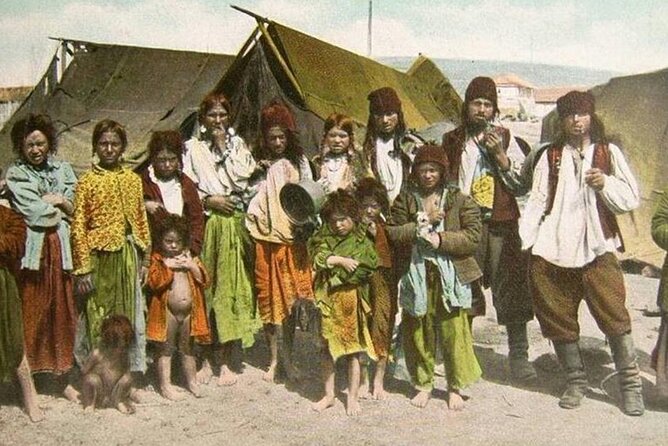
Bucharest’s landmarks tell a story that is often left out of a standard city walk: the history of Roma people, including slavery in Romania and persecution during World War II. This tour links that history to places you can see around the city, then ends at a shop selling work made by Roma craftspeople.
I like two things about the route. It connects major sights with the people and politics behind them, and it finishes at Mesteshukar ButiQ, where you can see Roma craftsmanship in a contemporary setting. Guide Mihai leads the English-language walk.
The main consideration is that this is a serious, history-focused tour, not a general introduction to Bucharest. You’ll also spend much of the three hours walking between stops, so bring comfortable shoes and be ready for a moderate level of physical activity.
Key points before you book
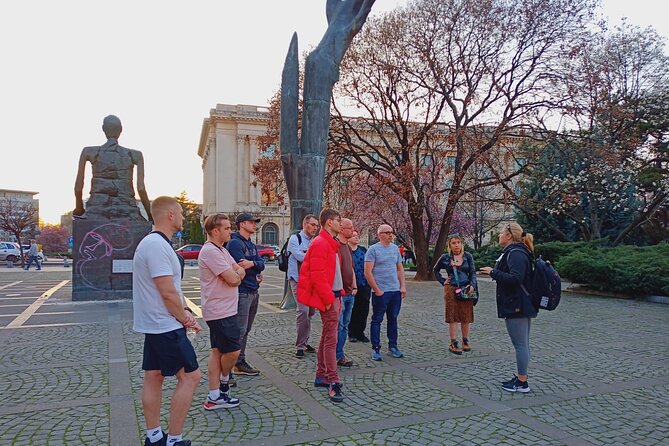
- A city walk with a clear subject: The route links Bucharest landmarks to Roma history, from slavery to the Holocaust.
- Eight stops over about three hours: Expect brief visits at most locations, with walking time between them.
- Guide Mihai leads in English: The group is limited to 15 people, which can make it easier to follow the discussion.
- The Holocaust Memorial is a central stop: You’ll learn about the persecution of Roma during World War II.
- A hands-on finish: The tour ends at Mesteshukar ButiQ, a shop featuring handcrafted pieces made by Roma artisans.
- Budget for a drink if you want one: A cake snack is included, but coffee and tea are not.
A different way to read Bucharest
This walk makes the city itself part of the story. Instead of treating monuments as isolated photo stops, it uses political figures, schools, a park, a memorial, and a craft shop to explore Roma life and history in Romania.
The tour title uses the word Gypsies, an older term that many people find offensive. The itinerary itself refers to Roma people, and that is the respectful term to use in conversation. The subject is not light: the route addresses slavery and the wartime persecution of Roma, alongside culture and craftsmanship.
That mix matters. A walk devoted only to hardship can leave you with a narrow view of a community, while a stop devoted only to crafts can miss the historical forces that shaped people’s lives. Here, the route puts those subjects together. You move from political history and public memory to a shop where Roma artisans’ work is on display.
The experience is also compact. In roughly three hours, you visit eight places, with each stop allotted between 10 and 30 minutes. That pace gives the guide room to connect the sites, but it does not promise a long, detailed visit at every one. Think of it as a guided introduction, with the walking route and conversation doing much of the work.
More Bucharest tours around Bucharest:
- Bucharest: Dracula’s Castle, Peles Castle, & Brasov Old Town
★ 4.5 · 17,858 reviews - Bucharest: Dracula Castle, Peles Castle & Brasov Old Town
★ 4.6 · 10,891 reviews - Bucharest: Dracula’s Castle, Peleș Castle & Brașov Day Trip
★ 4.5 · 5,919 reviews
Starting near the Romanian Athenaeum
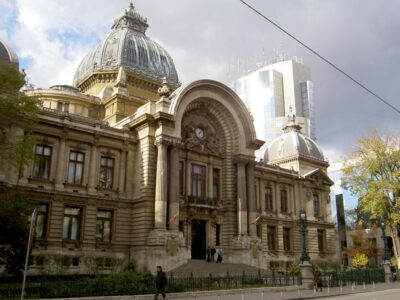
The tour begins at Teatrul Ion Creangă, Sala Mare, at Piața Amzei 13. The first stop is the Romanian Athenaeum, one of Bucharest’s key cultural landmarks and home to the National Romanian Philharmonic.
You spend about 20 minutes here. The Athenaeum offers a useful opening point because it gives the group a recognizable piece of the city before the conversation turns to less familiar parts of its history. The tour frames it as Romania’s house of art, and uses the setting to introduce the idea that every story has more than one side.
Admission is free at this stop. The visit is brief, so don’t expect a full tour of the building or a concert. Instead, treat it as a meeting point between Bucharest’s cultural identity and the broader questions the walk will raise.
Political figures and the history of Roma people
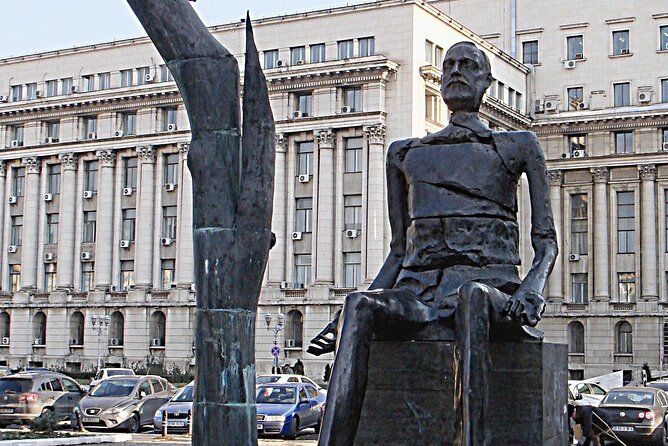
From the Athenaeum, the route turns to the Iuliu Maniu statue. You spend about 20 minutes learning about Maniu’s place in Romanian political life and his connection to the history of Roma people and the development of modern Romania.
This stop helps put the tour’s subject into a political frame. Rather than presenting Roma history as separate from the country’s wider story, the walk connects it to the people and decisions that shaped modern Romania. If political names are new to you, the guide’s explanation will be especially useful; the statue alone won’t tell you why Maniu matters to this particular subject.
Next comes Palatul Știrbei, with another 20-minute stop. The palace is associated with Barbu Știrbey, a ruler of Wallachia and an important figure in the tour’s story. The focus here is the 19th century, a period the walk uses to place the history of slavery in Romania within its political setting.
These stops are not simply a roll call of famous men. Their value lies in connecting power, government, and social history. The tour is strongest when it helps you understand why a figure or building belongs in the conversation, rather than asking you to admire a façade and move on.
Cismigiu Park, schools, and public memory
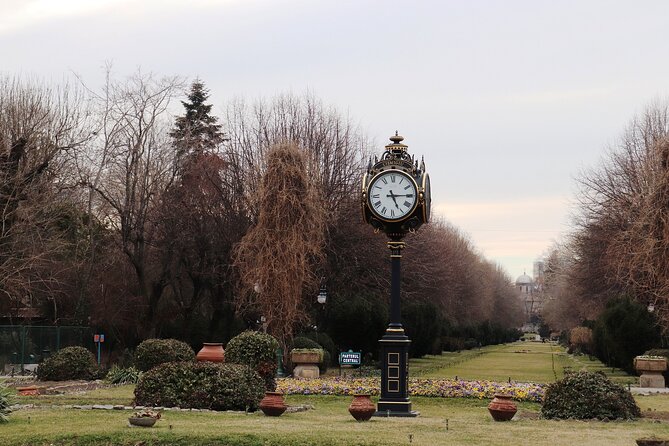
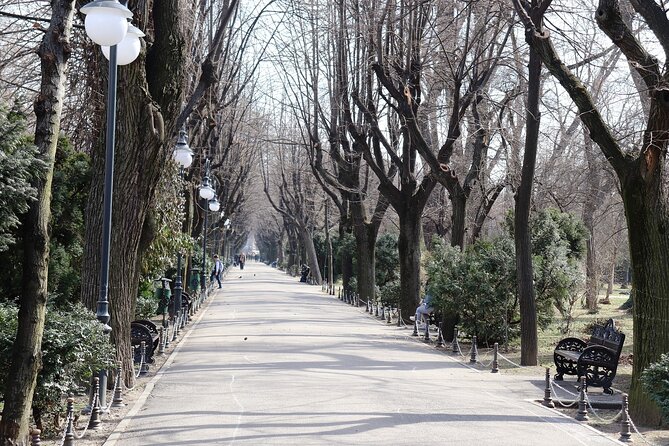
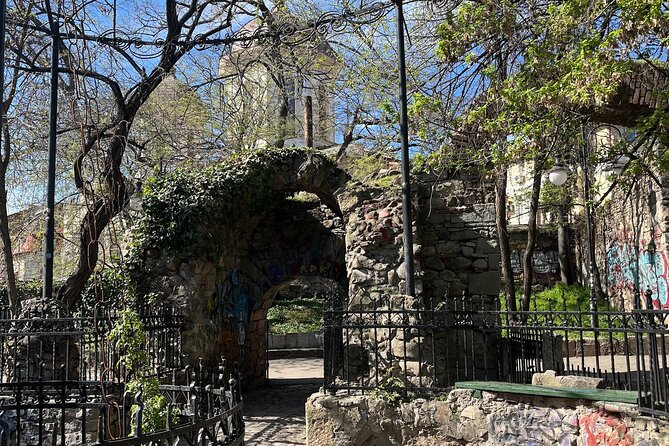
Cismigiu Park gives the walk a change of pace. You spend about 30 minutes in the garden, with several stops along the way. The route includes a view over the park, the ruins of an old monastery, and a well-known high school. The park is described as the city’s largest garden, and it offers a greener setting for a subject that can otherwise feel heavy.
This is the longest stop, but it is not a single, stationary visit. Expect to walk through the park and pause at different points while the guide makes connections to the tour’s themes. The mention of “surprises” on the route suggests there may be additional details along the way, but the specific stops named are the best guide to what you’ll see.
At the entrance to the park, Gheorghe Lazăr National College gets a separate 15-minute stop. The school is described as one of Bucharest’s most quoted high schools, and the tour uses it to make a simple point: education matters. It is a short visit, but the setting gives the discussion a practical connection to opportunity and social change.
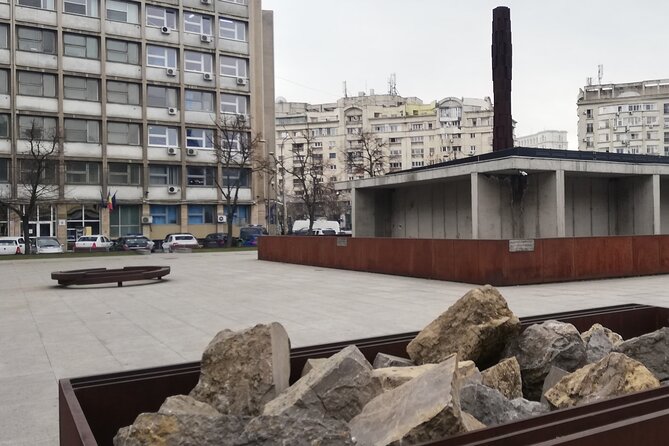
The route then reaches the Holocaust Memorial for about 15 minutes. Here, the guide discusses the persecution of Roma people during World War II and what is often called the Forgotten Holocaust. The memorial is described as the most impressive monument built in memory of Holocaust victims in Romania.
This is likely to be the most emotionally demanding part of the walk. The allotted time is short, so you may want to ask questions while you are there if you need more context. The memorial’s presence makes the history visible in public space, but a brief stop can only introduce the subject, not cover every detail.
Same starting point, a different day out:
- Bucharest: Palace of Parliament Tickets and Guide
★ 4.3 · 3,182 reviews - Bucharest: Day Trip to Dracula Castle, Peles Castle & Brașov
★ 4.4 · 3,049 reviews - Bucharest to Dracula Castle, Peles Castle and Brasov Guided Tour
★ 4.5 · 2,933 reviews - Bucharest: Palace of Parliament Tickets and Guided Tour
★ 4.4 · 1,877 reviews
Writers, politicians, and the route’s final stretch
At Piața Mihail Kogălniceanu, you spend around 10 minutes learning about Mihail Kogălniceanu, a prominent politician and writer in Romanian history. He is also identified as the first person to write about Romanian Gypsies.
The short stop adds another perspective: how Roma people were represented in writing and public life. Ten minutes is enough for a concise explanation, not a lengthy discussion of the period or the language used in historical texts. If this aspect interests you, the stop is a good moment to ask the guide how those early accounts relate to the tour’s broader theme.
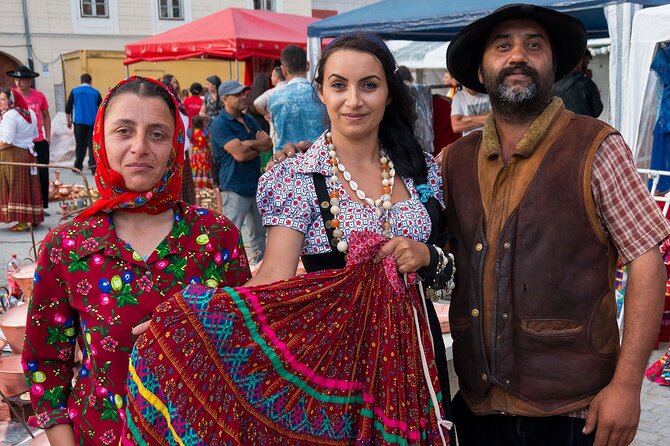
The tour ends at Mesteshukar ButiQ, also called MBQ, on Bulevardul Mihail Kogălniceanu 12. You spend about 20 minutes in this small shop, which features authentic pieces handcrafted by Roma artisans. The tour presents it as a chance to see Roma culture and tradition through the work of its makers.
This ending gives the walk a welcome present-day focus. After monuments and historical figures, you have a chance to look at objects made by Roma craftspeople. A visitor who enjoys jewelry or handmade design may find this the most tangible stop, and the shop can make the cultural discussion feel less abstract. One person who took the walk singled out the handcrafted jewelry store as a highlight, so allow yourself time to look around rather than treating it as a quick exit.
The shop is the official end point, so you can decide whether you want to browse or buy. The tour information does not specify prices or the range of items available, so don’t assume a particular piece or cost. What is clear is that the stop is intended to showcase Roma craftsmanship, not just serve as a souvenir shop.
What the three-hour format means
The tour starts at 10:00 am and lasts about three hours. The stated times at the stops add up to roughly two hours, leaving the remaining time for walking between them. That makes the pace plausible for a city route, but it also means you’ll be on your feet for much of the morning.
The group is capped at 15 people. That is small enough to make a guided conversation more manageable than a large tour, though the quality of your experience will still depend on how much you want to engage with the subject. The tour is offered in English, and professional English-speaking guidance is included.
A cake snack is included. Coffee and tea are not, and there is a short stop along the way where you can buy a drink at your own expense. You may want to bring water, especially if you prefer not to rely on finding a place to purchase something during the walk.
All listed stops have free admission, so the $127.37 per-person price is paying for the guided experience rather than entry tickets. That is a substantial price for a three-hour walking tour, particularly if you are comparing it with a general city walk. Its value depends on whether you want this specific subject and the guide’s interpretation. If you do, the route’s combination of political history, the Holocaust Memorial, and the artisan shop offers more than a standard monument circuit. If you mainly want an overview of Bucharest’s landmarks, another tour may cover more ground for less.
Group discounts are available, which may improve the value if you are booking with others. The activity is also mobile-ticketed, and confirmation is provided at booking. Free cancellation is available up to 24 hours before the start time; changes or cancellations inside that window are not accepted.
Who should take this walk
I’d choose this tour if you want to understand Roma history as part of Romania’s story, and you’re comfortable spending time with difficult subjects. It suits curious visitors who value context, enjoy walking between landmarks, and want to see a contemporary example of Roma craft alongside historical sites.
It may be less suitable if you want a broad survey of Bucharest, prefer a relaxed café-focused outing, or have trouble with a moderate amount of walking. The route has short stops and plenty of ground to cover between them, so it is not a long sit-down lecture.
The tour’s most compelling feature is its range: a cultural landmark, political history, a park, a school, a memorial, and a shop made by Roma artisans all belong to one connected story. That can make a three-hour walk feel purposeful. Just arrive ready to listen, ask questions, and give the subject the attention it deserves.
FAQ
How long is the tour?
It lasts about three hours, including walking time between the stops.
What time does the tour start?
The start time is 10:00 am.
Where does the tour begin and end?
It begins at Teatrul Ion Creangă, Sala Mare, at Strada Piața Amzei 13. It ends at Mesteshukar ButiQ, at Bulevardul Mihail Kogălniceanu 12.
Is the tour offered in English?
Yes. A professional English-speaking guide leads the tour.
Is food or drink included?
A cake snack is included. Coffee and tea are not included, and drinks during the short stop are at your own expense.
How large is the group, and how much walking should I expect?
The group has a maximum of 15 people. You should have a moderate level of physical fitness, since the time between stops is used for walking.
Recently added around Bucharest
- Snowmobiles, Sky Lift & Winter Sports – Private Tour★ 5.0 · 9 reviews
- Private Transfer and 3H Tickets to Therme Bucharest★ 4.5 · 10 reviews
- Day Trip from Bucharest to Dracula Castle, Brasov and Peles Castle Sinaia★ 5.0 · 10 reviews
- Day Trip Through Brasov in Transylvania and Bran, Peles, and Rasnov Castles★ 4.0 · 9 reviews
- 2-Day Small-Group Tour to Dracula’s Castle, Rasnov Fortress, Peles Castle, Sighisoara and Libearty Brown Bear Sanctuary with Overnight in Brasov★ 4.5 · 9 reviews
- The Real Story of Gypsies – Slavery in Romania★ 5.0 · 7 reviews
- Premium 8-Day Private Culinary Vacation in Romania★ 5.0 · 11 reviews
- 2 Days – Private Tour to Transylvania – Brașov, Sighișoara, Sibiu★ 5.0 · 17 reviews
Bucharest Tours, compared.
Dracula’s Castle, Peles Castle, & Brasov Old Town
Read our review →
Dracula’s Castle, Peleș Castle & Brașov Day Trip
Read our review →
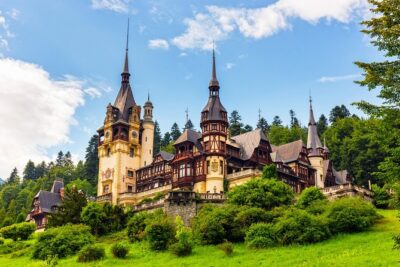
Bucharest to Dracula Castle, Peles Castle and Brasov Guided Tour
Read our review →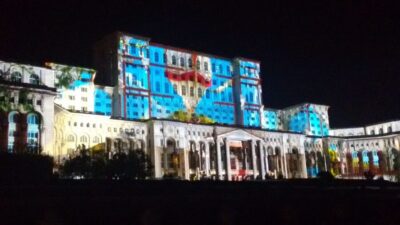
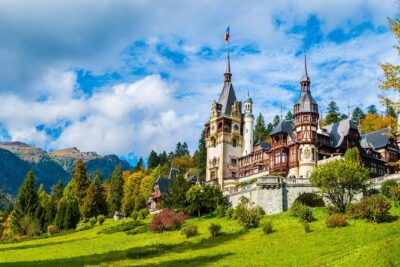
Transylvania and Dracula Castle Full Day Tour from Bucharest
Read our review →