
Reviewed · BUCHAREST COMMUNISM TOURS
3-Hour Guided Tour of Communist Bucharest
Bucharest’s communist past is written across the city, from the vast Palace of Parliament to streets where entire neighborhoods were demolished. This three-hour walk puts those changes in context, tracing the clash between the city’s interwar character and Ceaușescu’s plans for a new capital.
I like two things in particular: the guide links major landmarks to ordinary life, and the walk includes interwar streets and the remains of Uranus, not just grand government buildings. Cristina is a recurring guide, and her family stories and photographs have helped make a difficult history personal.
One thing to consider: this is a walking tour with long explanations at outdoor stops, so comfortable shoes and water are sensible, especially in hot weather. The café pause is welcome, but drinks and snacks there cost extra, and you won’t go inside the Palace of Parliament.
Key points to know
- The Palace is an exterior stop: You’ll hear about Ceaușescu and the building’s scale, but entry is not included.
- Uranus makes demolition tangible: The tour visits remains of a neighborhood reshaped by communist urban planning.
- Interwar Bucharest is part of the story: See streets and buildings that survived the regime’s remodelling.
- The 1989 revolution gets careful attention: Political memorials and key sites help explain the fall of Ceaușescu’s rule.
- Personal stories add human scale: Guides such as Cristina have used family anecdotes and photographs to explain daily life.
- Three hours costs $29 per person: The guided walk and small snacks are included; café purchases and museum fees are not.
A walk through two versions of Bucharest
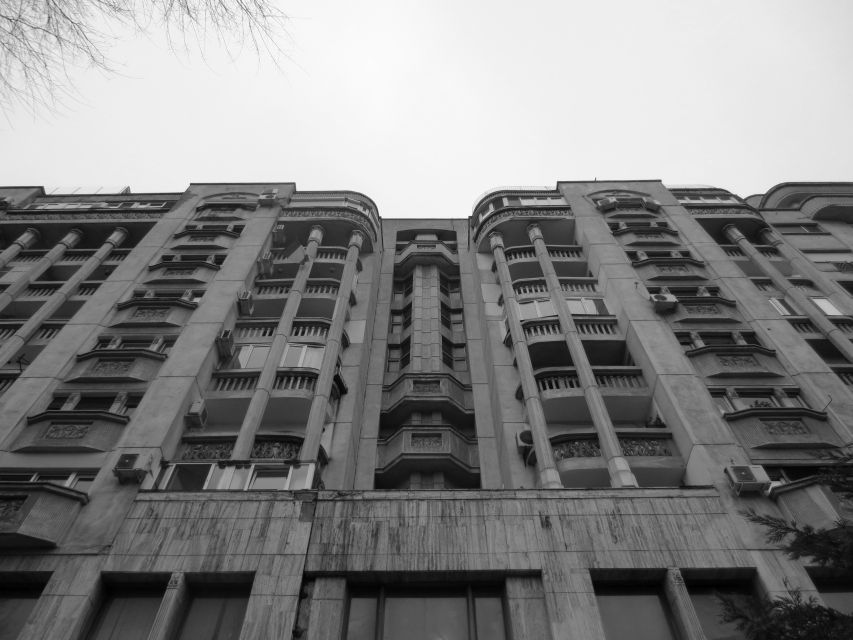
This tour is not simply a parade of communist buildings. Its central idea is the collision between two city plans: the Bucharest of the interwar years, with its varied streets and architecture, and the capital Ceaușescu wanted to remake. Seeing both gives you a better sense of what was changed, what survived, and how political power can shape the place people call home.
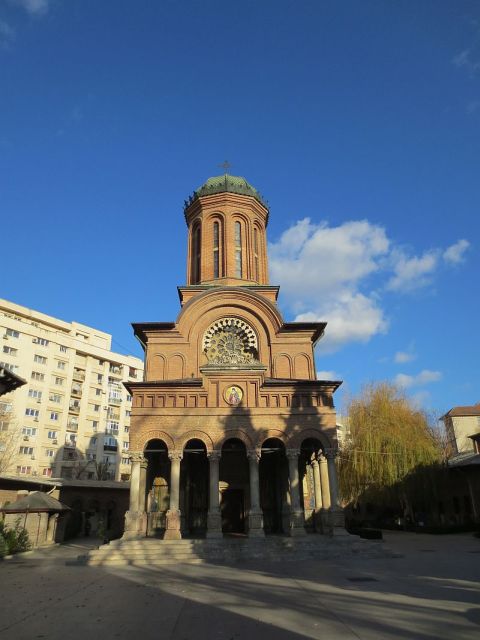
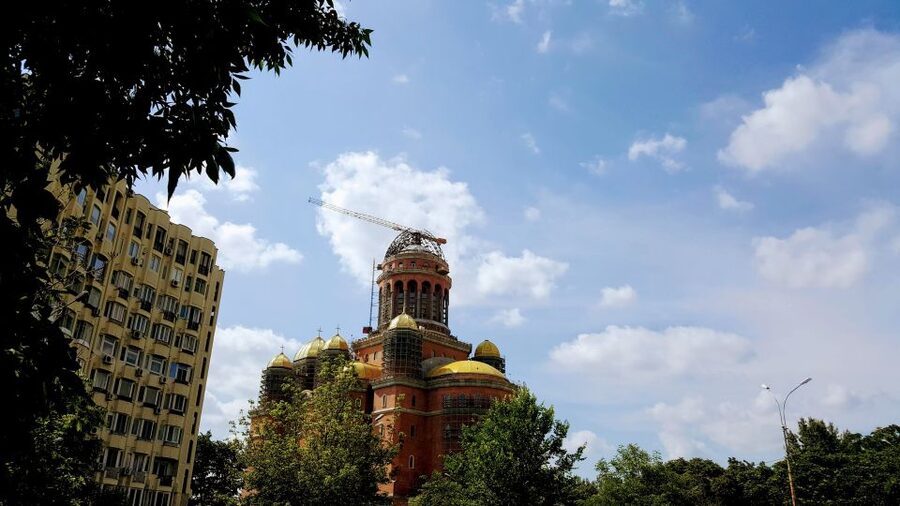
The route begins near the red-brick bell tower of the Patriarchy, at Aleea Dealul Mitropoliei 19, within walking distance of Piața Unirii. From there, the guide leads a city walk that combines landmarks, political memorials, and less familiar streets. The exact sequence is not specified, so expect the guide to connect stops into a story rather than treat this as a fixed checklist of interiors.
That storytelling matters. The history covers the violent beginnings of communist rule, nationalization, forced home demolitions, Ceaușescu’s regime, and the 1989 revolution. Those topics can feel abstract in a book. On foot, the contrasts between preserved neighborhoods, remade streets, and monumental architecture give them a physical setting.
More communism tours around Bucharest:
- Bucharest: Palace of Parliament Tickets and Guide
★ 4.3 · 3,182 reviews - Bucharest: Palace of Parliament Tickets and Guided Tour
★ 4.4 · 1,877 reviews - Bucharest: Parliament Palace Skip-the-line Ticket
★ 4.2 · 1,518 reviews
The Palace of Parliament, seen from outside
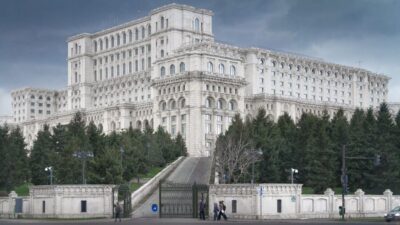
The Palace of Parliament is the tour’s biggest architectural statement. It is an impressive landmark, and its size gives the guide a natural starting point for explaining Ceaușescu’s ambitions and the costs of his plans for Bucharest. You’ll also hear about the dictator’s family and the political system built around him.
The visit is from the outside. Palace entry is not included, and any museum fees are separate, so don’t book this expecting an interior tour. That limitation is useful to know, but it doesn’t make the stop incidental: the exterior gives the guide room to explain how the building fits into the wider remaking of the city.
I’d treat this as a context stop rather than a chance to inspect the building in detail. The value is in understanding what it represented and how its construction connects with the forced demolition of homes and neighborhoods. If you want to visit inside, you’ll need to arrange that separately and account for the extra time and cost.
Uranus and the cost of remaking a city
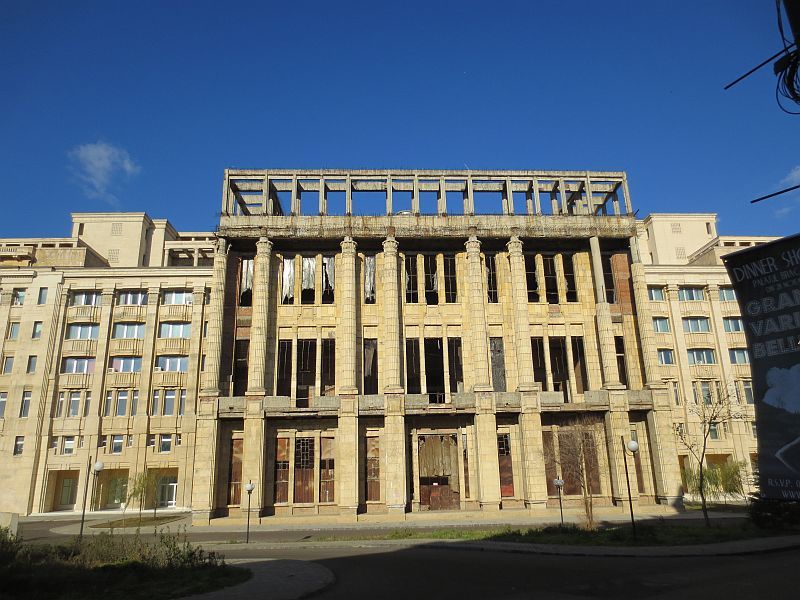
The remains of the Uranus neighborhood bring the subject down to street level. The tour points out what is left of an area affected by communist urban remodelling, helping you picture the human consequences behind the city’s new roads and monumental buildings.
This is where the walk’s mix of architecture and personal history becomes especially useful. Rather than discussing demolition only as policy, the guide can relate it to homes taken over or destroyed and to the everyday lives that continued around those changes. The supplied itinerary does not identify each surviving structure, so go in ready to hear the guide interpret what you see rather than expecting a long list of named buildings.
For me, this is among the most important parts of the route. A grand building shows the regime’s power; the remains of a neighborhood suggest what that power meant to residents. It is a sobering contrast, and a reason to choose this tour over a walk focused only on famous façades.
Interwar streets that escaped the bulldozers
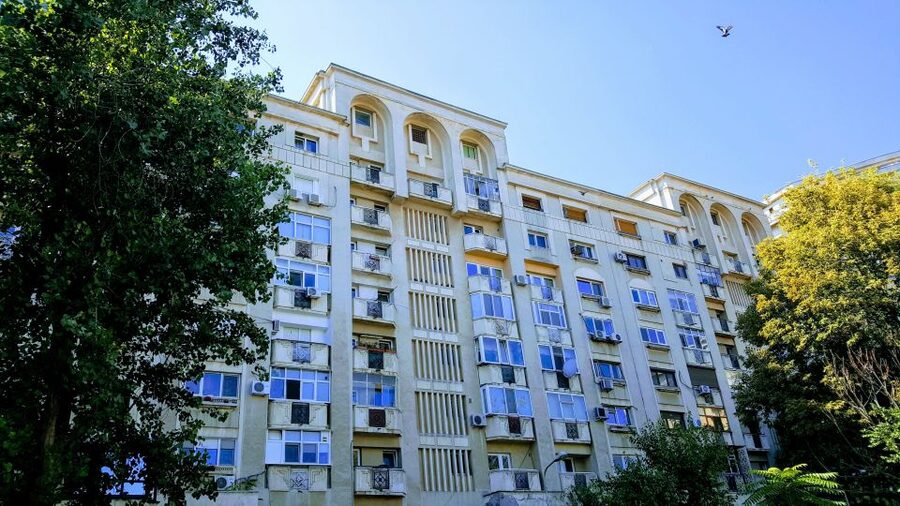
The tour also visits lesser-known, charming interwar neighborhoods that survived the communist city plan. These streets offer a counterpoint to the monumental scale of the Palace and help explain why Bucharest feels like a mix of architectural styles.
The guide’s task here is to show you how different periods left their mark, not just to point out that buildings look different. You’ll hear how the city appeared before communist remodelling and how its interwar character differed from the image the regime sought to create. That context makes the surviving streets more than a pleasant detour: they show you a version of Bucharest that was not completely erased.
If you’re hoping for a tightly focused architectural tour, remember that politics and daily life are central to the experience. The buildings serve the story. That balance is a strength if you want to understand why the city looks as it does, though less so if your main interest is architectural detail alone.
More three-hour experiences around Bucharest:
- Bucharest: 3-Hour Dark History Tour with a Local
★ 4.9 · 301 reviews - Bucharest: Alternative Sightseeing 2.5-3h-Hour Guided Tour
★ 4.9 · 80 reviews - Bucharest: 3-Hour Walking Tour
★ 4.9 · 77 reviews - Bucharest: Relics of Communism 3-Hour Walking Tour
★ 4.9 · 77 reviews
Daily life under communism, told through local experience
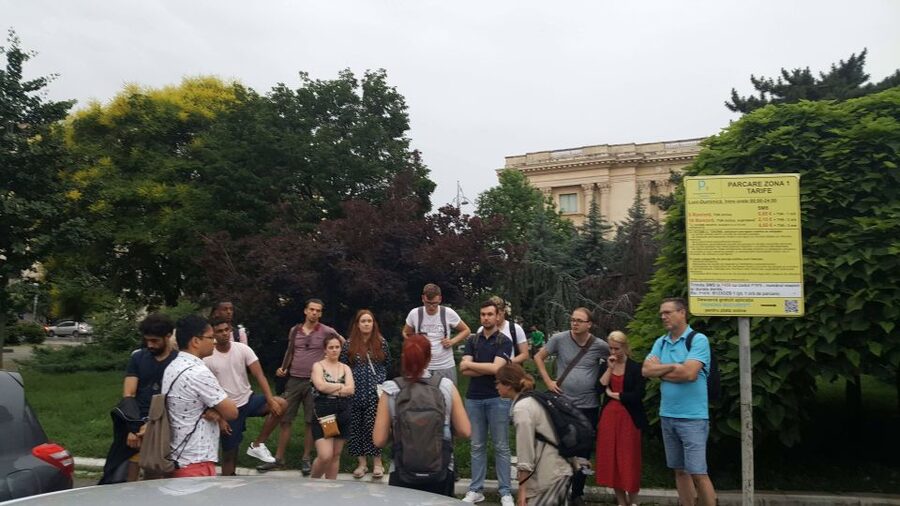
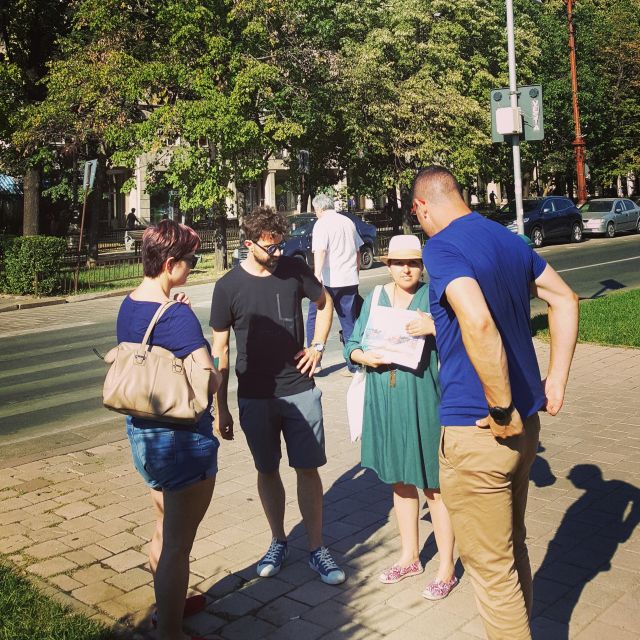
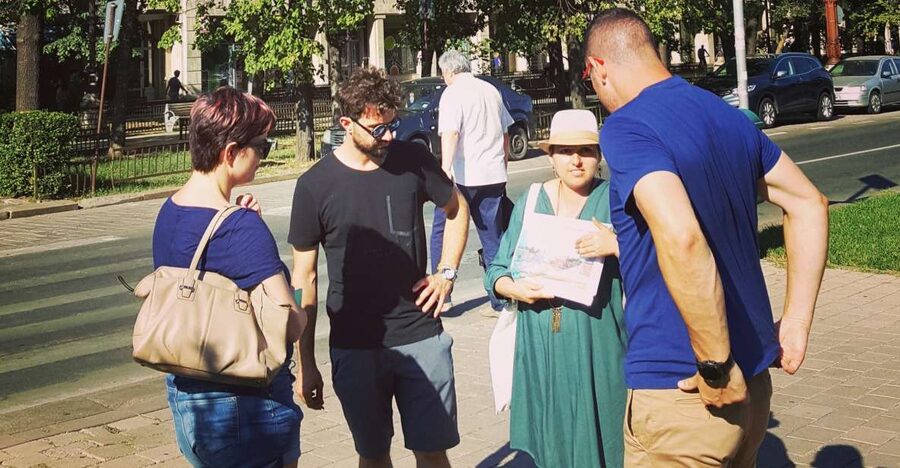
The most praised quality of this walk is the way guides make a complex subject understandable and personal. Cristina is frequently associated with the tour, and her approach has included family anecdotes, photographs, and a willingness to take questions. Other guides named by participants include Elena, Flori, Andrea, and Ene, so you should not assume a particular person will lead your departure.
Personal accounts help fill the gap between political events and daily routines. You’ll hear what life was like for people living under communist rule, alongside the larger story of the regime’s rise and fall. A guide who grew up with family memories of the period can offer a human angle that a monument plaque cannot.
The strongest approach is balanced rather than theatrical. The subject includes violence, repression, and upheaval, but the tour also makes room for questions and differing perspectives. Past guides have used photos to illustrate their explanations, and one has brought an old snack for the group to try. Treat that as a possible personal touch, not a guaranteed feature.
This is a good tour for curious visitors who want more than dates and slogans. You can ask questions as you go, and the walk’s pace has been adjusted to allow for both planned explanations and discussion. If you prefer a quiet, fast-moving route with little commentary, three hours of history may feel like a lot.
Memorials and the 1989 revolution
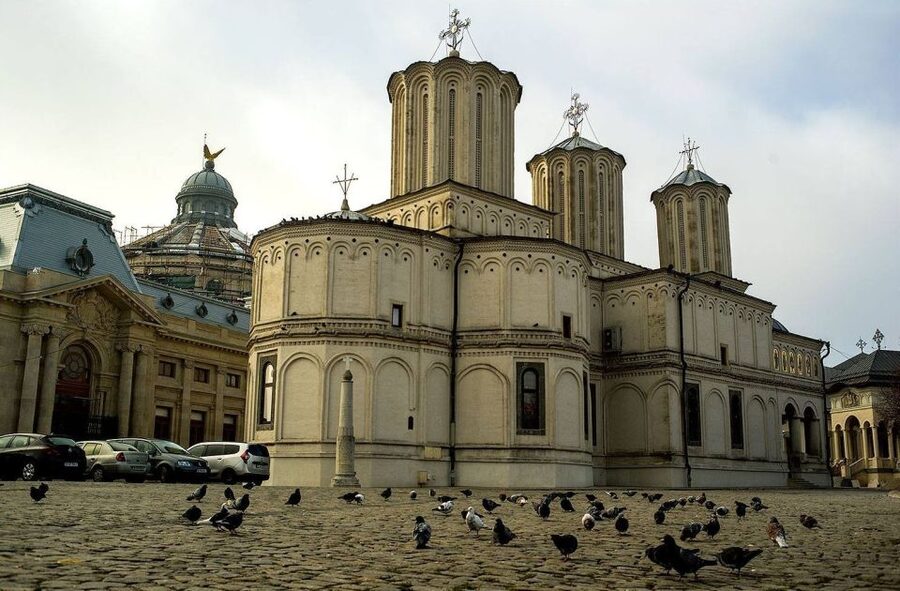
Political memorials and sites tied to the 1989 revolution add another layer to the route. The guide explains the anti-communist uprising and the violent events that brought Ceaușescu’s rule to an end, linking those locations to the fall of the Iron Curtain.
The revolution is recent enough to remain part of family and national memory, but a visitor can easily pass its sites without knowing what happened there. Having a guide point out their role helps connect the physical places to the wider events. The tour’s emphasis is on explanation and context, not on entering a museum or viewing a staged exhibit.
The subject can be emotionally heavy. That is part of the point, but it also means the walk is not a light sightseeing stroll. If you want to understand modern Romania, this is valuable ground to cover. If you’re travelling with children, consider whether they’re ready for discussions of political violence and forced displacement.
A café pause, with a small practical catch
A short café break gives the group a chance to sit, get a drink, and talk. It is a useful pause during a three-hour walk, especially after standing through several explanations. Drinks and snacks at the café are at your own expense, so bring a little money if you want to order.
The included experience lists a guided tour and small snacks, but it does not promise a full meal or a particular tasting. One guide has shared an old snack with the group, while another participant wished there had been more traditional food. I’d regard any shared snack as a bonus, not as a reason to book.
Bring water of your own, particularly on a sunny day. A past participant specifically found that useful, and another suggested limiting how long the group stands during hot weather. The tour is outdoors, so shade and temperature can affect how comfortable the explanations feel.
Is $29 good value for three hours?
At $29 per person, the tour offers a substantial guided walk through several parts of Bucharest, with a guide who connects architecture, political history, and personal experience. You’re paying for interpretation, not transport, a meal, or entry to the Palace of Parliament. If you want an organized way to understand what you’re seeing on the street, that is a fair trade.
The value improves if you arrive with a few questions. Ask how the regime changed the city, what daily routines were like, or how the 1989 revolution is remembered now. Guides have been praised for answering questions and adapting the pace, so this is not just a scripted march from one photo stop to the next.
The main costs beyond the tour are optional café purchases and any museum fees. Palace entry is not included. You can cancel up to 24 hours ahead for a full refund, and the reserve-now, pay-later option allows you to hold a place without paying immediately. Check available start times when booking.
Who should take this walk?
I’d recommend it if you want to understand Bucharest’s recent past and how it shaped the city you see today. It suits first-time visitors who want a local guide to connect the Palace, old neighborhoods, and revolution sites, as well as anyone with a particular interest in communism or Eastern European history.
It can also work well for a family, provided everyone is comfortable walking and hearing about a difficult period. One family of four found the experience engaging, and the guide’s stories and photographs can help hold attention. Still, the subject is serious, and the tour is not designed as a children’s activity.
If you have only a short stay, this walk makes good use of three hours because it brings together several themes that are hard to piece together on your own. If you already know the history well, or want to spend the time inside the Palace, you may prefer a different plan. The Palace is an outside stop, and the tour’s strength lies in the guide’s explanations across the city.
Should you book the Communist Bucharest tour?
Book it if you want a grounded account of how communist rule changed Bucharest and affected ordinary people. The combination of the Palace’s scale, the remains of Uranus, surviving interwar streets, and 1989 revolution sites gives the city’s history a clear shape. At $29 for three hours, the guide-led context is the main value.
Skip it if you’re looking for a short, light sightseeing walk or guaranteed Palace entry. Wear comfortable shoes, carry water, and be ready to stand outdoors while the guide speaks. If those trade-offs suit you, this is a practical way to make sense of Bucharest beyond its most imposing building.
FAQ
How long is the tour?
The guided tour lasts three hours.
What language is the tour in?
The tour is conducted in English.
Where is the meeting point?
Meet near the red-brick bell tower of the Patriarchy at Aleea Dealul Mitropoliei 19, București 030167. It is within walking distance of Piața Unirii.
Do you go inside the Palace of Parliament?
No. The tour includes an exterior visit, not entry inside the Palace.
Are café drinks and snacks included?
No. Drinks and snacks at the café are at your own expense. The tour includes small snacks.
What should I bring?
Wear comfortable shoes. Bringing water is also useful, especially on a sunny day.
Does the tour include museum entry?
No. Fees for any museums you choose to visit are not included.
Can I cancel for a refund?
Yes. You can cancel up to 24 hours in advance for a full refund.
Do I need to pay when I book?
No. The reserve-now, pay-later option lets you reserve a place without paying immediately.
Recently added around Bucharest
- Snowmobiles, Sky Lift & Winter Sports – Private Tour★ 5.0 · 9 reviews
- Private Transfer and 3H Tickets to Therme Bucharest★ 4.5 · 10 reviews
- Day Trip from Bucharest to Dracula Castle, Brasov and Peles Castle Sinaia★ 5.0 · 10 reviews
- Day Trip Through Brasov in Transylvania and Bran, Peles, and Rasnov Castles★ 4.0 · 9 reviews
- 2-Day Small-Group Tour to Dracula’s Castle, Rasnov Fortress, Peles Castle, Sighisoara and Libearty Brown Bear Sanctuary with Overnight in Brasov★ 4.5 · 9 reviews
- Slavery in Romania Myths and Truths About Gypsies★ 5.0 · 8 reviews
- The Real Story of Gypsies – Slavery in Romania★ 5.0 · 7 reviews
- Premium 8-Day Private Culinary Vacation in Romania★ 5.0 · 11 reviews
Bucharest Communism Tours, compared.


Parliament Senate Entry Tickets and Guided Tour
Read our review →
Bucharest Essential Tour: Old Town, Calea Victoriei & Communism
Read our review →
Communism in Bucharest – Landmarks, Museum & Communist Appetizers
Read our review →Browse the lists this tour appears in