
Reviewed · BUCHAREST COMMUNISM TOURS
Contrasts of Communism – Small Group Walking Tour in Bucharest
Bucharest’s communist past comes into focus on this three-hour walk, which links the site of Ceausescu’s final speech with the cemetery where revolution victims are remembered. You’ll also leave the central boulevards behind for a working-class neighborhood, where street art now adds color to the gray blocks of the 1970s.
I like two things in particular: the group is capped at eight, so there’s room for questions and conversation, and the route mixes famous landmarks with places you might not find on your own. Guides such as Elena use historical photographs and personal stories to connect buildings and public spaces with everyday life under communism.
One thing to plan for: this is an active outing, with plenty of walking and public transport, and a moderate fitness level is recommended. Wear comfortable shoes, and take the advice to eat breakfast seriously.
- Revolution Square: Hear about Ceausescu’s last speech and the collapse of his dictatorship.
- University’s Square: Visit KM0 of Romanian freedom of speech and discuss the country’s current politics.
- A working-class neighborhood: See communist-era apartment blocks alongside newer street art.
- The Heroes’ Memorial Cemetery: Walk quiet paths and hear personal stories of people killed in 1989.
- Carol I Park and Parliament: Take in a hilltop view, then finish near Ceausescu’s enormous palace and Unirii Boulevard.
A route that connects famous sites with everyday Bucharest
This tour gives you a useful way to read a city where the communist period is visible in grand civic spaces as well as ordinary apartment blocks. It begins near the center, then uses public transport to reach sites beyond the usual sightseeing circuit before returning to the Palace of Parliament and Unirii Boulevard.
The seven stops have different moods. Revolution Square and University’s Square are public places where political change became visible. The cemetery is quieter and more personal. The neighborhood and park help put the capital’s monuments in context, while the Palace of Parliament makes the scale of Ceausescu’s ambitions hard to ignore.
That mix is the tour’s chief strength. You don’t just hear dates and names; you move through places that show how the revolution, the regime, and the city’s later changes are tied together. At each stop, you can ask questions and discuss what you’re seeing.
Revolution Square: where Ceausescu’s rule reached its end
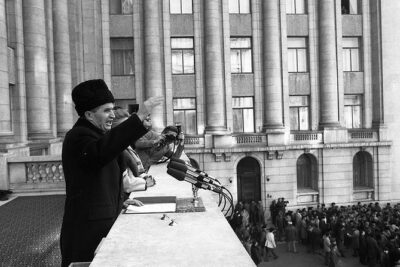
The tour begins at Revolution Square, where Nicolae Ceausescu delivered his last speech in 1989. You’ll spend about 30 minutes here hearing about the rise and fall of the communist dictatorship and the events surrounding its final days.
This is a strong place to start because it gives the rest of the walk a clear frame. The story is not only about a ruler losing power. It is also about people taking to the streets, the dangers they faced, and the rapid changes that followed. Historical photographs can help you picture how the square looked during earlier events.
The square is an open public space, and admission is free. Don’t expect a museum-style display or a long visit indoors. The value comes from having a guide explain what happened here and point out why the location matters.
More communism tours around Bucharest:
- Bucharest: Palace of Parliament Tickets and Guide
★ 4.3 · 3,182 reviews - Bucharest: Palace of Parliament Tickets and Guided Tour
★ 4.4 · 1,877 reviews - Bucharest: Parliament Palace Skip-the-line Ticket
★ 4.2 · 1,518 reviews
University’s Square: the revolution’s human cost
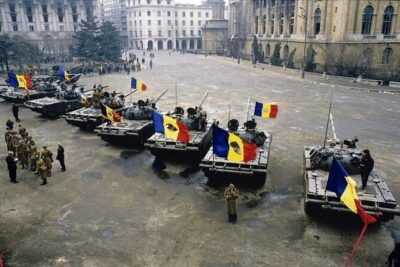
At University’s Square, the focus shifts to the first people killed in Bucharest in the struggle for freedom on December 21, 1989. The tour describes the square as KM0 of Romanian freedom of speech and uses the stop to connect the revolution with Romania’s current political climate.
Plan on roughly 30 minutes. This is a good stretch of the route for questions and discussion, particularly if you want to understand how the events of 1989 still shape public life. The subject is serious, and the guide’s conversation can help you move beyond a simple account of the regime’s fall.
As with Revolution Square, this is a public site rather than a ticketed attraction. You’ll be standing and listening outdoors, so the experience depends on the guide’s explanation and your interest in recent history.
Public transport to the apartment blocks and street art
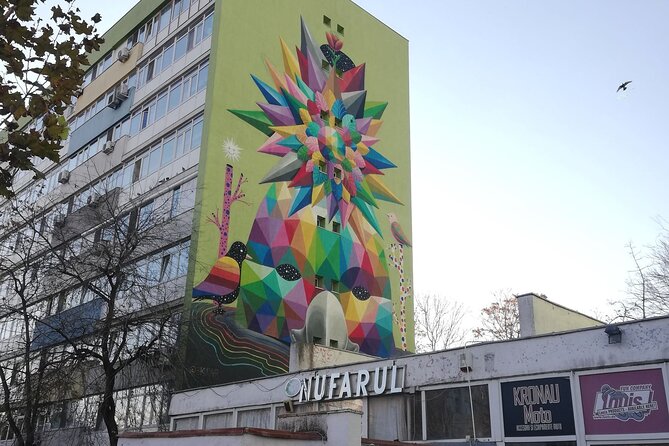
The route leaves the main central sights to reach Eroii Revolutiei, a working-class neighborhood that brings a different view of Bucharest into the tour. You’ll use public transport to get there, then spend about 15 minutes looking at the area’s 1970s communist apartment blocks and the colorful street art now appearing on them.
That short stop makes a useful contrast with the capital’s monumental buildings. The blocks are part of the everyday city, not a purpose-built showpiece. Their changing appearance also offers a way to talk about how Bucharest has been reshaped since the communist period.
The journey itself is part of the experience. You’re not simply moving between landmarks in a tour vehicle; you’re seeing how public transport links different parts of the city. The exact mix of transport can vary, but the route has included the subway and public buses, with tram travel also described on the tour.
This is a brief visit, not a long neighborhood walk. If you want a close look at the street art or the local streets, ask the guide what time allows. The stop’s main purpose is to introduce a slice of everyday Bucharest and give the larger history a more human scale.
The Heroes’ Memorial Cemetery: stories behind the dates
At Cimitirul Eroilor Revoluției, the pace slows. You’ll walk the quiet paths of a memorial cemetery dedicated to people killed in the 1989 revolution, with about 30 minutes to hear their personal stories.
This stop changes the tone of the tour. The earlier squares are broad public spaces; here, the cost of the revolution is remembered one person at a time. It can make the historical account feel less distant, especially after hearing about the demonstrations and deaths at University’s Square.
The cemetery is a place for a measured visit rather than quick sightseeing. Keep in mind that it is a memorial, and give the setting the respect it calls for. The route’s mix of landmark and cemetery helps explain why this tour is not just about architecture or political leaders.
More walking tours around Bucharest:
- Bucharest: City Highlights Guided Walking Tour
★ 4.9 · 1,482 reviews - Bucharest Highlights Walking Tour
★ 5.0 · 469 reviews - Free walking tour of Brasov in English
★ 4.9 · 302 reviews - Bucharest: Ghost Stories & Romanian Mythology Walking Tour
★ 4.9 · 287 reviews
Carol I Park: a view and a communist monument
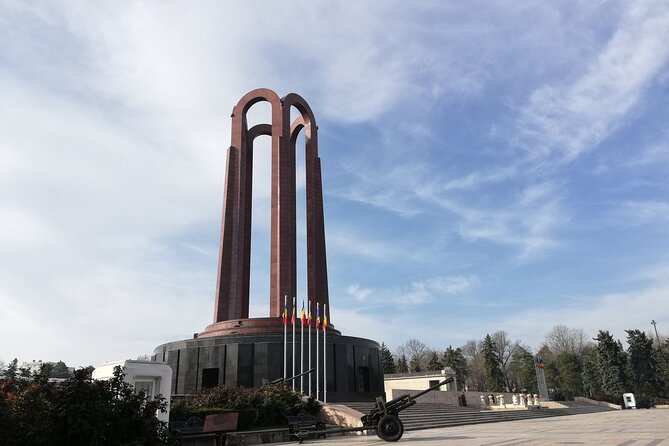
Parcul Carol I offers a different perspective, both literally and historically. You’ll spend about 30 minutes in the park, including time to take in a view from one of Bucharest’s highest hills and learn about the Monument of the Heroes for the Freedom of the Motherland.
The monument was built in honor of communist party leaders. That makes it a revealing stop: public monuments don’t just mark events, they also show what a government wanted people to remember and honor. In the park, the guide can explain the monument’s place in the communist era and the way its meaning sits within the city today.
The hilltop view gives you a break from standing close to buildings and memorials. But this is still an outdoor walking tour, and the park’s paths add to the day’s time on your feet. Take a moment to look around, not only at the monument, but at the city beyond it.
The Palace of Parliament: Ceausescu’s final grand project
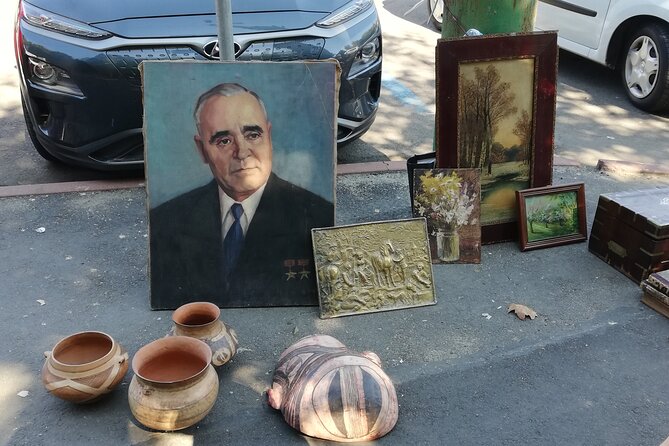
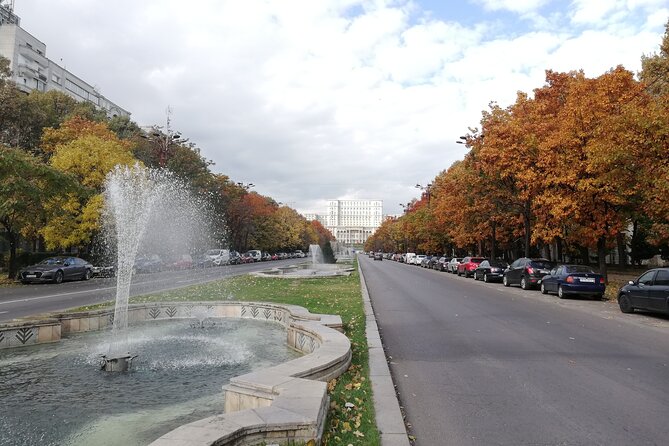
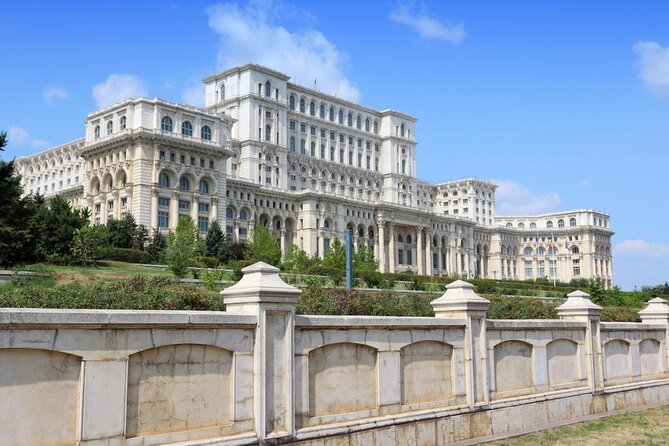
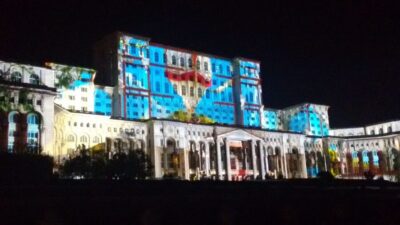
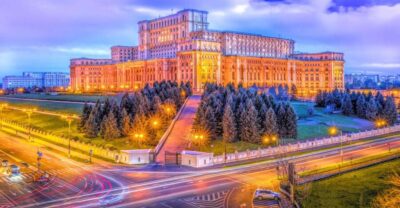
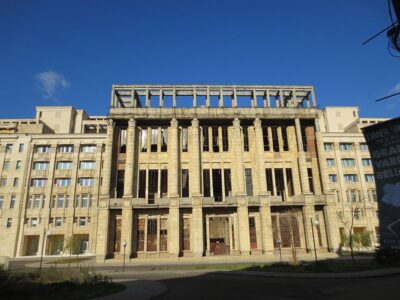
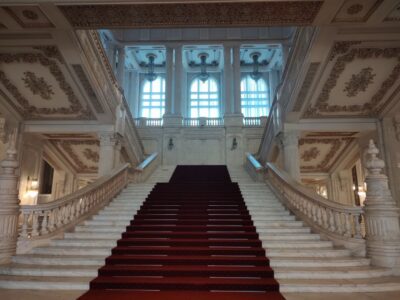
The group returns to the city center for a 30-minute stop outside the Palace of Parliament. Described as the world’s second-largest administrative building, it was one of Ceausescu’s last great projects and remains a striking symbol of the regime’s scale and ambition.
The tour ends up close to a building that can be difficult to grasp from a quick glance. From outside, you can consider the resources and power required to create it, and the contrast between monumental state projects and the lives of ordinary people. The guide’s wider account of Ceausescu’s rule gives the building more meaning than its size alone.
This stop is outside the palace. Admission is not included, so don’t assume the tour enters the building. If you want to visit inside, you’ll need to make separate plans. For this walking tour, the point is to see the palace in its city setting and hear how it fits into the story.
Unirii Boulevard: a final look at the city’s grand plan
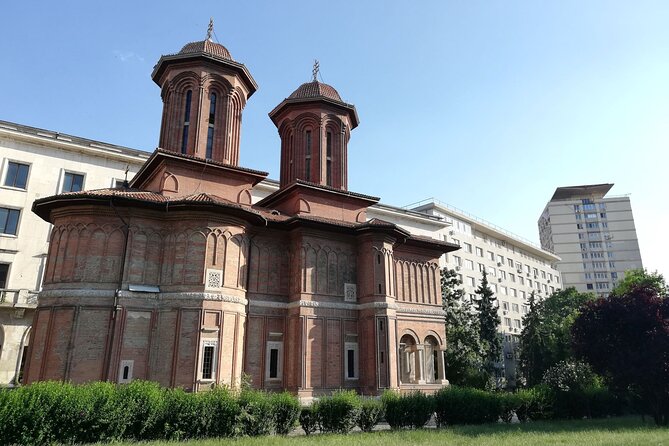
The final stop is near the dancing fountains on Bulevardul Unirii, where the tour spends about 15 minutes. The boulevard and fountains were designed as a kind of home-court advantage, intended to impress visiting world leaders.
It’s an apt ending. After seeing personal memorials and working-class housing, you finish with a grand urban gesture built to project power. You end near both the Palace of Parliament and the Old Town, making it easy to continue sightseeing or find a meal afterward.
The fountain stop is a brief one, and the experience will depend on conditions on the day. Still, the boulevard ties the route together: it shows how political ambition shaped not just a single building, but the wider city center.
A small group makes room for questions
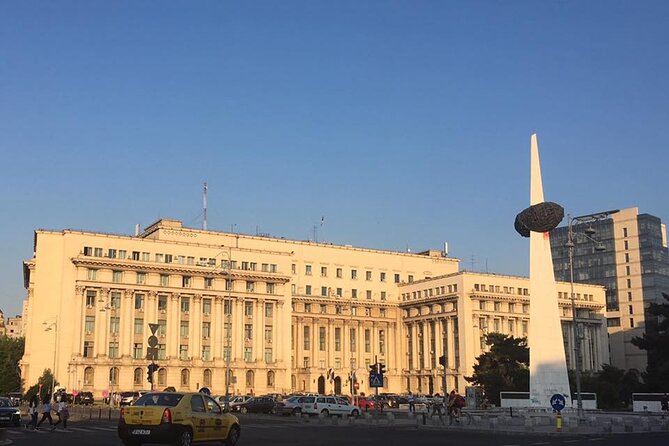
The maximum group size is eight. That limit matters on a subject as complex as Romania’s recent past, since you can ask questions without having to compete with a large crowd. The tone is conversational, not a string of set speeches, and the guide can respond to what interests your group.
Elena is the guide most often named in accounts of this tour. She has been described as using historical photographs and adding context about life under communism, including the effects on ordinary families. One account names Martha as guide, so the person leading your date may vary.
The guide’s personal and local perspective is a key part of the experience. If you want more than a list of dates, bring questions about the revolution, the communist period, and how its effects are still felt. The tour is designed to leave room for that kind of discussion.
Is $42.05 good value for three hours?
At $42.05 per person, the price buys a three-hour small-group tour, a guide, and a route that combines central landmarks with places beyond the city center. Public transport is part of the outing, and you’ll cover several parts of Bucharest without needing to plan the route yourself.
The tour’s value is strongest if you care about recent Romanian history. You get interpretation at sites that might otherwise look like squares, monuments, or apartment blocks, plus personal stories and the chance to ask questions. The maximum group size of eight adds to the value if you prefer a more direct exchange with your guide.
Keep the limits in mind. The Palace of Parliament admission is not included, and the tour does not replace a separate visit inside. You’ll also spend much of the three hours walking or moving between stops, so this is not the easiest option if you want a mostly seated introduction to Bucharest.
How to prepare for the walk
The tour starts at Boteca 13, Strada Boteanu 3, and ends at Bulevardul Unirii 25, near the Palace of Parliament and Old Town. Check your route to the starting point before you go, and remember that you finish somewhere different from where you began.
Wear shoes suited to a few hours on foot. The tour recommends a moderate level of fitness, and the route includes both walking and public transport. Eating breakfast beforehand is sensible, especially if you’re booking a morning departure.
The tour is offered in English and uses a mobile ticket. Confirmation is due within 48 hours of booking, subject to availability. It requires good weather; if poor weather cancels it, you’ll be offered another date or a full refund. You can cancel for a full refund up to 24 hours before the start time.
Who should book this Bucharest history tour?
I’d choose this tour if you want to understand how communism and the 1989 revolution shaped Bucharest, rather than just tick off its best-known sights. It suits curious visitors who enjoy asking questions, hearing local perspectives, and seeing both symbolic landmarks and ordinary neighborhoods.
It may be less appealing if you want a relaxed, low-walking outing or expect to enter the Palace of Parliament as part of the tour. For everyone else, the combination of Revolution Square, a memorial cemetery, public transport, street art, and Ceausescu’s grand projects makes for a thoughtful introduction to the city.
Should you book it?
If recent history matters to you, I’d put this near the top of your Bucharest plans. The small group, personal stories, and route beyond the central squares help explain not only what happened in 1989, but how the period remains part of the city’s present.
Book with comfortable shoes and an appetite for conversation. If you’re mainly seeking interiors or an easy sightseeing loop, pick another activity. If you want context, a local guide, and a closer look at the contrasts of communist Bucharest, this three-hour walk is a strong choice.
FAQ
How long is the tour?
It lasts about three hours.
What is the price?
The listed price is $42.05 per person.
What language is the tour offered in?
The tour is offered in English.
How many people can join?
The group has a maximum of eight travelers.
Where does the tour start?
It starts at Boteca 13, Strada Boteanu 3, București 010027, Romania.
Where does the tour end?
It ends at Bulevardul Unirii 25, near the Palace of Parliament and Old Town.
Is admission to the Palace of Parliament included?
No. Admission to the Palace of Parliament is not included.
What happens if bad weather cancels the tour?
You’ll be offered a different date or a full refund.
Recently added around Bucharest
- Snowmobiles, Sky Lift & Winter Sports – Private Tour★ 5.0 · 9 reviews
- Private Transfer and 3H Tickets to Therme Bucharest★ 4.5 · 10 reviews
- Day Trip Through Brasov in Transylvania and Bran, Peles, and Rasnov Castles★ 4.0 · 9 reviews
- 2-Day Small-Group Tour to Dracula’s Castle, Rasnov Fortress, Peles Castle, Sighisoara and Libearty Brown Bear Sanctuary with Overnight in Brasov★ 4.5 · 9 reviews
- Day Trip from Bucharest to Dracula Castle, Brasov and Peles Castle Sinaia★ 5.0 · 10 reviews
- Slavery in Romania Myths and Truths About Gypsies★ 5.0 · 8 reviews
- The Real Story of Gypsies – Slavery in Romania★ 5.0 · 7 reviews
- Premium 8-Day Private Culinary Vacation in Romania★ 5.0 · 11 reviews
Bucharest Communism Tours, compared.
Parliament Senate Entry Tickets and Guided Tour
Read our review →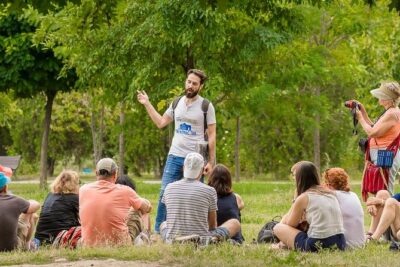
Bucharest Essential Tour: Old Town, Calea Victoriei & Communism
Read our review →Browse the lists this tour appears in