
Reviewed · BUCHAREST TOURS
Bucharest: 3-Hour Dark History Tour with a Local
Bucharest’s past is not tucked away in a museum on this tour. It appears in cemetery carvings, street corners marked by political upheaval and stories about people who lived on the city’s margins. Over three hours, you move from Bellu Cemetery to the sites of revolution and repression, with a local guide connecting the places to the people behind them.
I like two things in particular: Bellu Cemetery, where elaborate monuments turn a walk among graves into a look at Romanian art and memory, and the way the route connects dramatic stories to real city locations. Guides such as Alex, Elena, Andra and Vlad are praised for explaining history clearly, sharing personal perspectives and welcoming questions.
The main consideration is the pace on foot. This is a walking tour with several stops, and some parts involve standing outdoors while the guide talks, so wear comfortable shoes and dress for the weather. The subjects can also be grim, from political violence to murder, and the tour is not for children under 16.
What makes this tour different
- Six cemeteries on one street: The route introduces a cluster of burial grounds before taking you inside historic Bellu Cemetery.
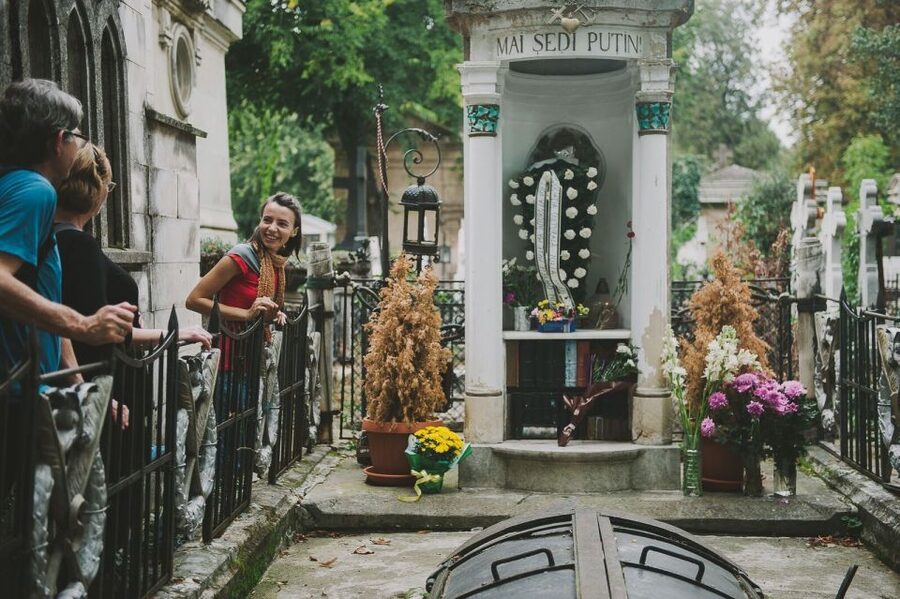
- Bellu’s funerary art and stories: Look for architectural details as your guide shares tales of love, death and local mysteries.
- Revolution-era city landmarks: University Square and Revolution Square bring the 1989 upheaval and later protests into focus.
- A less familiar Bucharest: Interwar sex work and a notorious 1970s serial killer add stories beyond the usual city highlights.
- Small group, local perspective: Groups are capped at 12, and guides often make room for questions and individual interests.
- Practical extras: Metro tickets and a traditional street snack are included in the $55 price.
From the National Theatre to a street of cemeteries
The meeting point is the main entrance of the Ion Luca Caragiale National Theatre, at Bulevardul Nicolae Bălcescu 2. It is a central location, and the tour begins in the city rather than with a long transfer out to the edge of town.
The opening subject is striking: a nearby street accommodates at least six cemeteries. They include the Cemetery of the Victims of the 1989 Revolution, the Jewish Cemetery, the Cemetery of the Russian Soldiers and historic Bellu Cemetery. Even before you enter Bellu, this concentration of burial grounds sets the mood and hints at how many layers of history share a small area of Bucharest.
The route does not treat death as a spooky prop. Instead, the guide uses burial customs, monuments and stories to explain how Romanians remember the dead. Folklore and personal tales sit beside the city’s political history, giving the opening section a human scale. You are not just hearing dates; you are looking at how loss has been marked in stone.
More history tours around Bucharest:
- Bucharest: Small Group History, Art & Secrets Tour
★ 4.7 · 152 reviews - Guided Walking Tour of Historical Bucharest
★ 5.0 · 84 reviews - Bucharest Jewish Heritage | Holocaust Memorial | Private Car Tour
★ 5.0 · 38 reviews
Bellu Cemetery: a museum without walls
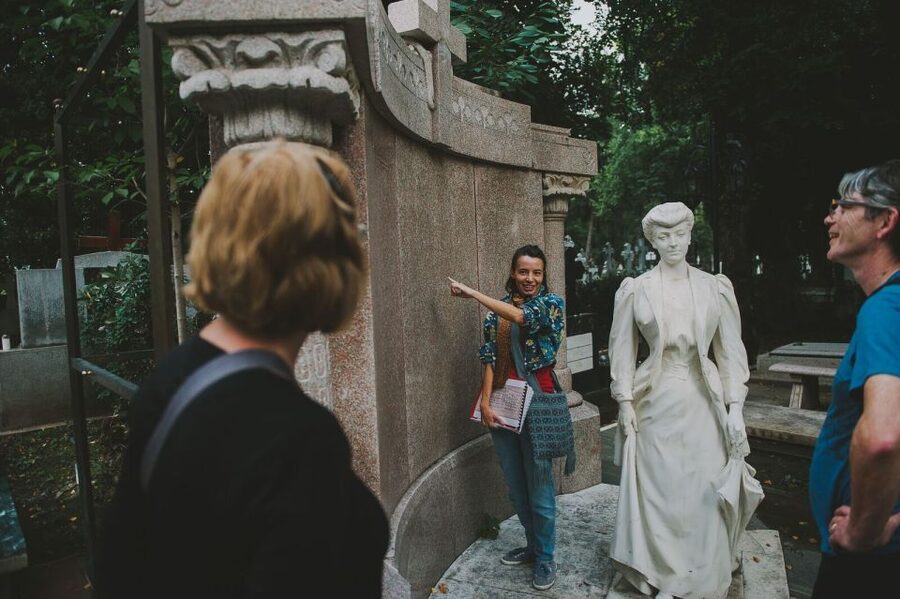
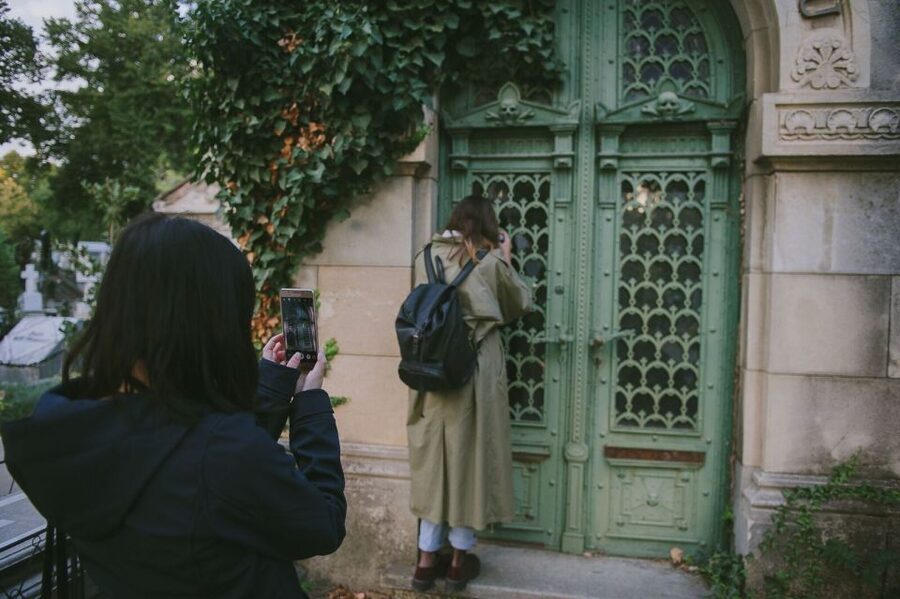
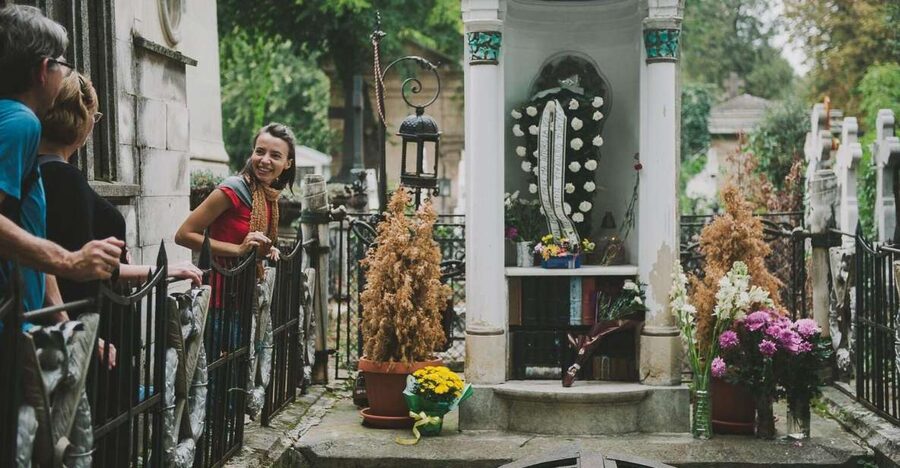
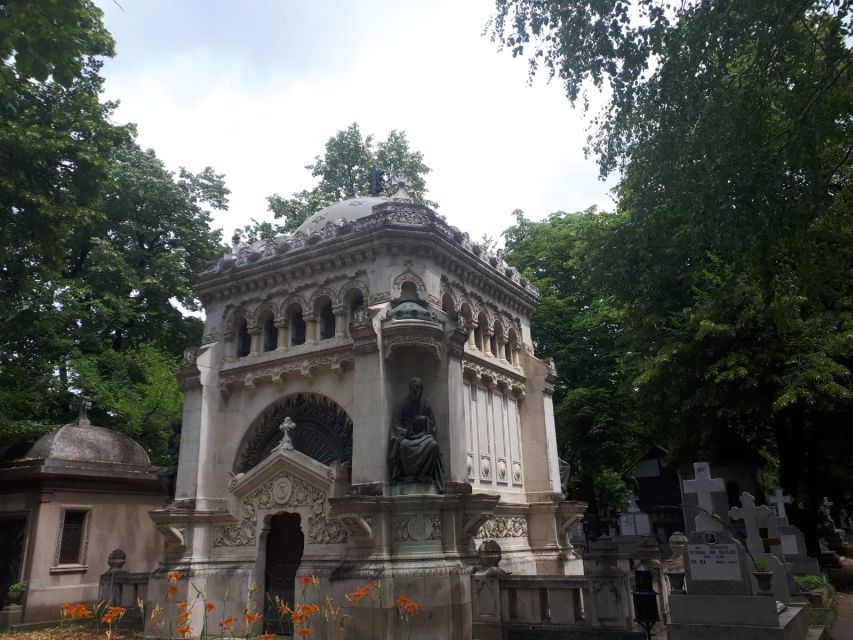
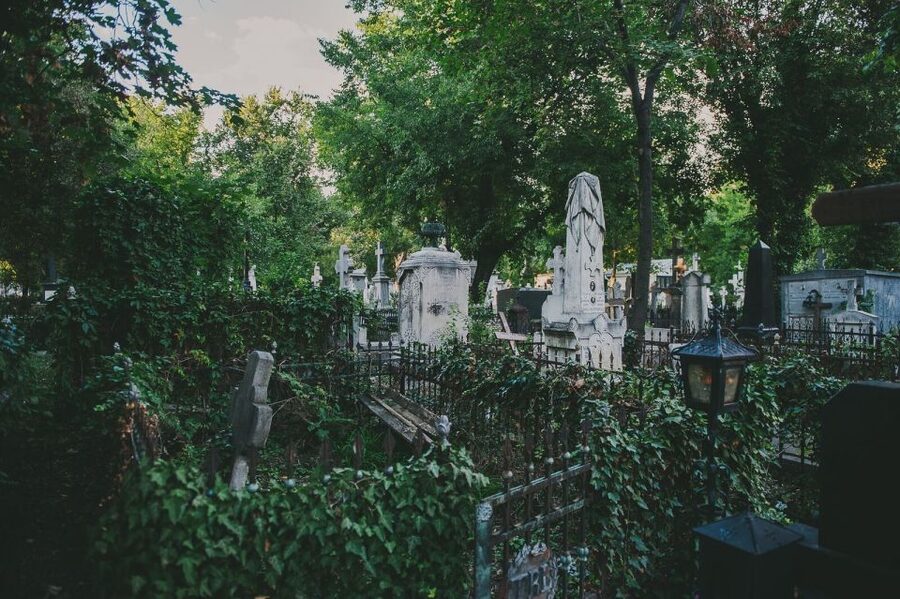
Bellu is the tour’s most distinctive stop, and for many people it will be the visual high point. A national historical monument, the cemetery is known for funerary architecture and elaborate memorials. Your guide points out details that are easy to miss if you wander alone, then uses individual graves and monuments to tell stories that range from sad love affairs to unsettling mysteries.
I especially like that this stop makes room for looking. A cemetery can be a quiet place to absorb a city’s past, but the carvings and structures here also reward close attention. Guides have drawn attention to famous monuments, small architectural touches and local folklore, helping you see Bellu as more than a collection of graves.
There is a gentler side to the visit, too. Cats and dogs live around the cemetery, and some guides bring food or treats for them. That is a small, informal detail rather than a formal attraction, but it helps the stop feel like part of living Bucharest, not a staged horror set.
Allow for the fact that a cemetery walk can be uneven underfoot and exposed to the weather. You will likely spend time standing while the guide tells a story, so sturdy shoes and warm layers matter more here than they might on a quick indoor visit. In colder months, wrap up well; when you are listening, it is easy to forget how long you have been outside.
University Square and the memory of protest
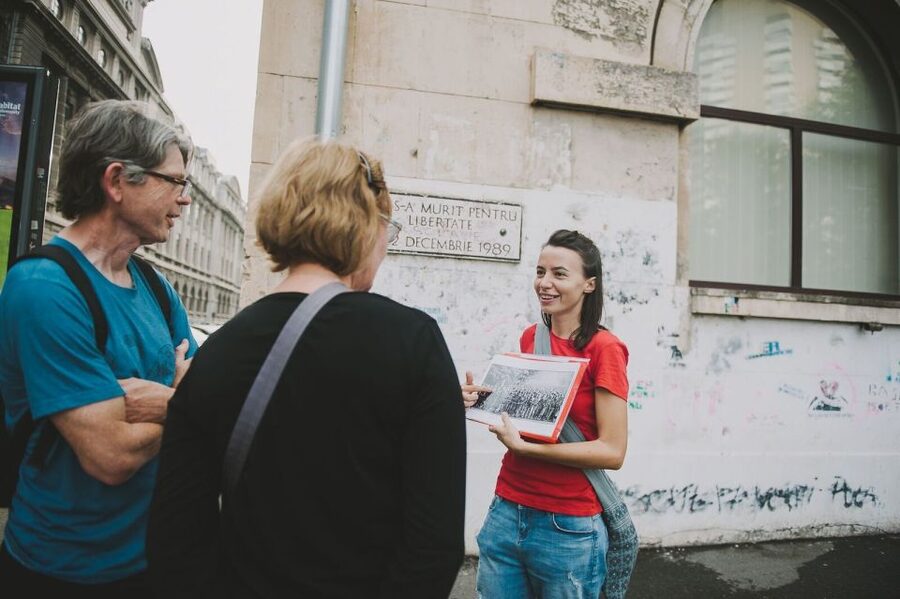
From Bellu, the tour shifts from private grief to public conflict. University Square is one of Bucharest’s key civic spaces, and the guide explains its role in the 1989 Revolution and the anti-communist student protests of the 1990s. Both periods involved bloodshed, so this is a sobering stop rather than a simple photo opportunity.
The value of standing here is context. A square can look ordinary until you understand what happened in it and why people gathered there. Your guide connects the location to the risks faced by protesters and to the larger struggle over Romania’s political future. If you have already taken a general city tour, this stop adds a different layer: not just what the buildings look like, but what the space has meant to people.
Expect the discussion to cover difficult events directly. The tone is often described as engaging and clear, with guides able to explain complex history in accessible terms. Bring questions if you have them. The group limit of 12 gives the walk a more conversational feel than a large coach tour, although the exact group size will vary.
Interwar Bucharest: sex work and the city’s old glamour
The tour then turns back to the interwar period, when Bucharest was known as Little Paris for its sophisticated urban atmosphere. That nickname supplies a contrast, not a full portrait: the city’s polished image coexisted with less respectable, less visible parts of urban life.
You hear about the sex trade in Bucharest and get a glimpse of what remains of a former interwar brothel. This is a useful detour from the standard parade of grand buildings and famous rulers. It brings the social history of the city into view and asks you to consider who benefited from its glamour, and who lived outside it.
The stop is best approached as history, not titillation. The tour links the setting to the people and practices of the time, then turns to another dark chapter: the serial killer nicknamed the Vampire of Bucharest, who terrorized the city in the early 1970s. The available details focus on the story and its place in the city’s memory, rather than promising a long crime-scene investigation.
If you are drawn to true crime, this part may be a particular draw. If not, it remains one part of a broader walk through Bucharest’s political and social past. The variety helps keep the tour from becoming a single-theme ghost walk.
More three-hour experiences around Bucharest:
- 3-Hour Guided Tour of Communist Bucharest
★ 4.9 · 303 reviews - Bucharest: Alternative Sightseeing 2.5-3h-Hour Guided Tour
★ 4.9 · 80 reviews - Bucharest: Relics of Communism 3-Hour Walking Tour
★ 4.9 · 77 reviews - Bucharest: 3-Hour Walking Tour
★ 4.9 · 77 reviews
Revolution Square and the machinery of dictatorship
The final major stop is Revolution Square, identified as the place where the 1989 Revolution began in Bucharest. Here the focus widens from protest to the system people were protesting against. Your guide discusses Ceaușescu’s dictatorship, the Securitate, Romania’s secret police, and the methods the regime used to silence critics.
The subjects include prisons, forced-labour camps and torture. The tour also addresses the ordinary hardship of daily life under dictatorship, when fear and shortages shaped decisions as much as dramatic political events did. That everyday perspective matters: it helps explain why repression reached far beyond the prison walls.
Some guides draw on personal experience of life under Romanian communism. That can make the history feel close and specific, rather than sealed off in a textbook. It also gives you a chance to ask how political change affected people’s lives. The tour does not need to turn every stop into a lecture; its best moments come when a place, a story and a personal perspective line up.
The route uses metro tickets, which are included in the price. The metro helps connect separate parts of the itinerary without turning the whole afternoon into a long march. The tour is still a substantial walk, though, and the precise balance of walking and transport may depend on how the outing unfolds.
The guide makes the difference
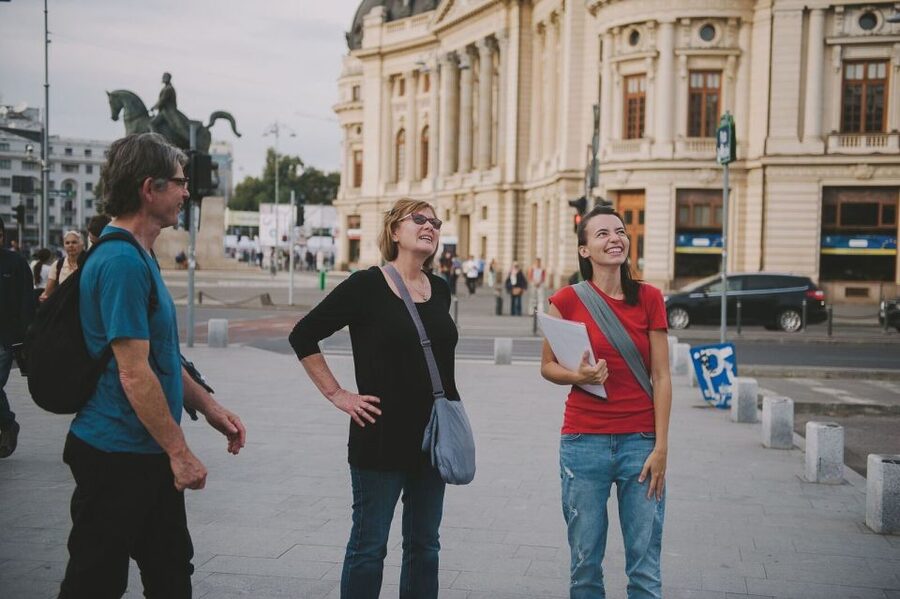
This tour’s subject matter is strong, but the guide is what ties it together. Alex, Elena, Andra, Vlad and other named guides have been praised for clear storytelling, humor and a willingness to answer questions. Some tailor the discussion to the group’s interests, while others add photos, personal anecdotes or observations about small details such as bullet holes, street art and local flora.
That flexibility is useful because the itinerary touches several big subjects in a short time. You might want to spend longer on the Revolution, folklore, architecture or the city’s social history. A guide who asks what interests you can shift the emphasis without losing the route’s basic shape.
The walk can feel more like a conversation than a formal lecture. That is a plus if you enjoy asking questions and hearing how a local sees the city. It also means the experience may vary somewhat by guide and group. You are booking a guided interpretation of Bucharest, not a scripted performance with every stop guaranteed the same amount of time.
Is $55 good value for three hours?
At $55 per person, this is not the cheapest way to spend an afternoon, but the price covers more than a stroll between landmarks. You get an English-speaking local guide, metro tickets and a traditional street snack, along with a small-group format capped at 12 people. The main value is the guide’s ability to connect cemetery art, political sites and personal stories into one account.
The route also visits places that are not always central to a standard first-time city tour. If you want to understand how the Revolution, communist rule and less familiar social histories shaped Bucharest, that focus can justify the price. You are paying for interpretation and local context, not entry to a string of paid attractions.
The snack is a modest extra, not a meal, and additional food, drinks and souvenirs are not included. Plan to eat before or after if you need something more substantial. One guide may also offer food or restaurant suggestions, but that should be treated as a helpful bonus rather than part of the package.
Three hours is a sensible amount of time for the subject matter, though it can pass quickly when discussion is lively. On a private or nearly private outing, the guide may be able to extend the walk, but do not count on extra time as a standard feature.
Who should book this walk?
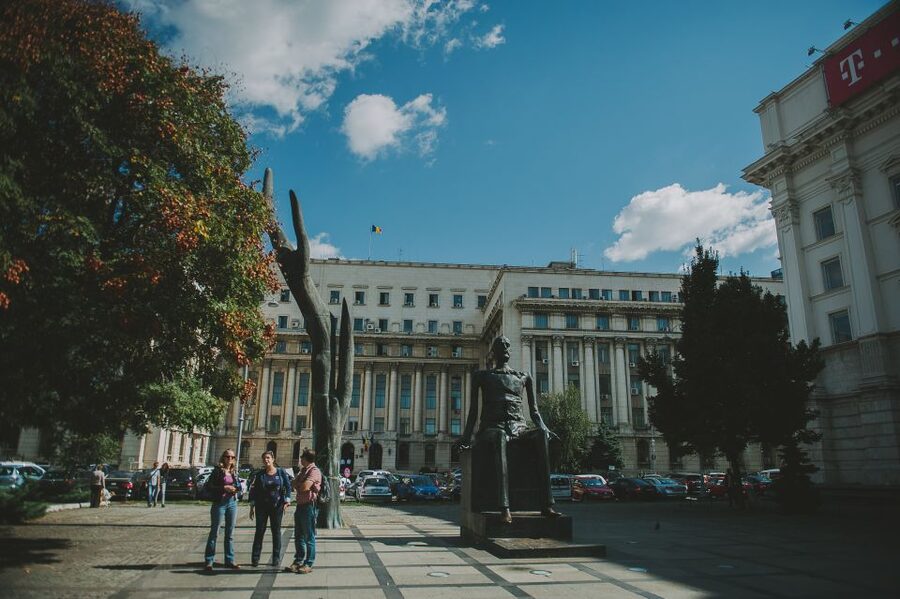
I would choose this tour if you want more than a tour of elegant façades and central squares. It suits history-minded visitors, people curious about the 1989 Revolution, and anyone interested in folklore, cemeteries or crime stories. It is also a good fit if you like hearing a local explain how national events affected ordinary life.
You do not need to be an expert in Romanian history. Guides are valued for making difficult subjects understandable, and the group format leaves room for questions. Still, the tour’s themes are serious. If you prefer a light introduction to the city, or do not want to hear about violence, torture and murder, choose a different route.
Practical preparation is simple: wear comfortable shoes, dress for the forecast and bring any questions you have. The meeting point is the National Theatre’s main entrance. The tour is in English, lasts three hours and does not accept children under 16. You can reserve now and pay later, and cancellation up to 24 hours in advance is eligible for a full refund.
Should you book it?
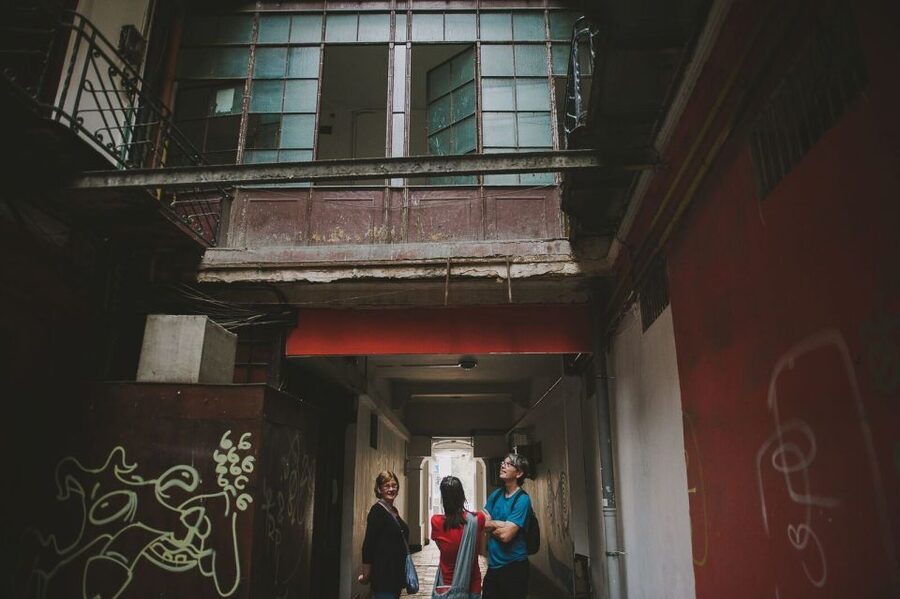
Book this walk if you want Bucharest’s difficult history explained at the places where it unfolded. Bellu Cemetery gives the tour its strongest sense of place, while University Square and Revolution Square add the political story that many visitors come to Romania hoping to understand. The interwar brothel and the Vampire of Bucharest add unusual, darker threads without making the whole outing a ghost tour.
I would skip it if you want an easy, mostly seated introduction or prefer to avoid grim subjects. For everyone else, the small group, included metro tickets and locally led storytelling make $55 a fair price for a focused three-hour look at a side of Bucharest that is easy to miss on your own.
FAQ
How long is the tour?
The tour lasts three hours. The route includes walking and metro travel.
Where is the meeting point?
Meet at the main entrance of the Ion Luca Caragiale National Theatre, Bulevardul Nicolae Bălcescu 2, București 010051, Romania.
What language is the tour in?
The live tour guide speaks English.
Are metro tickets included?
Yes. Metro tickets are included in the tour price.
Is the tour suitable for children?
No. Travelers under 16 are not permitted to join.
What should I bring?
Wear comfortable shoes. Warm clothing is a good idea in cold weather, since you will stop outdoors to hear the guide.
Recently added around Bucharest
- Snowmobiles, Sky Lift & Winter Sports – Private Tour★ 5.0 · 9 reviews
- Private Transfer and 3H Tickets to Therme Bucharest★ 4.5 · 10 reviews
- Day Trip from Bucharest to Dracula Castle, Brasov and Peles Castle Sinaia★ 5.0 · 10 reviews
- Day Trip Through Brasov in Transylvania and Bran, Peles, and Rasnov Castles★ 4.0 · 9 reviews
- 2-Day Small-Group Tour to Dracula’s Castle, Rasnov Fortress, Peles Castle, Sighisoara and Libearty Brown Bear Sanctuary with Overnight in Brasov★ 4.5 · 9 reviews
- Slavery in Romania Myths and Truths About Gypsies★ 5.0 · 8 reviews
- The Real Story of Gypsies – Slavery in Romania★ 5.0 · 7 reviews
- Premium 8-Day Private Culinary Vacation in Romania★ 5.0 · 11 reviews
Bucharest Tours, compared.
Dracula’s Castle, Peles Castle, & Brasov Old Town
Read our review →
Dracula’s Castle, Peleș Castle & Brașov Day Trip
Read our review →
Bucharest to Dracula Castle, Peles Castle and Brasov Guided Tour
Read our review →
Transylvania and Dracula Castle Full Day Tour from Bucharest
Read our review →
Browse the lists this tour appears in