
Reviewed · BUCHAREST COMMUNISM TOURS
Communist Era Bucharest Tour
Bucharest’s communist past is written across its streets: in the vast scale of Unirii Boulevard, the Palace of the Parliament, and the landmarks tied to the 1989 Revolution. This private walking tour links those places to the lives of ordinary Romanians, making the city’s imposing architecture easier to read.
I like two things in particular: you get a private guide, so the conversation can follow your interests, and the route pairs major sights with personal accounts of daily life under the regime. Guides Alina and Claire have led tours, sharing both historical context and their own perspectives.
One consideration: three hours is a brisk amount of time for a lot of history, and the tone of the interpretation can vary. One visitor found the guide hard to understand, while another felt the account was too sympathetic to Ceaușescu’s rule. Ask questions and listen for nuance, especially on a subject with sharply differing views.
- Unirii’s scale tells a story: See the fountains and boulevard built as part of the communist plan to remake central Bucharest.
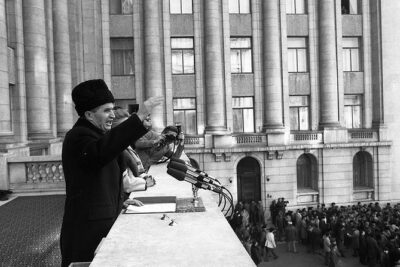
- Revolution Square brings 1989 into focus: The route includes the balcony associated with Ceaușescu’s final speech and memorials to the uprising’s victims.
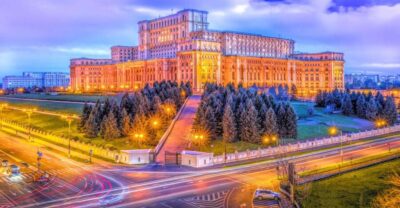
- The Parliament Palace dominates the route: Learn about the enormous building Ceaușescu ordered, known as Casa Poporului, or House of the People.
- Personal accounts add human context: Guides Alina and Claire have shared memories of growing up under communism, alongside national history.
- It is private and about three hours: Choose a morning or afternoon tour, with hotel pickup offered or a meeting at Manuc’s Inn.
- The price is $30.72 per person: For a private, guided introduction to central Bucharest, that is a strong price, though the value depends on how much you want to discuss the history.
Reading Bucharest through its communist-era streets
This tour is less a march through dates than a way to understand why central Bucharest looks the way it does. The communist government reshaped parts of the city on a grand scale, and the route takes you through areas where that ambition remains visible in broad avenues, monumental buildings, and public spaces.
You’ll also hear about the Romanian experience beyond the architecture. Alina and Claire have been praised for connecting the country’s changing political eras with family memories and everyday life. Accounts have included Romania’s earlier royal period, the communist takeover, and the years since the 1989 Revolution. That wider view matters: the city’s story did not begin with Ceaușescu, and it did not end when his rule did.
Expect a walking tour, not a tour inside every landmark. The listed stops are mostly brief, and there is no stated admission to the Palace of the Parliament. The value is in seeing how the sites relate to one another while your guide explains what the buildings and squares meant.
Unirii Square and the boulevard built for spectacle
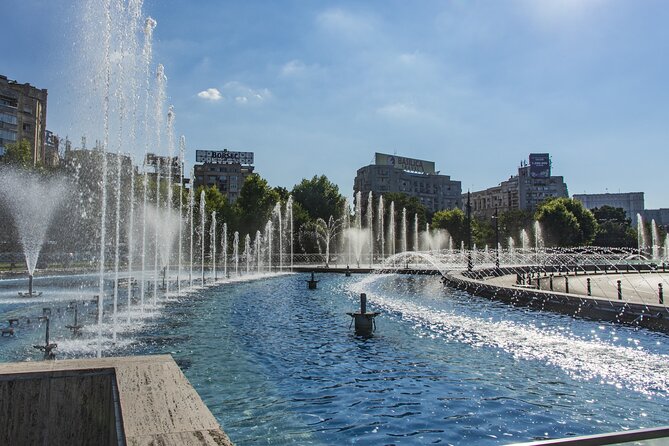
The walk begins at or near Manuc’s Inn in the Old Centre, unless you arrange the offered hotel pickup. From there, the first named stop is Unirii Square, a central space reshaped during communist modernization. Today it is a busy city hub, with restored fountains that make a striking contrast with the square’s political origins.
You have about ten minutes here. That is enough for an introduction and photos, but not a long pause to linger by the fountains. Listen for the link between the redesign and the regime’s desire to remake the capital. The square is not just a pleasant open space; its size and layout reflect the power behind the project.
Next comes Unirii Boulevard, once called the Boulevard of Socialist Victory. It was planned as Bucharest’s answer to Paris’s Champs-Élysées, with a broad, formal axis and 17 fountains decorated to represent the four seasons. The stop is brief, around five minutes, so look along the length of the boulevard and notice the deliberate sense of scale.
The comparison with Paris is useful, but the boulevard’s political purpose is the more revealing point. This was a street designed to impress. Your guide can help you see how the monumental approach ties into the Parliament Palace and the wider rebuilding of central Bucharest.
More communism tours around Bucharest:
- Bucharest: Palace of Parliament Tickets and Guide
★ 4.3 · 3,182 reviews - Bucharest: Palace of Parliament Tickets and Guided Tour
★ 4.4 · 1,877 reviews - Bucharest: Parliament Palace Skip-the-line Ticket
★ 4.2 · 1,518 reviews
The Parliament Palace and the cost of grand plans
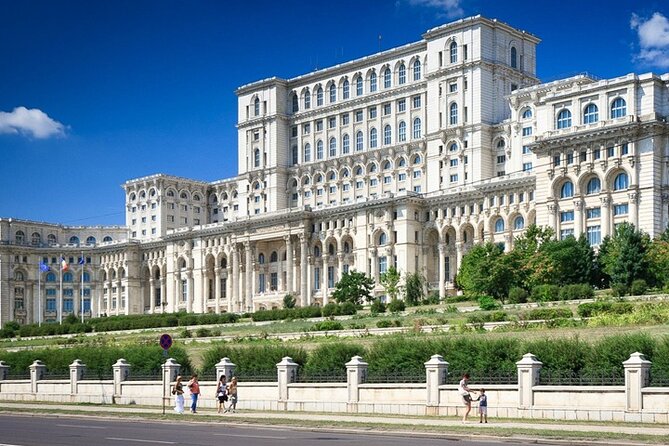
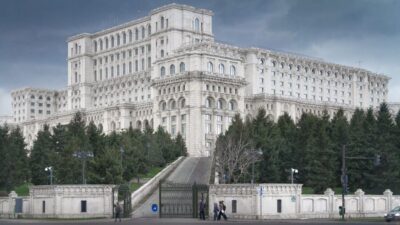
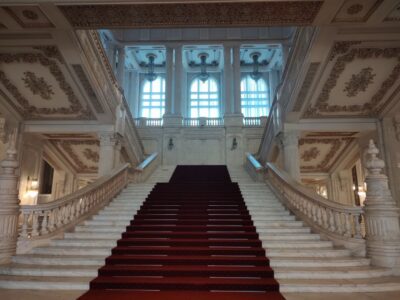
The Palace of the Parliament, also known as Casa Poporului or the House of the People, is one of the tour’s central subjects. Ceaușescu ordered this immense building as part of his vision for the capital. It is described as the heaviest building in the world, a claim that gives you a sense of its sheer scale, even before you consider its place in the city.
The Palace is a powerful example of how communist-era planning could transform Bucharest. It was meant to project authority and national importance, but its construction also sits within a wider story of upheaval and sacrifice. Ask your guide how the project affected the city and the people who lived there. The provided tour details promise its history, but do not specify an interior visit, so plan on learning about it from outside rather than expecting to go in.
From the palace and the grand boulevard, the route moves toward more familiar city streets. That shift helps keep the tour from being only about monumental architecture. You’ll hear how shops and central avenues worked during the communist years, and how the city’s public face changed after the regime.
Victoria Avenue, banks, and the city’s everyday history
A walk along part of Victoria Avenue brings a different scale of Bucharest into view. The avenue is lined with shops, and your guide explains what it was like during the communist era. This is a useful counterpoint to the massive boulevard: rather than looking only at state projects, you begin to consider how ordinary city life took place around them.
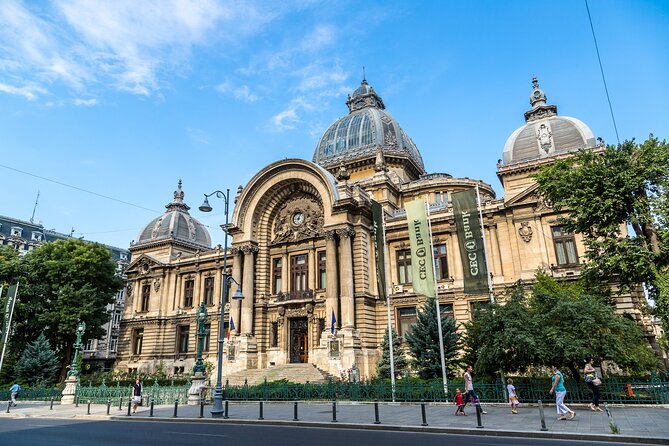
The route also passes the CEC Bank, described as the people’s bank during the communist years, and the National Bank of Romania, whose history adds another layer to the city’s financial and political story. These are short stops, not extended visits. Their value lies in hearing how familiar civic institutions fit into the different systems that governed the country.
At University Square, you’ll see Bucharest’s oldest and largest university, along with the Intercontinental Hotel, completed and opened in 1971. The National Theatre is also on the route. Its design changed several times during its relatively short history, a small but telling example of how the city’s public buildings could be reshaped to suit changing political and cultural aims.
Don’t expect to spend long inside any of these sites. The tour is about reading the streets, not touring bank halls or theatre interiors. If one building catches your interest, use the private format to ask a follow-up question or note it for a later visit.
Revolution Square and the events of 1989
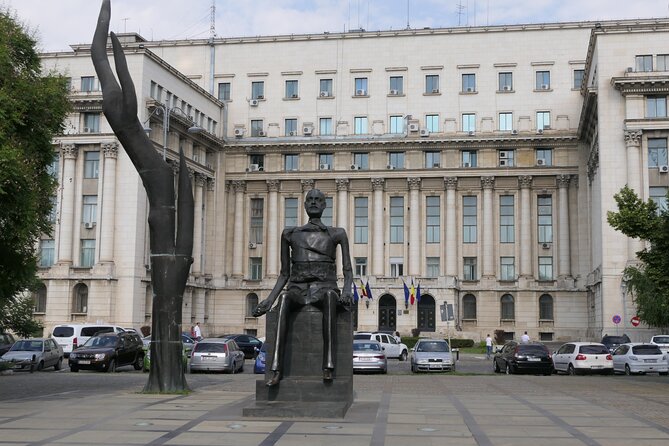
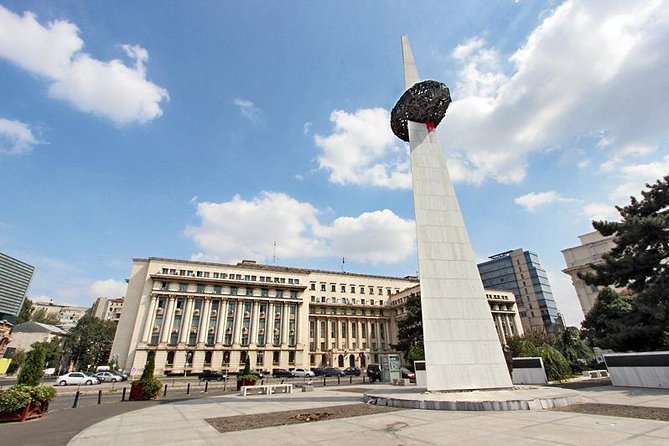
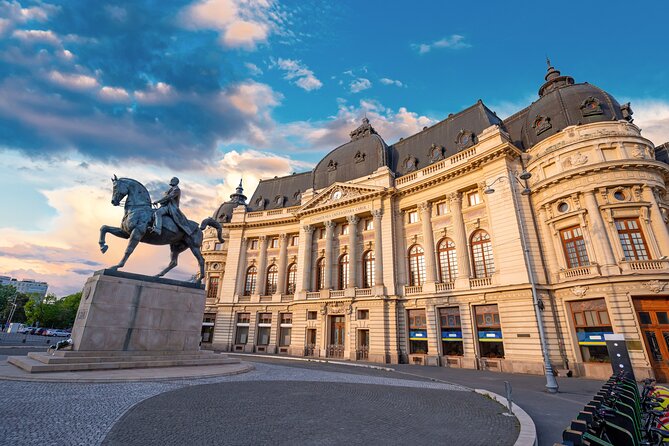
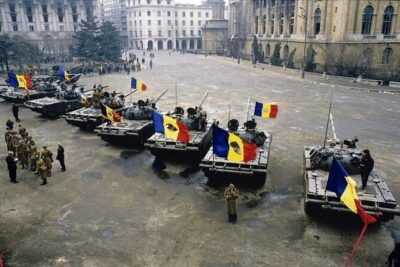
Revolution Square is the tour’s clearest link to the fall of the communist regime. Here you’ll see the area where the 1989 Revolution began, including the balcony associated with Ceaușescu’s final speech, the former Communist Party headquarters, the Monument of National Rebirth, the equestrian statue of King Carol I, and the University Library.
There is much to take in, and the scheduled stop is about ten minutes. That makes the guide’s explanation especially useful: the monuments and buildings are not all from the same period, and the square holds several layers of Romanian history. Give yourself a moment to look around as well as listen. The location offers strong photo opportunities, but its importance is more than scenic.
The Monument of National Rebirth, a 25-metre memorial to the struggles and victims of the December 1989 Revolution, gets its own short stop. Its stark design can prompt questions about how a country remembers a revolution and its dead. The route also includes a brief visit to the statue of Iuliu Maniu, a three-time prime minister whose later struggle against early communist rule adds context to the political changes that followed.
These stops can feel compressed if you want a long discussion of the Revolution. Still, they give you a useful framework for understanding the square, and a private guide can often spend more time on the subjects you care about. Some past tours have stretched beyond the expected three hours when conversations continued, but you should treat three hours as the planned duration, not a promise of extra time.
More Bucharest tours around Bucharest:
- Bucharest: Dracula’s Castle, Peles Castle, & Brasov Old Town
★ 4.5 · 17,858 reviews - Bucharest: Dracula Castle, Peles Castle & Brasov Old Town
★ 4.6 · 10,891 reviews - Bucharest: Dracula’s Castle, Peleș Castle & Brașov Day Trip
★ 4.5 · 5,919 reviews - Bucharest: Day Trip to Dracula Castle, Peles Castle & Brașov
★ 4.4 · 3,049 reviews
A personal account, with room for questions
The strongest reason to choose this tour is the chance to hear history alongside lived experience. Alina has been described as explaining the country’s past in context, including the contrasts between life under communism and life today. Claire has shared memories of growing up during the period, along with stories about her family. These accounts can make abstract ideas such as shortages, political control, or social change easier to grasp.
The guide’s perspective is not a substitute for a range of historical sources. One visitor felt that a guide presented communist Romania in a more positive light than other guides had, and another objected to what they saw as a misleading interpretation of Ceaușescu’s rule. Those are meaningful cautions, particularly because personal memory and national history can be contested.
Use the private setting to ask clear questions. You can ask what daily life was like, what changed after 1989, or how your guide weighs the period’s gains and harms. Several guides have been praised for being open to questions and adapting the discussion to a group’s interests. At the same time, one visitor reported difficulty understanding the guide, so clear communication is worth keeping in mind if that is a concern for you.
The final stop and the shape of the walk
The route includes a final site described as a historic building, more than a century old, with gardens and strong photo opportunities. Its name is not specified in the tour details, so it is best not to build plans around a particular landmark. Think of it as a quieter counterpoint to the central squares and monumental avenues.
The tour begins outside Manuc’s Inn, at 62 Strada Franceză, and ends back at the meeting point. Hotel pickup is offered, which can save you the trouble of finding the start in the Old Centre. Confirm the pickup arrangement when booking, since the tour also gives Manuc’s Inn as the standard meeting place.
Wear comfortable walking shoes. The route covers several central locations, and a moderate level of physical fitness is recommended. The activity is private, so only your group participates, and you can choose a morning or afternoon departure. The tour is offered in English and uses a mobile ticket.
Is $30.72 good value?
At $30.72 per person, the price is appealing for a private tour of about three hours. You are paying not only to be guided past the landmarks, but for the chance to ask questions and hear how large political changes affected ordinary people. The 4.8 rating from 24 reviews and 92 percent recommendation figure offer a positive signal, though the small review count and differing views on interpretation make it sensible to keep expectations balanced.
Value is strongest if you want context and conversation. If you mainly want to photograph the fountains, squares, and palace, you can see many of these places on your own. If you want to understand why they look as they do, and how Bucharest’s communist period shaped life beyond the facades, a guide adds much more.
This is also a good early-tour choice if you are still getting your bearings. The route touches central landmarks and gives you names and stories to carry into the rest of your stay. It suits visitors with a real interest in modern Romanian history, especially those willing to ask questions and consider more than one interpretation.
Should you book the Communist Era Bucharest Tour?
Book it if you want a focused introduction to Bucharest’s communist past, prefer a private guide, and value personal accounts as much as architecture. The route gives you a strong overview of Unirii, the Parliament Palace, and Revolution Square, while the guide can connect those sights to the lives of Romanians under the regime.
Skip it if you want a slow, in-depth visit inside major buildings, or if you would rather explore at your own pace without a guided historical discussion. The stops are short, and the guide’s interpretation may not match every visitor’s expectations. For a curious visitor who wants to ask questions and see the capital with more context, it is a worthwhile three hours.
FAQ
How long is the Communist Era Bucharest Tour?
The tour lasts about three hours. Some discussions may run longer, but three hours is the stated approximate duration.
What is the price?
The listed price is $30.72 per person.
Is this a private tour?
Yes. Only your group participates.
What language is the tour offered in?
The tour is offered in English.
Where does the tour start?
The meeting point is outside the main entrance of Manuc’s Inn, at 62 Strada Franceză in Bucharest’s Old Centre. Hotel pickup is also offered.
What should I bring, and how much walking should I expect?
Comfortable walking shoes are recommended, and participants should have a moderate level of physical fitness.
Recently added around Bucharest
- Snowmobiles, Sky Lift & Winter Sports – Private Tour★ 5.0 · 9 reviews
- Private Transfer and 3H Tickets to Therme Bucharest★ 4.5 · 10 reviews
- Day Trip from Bucharest to Dracula Castle, Brasov and Peles Castle Sinaia★ 5.0 · 10 reviews
- Day Trip Through Brasov in Transylvania and Bran, Peles, and Rasnov Castles★ 4.0 · 9 reviews
- 2-Day Small-Group Tour to Dracula’s Castle, Rasnov Fortress, Peles Castle, Sighisoara and Libearty Brown Bear Sanctuary with Overnight in Brasov★ 4.5 · 9 reviews
- Slavery in Romania Myths and Truths About Gypsies★ 5.0 · 8 reviews
- The Real Story of Gypsies – Slavery in Romania★ 5.0 · 7 reviews
- Premium 8-Day Private Culinary Vacation in Romania★ 5.0 · 11 reviews
Bucharest Communism Tours, compared.
Parliament Senate Entry Tickets and Guided Tour
Read our review →
Bucharest Essential Tour: Old Town, Calea Victoriei & Communism
Read our review →Browse the lists this tour appears in