
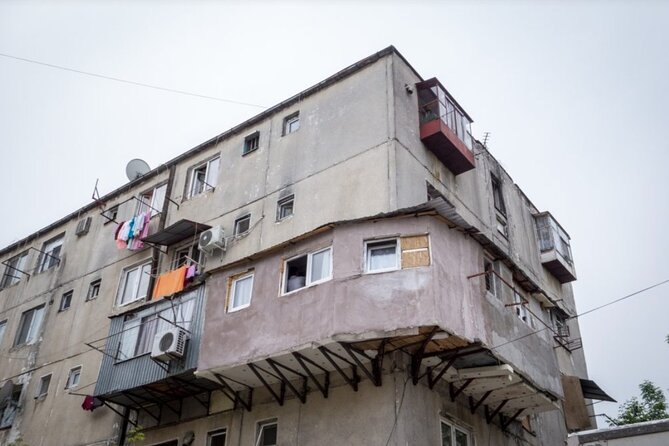
Reviewed · BUCHAREST
Troubled – Notorious Neighborhood – area known for social issues
Bucharest’s story changes quickly when you leave its central boulevards for Ferentari, Rahova and the village of Sintești. This private tour looks at poverty, local markets and Roma life, with a guide to explain what you are seeing and where visitors should take care.
I like two things in particular: the mix of neighborhoods and a village gives you more than one view of life outside the tourist center, and the guides’ local explanations help put difficult subjects in context. You may travel by vehicle for much of the tour, with walks through markets and residential areas.
The main consideration is that this is not a casual sightseeing loop. The subject matter can be sensitive, and you are visiting communities rather than a staged attraction. Dress simply, leave valuables at home, and follow your guide’s instructions about photos and respectful behavior.
Key points before you book
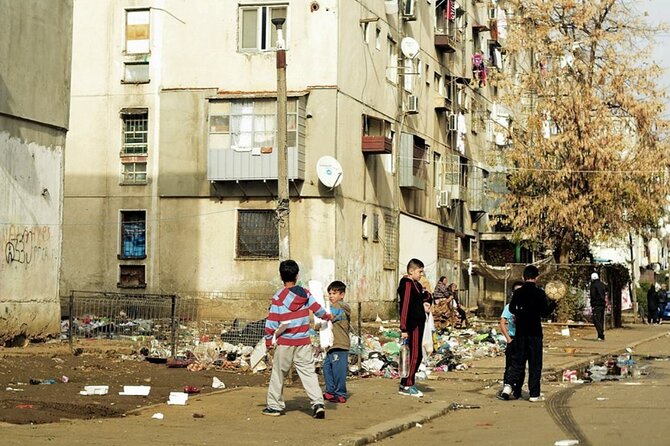
- Three places, about 70 minutes each: Ferentari, Rahova and Sintești make up the roughly 3.5-hour route.
- A private experience: Only your group takes part, so the guide can tailor explanations and set a pace that suits your party.
- Markets and street-level observation: Expect some walking, including market visits, alongside vehicle travel between areas.
- Local guides have included Sebastian, Bogdan, Catalin and Valerica: The specific guide is not guaranteed, but the tour depends heavily on their ability to explain the places with care.
- Go modestly dressed: The operator advises leaving jewelry and expensive items behind.
- A serious subject, not poverty tourism: Go ready to listen, be discreet with your camera and treat residents as people going about their lives.
A different side of Bucharest
This tour is designed for people who want to see more than Bucharest’s central sights. It takes you into Ferentari and Rahova, then out to Sintești, where the focus shifts to Roma homes and community life. The route is unusual, and its value lies less in ticking off landmarks than in having a local guide explain the places and their social context.
That approach matters here. A visitor on their own may see a market, a street or a large house without knowing what they are looking at, or how to behave respectfully. A guide can provide background, answer questions and make clear when it is or is not appropriate to take pictures. The tour’s subject is sensitive, so that guidance is part of the experience, not an extra.
The tour description uses the word Gypsy, a label that many Roma people consider offensive. Roma communities are not one uniform group, and the tour’s broad descriptions should not be mistaken for a full account of Roma life. Go with an open mind, but also with care about how you frame what you see.
Other trips people book from Bucharest:
- Bucharest: Dracula’s Castle, Peles Castle, & Brasov Old Town
★ 4.5 · 17,858 reviews - Bucharest: Dracula Castle, Peles Castle & Brasov Old Town
★ 4.6 · 10,891 reviews - Bucharest: Dracula’s Castle, Peleș Castle & Brașov Day Trip
★ 4.5 · 5,919 reviews
Ferentari: a closer look at hardship
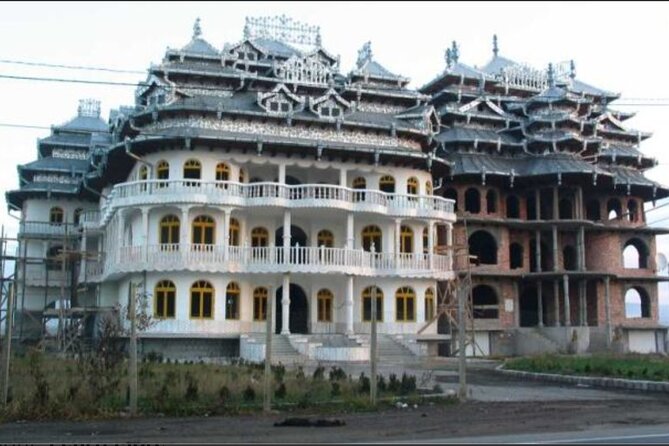
The first stop is Ferentari, with about 1 hour and 10 minutes allocated. The area is described as having some of the lowest living standards in Bucharest. That is a stark starting point, and it makes the guide’s role especially important: you are not simply looking at buildings, but seeing a neighborhood where social hardship is part of the story.
The tour also includes stops at addresses on Strada Zăbrăuţului, Aleea Iacob Andrei, Aleea Livezilor and Strada Pucheni. The supplied information does not spell out what happens at each address, so think of these as locations along a guided neighborhood visit rather than separate attractions with set exhibits.
A market visit is one of the more grounded ways to encounter daily local life. You may see people shopping and working, rather than a neighborhood presented only through its problems. That distinction is worth keeping in mind: poverty is not a show, and the people you see are not there for visitors. Take cues from your guide, and ask before photographing anyone.
Rahova: markets, history and boundaries
The second stop is Rahova, also allotted about 1 hour and 10 minutes. The tour’s route includes local residential areas and the former Rahova Penitentiary, at Strada Adrian 4. The prison is described as once feared, but the information provided does not promise an interior visit or give details about its history. Treat it as a landmark the guide may explain from the route, not a prison tour.
Rahova is also where the tour description places much of the city’s Roma population. That wording is broad and should not be taken as a precise demographic fact. Roma people live in many different circumstances, and no single neighborhood or visit can represent an entire community.
The walking portions are a useful counterweight to the vehicle travel. At a local market, you can observe ordinary commerce and the pace of the neighborhood. One visitor bought groceries there, but that should be seen as a possibility, not a guaranteed activity. If you do shop, follow the guide’s lead and be considerate of people who are there to do their errands.
Guides named in connection with this tour include Sebastian, Bogdan, Catalin and Valerica. Their approach, as described by people who took the tour, is to explain local history and social codes, keep the mood conversational, and set clear limits on what is appropriate. The exact guide you meet can vary, so do not book on the assumption that one named person will lead your departure.
Sintești: a village of large Roma homes
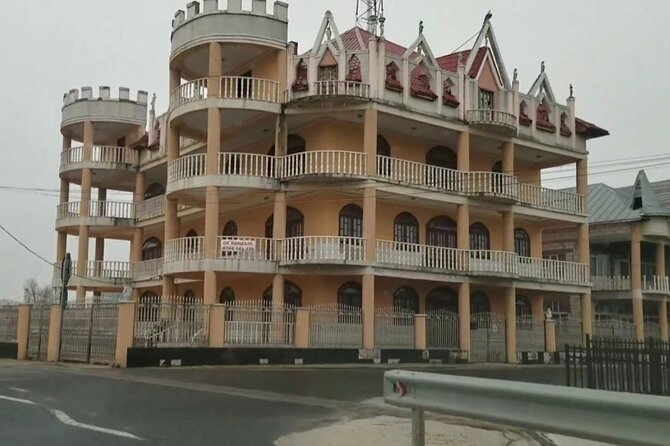
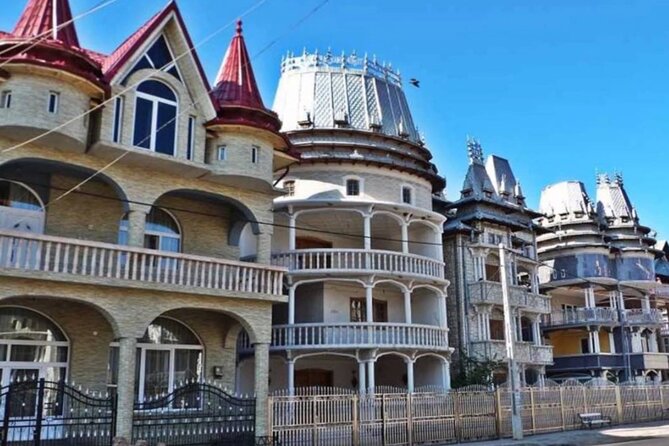
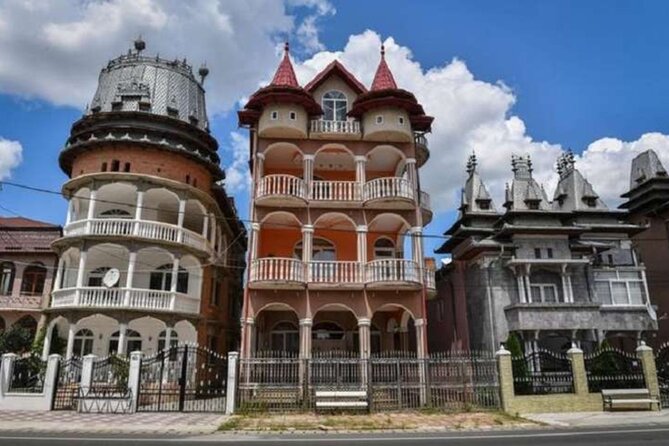
The final stop is Sintești, a village outside central Bucharest, with about 1 hour and 10 minutes set aside. The tour describes it as a village with Roma palaces, referring to large, often elaborate homes. The contrast with the earlier neighborhoods is one of the route’s more striking ideas: the tour aims to show different levels of life, rather than treating poverty as the only story.
The homes are not a museum display. You are visiting a lived-in place, so keep your distance and avoid turning residents’ property into a photo backdrop. The tour does not specify whether you enter any homes, and you should not expect access unless your guide explicitly arranges it.
This stop can prompt questions about wealth, status and the range of economic circumstances within Roma communities. Ask your guide for context, but be wary of sweeping explanations about how any group lives or earns money. A useful visit leaves room for nuance rather than reducing people to a single narrative.
Same starting point, a different day out:
- Bucharest: Palace of Parliament Tickets and Guide
★ 4.3 · 3,182 reviews - Bucharest: Day Trip to Dracula Castle, Peles Castle & Brașov
★ 4.4 · 3,049 reviews - Bucharest to Dracula Castle, Peles Castle and Brasov Guided Tour
★ 4.5 · 2,933 reviews - Bucharest: Palace of Parliament Tickets and Guided Tour
★ 4.4 · 1,877 reviews
How the transport and timing shape the visit
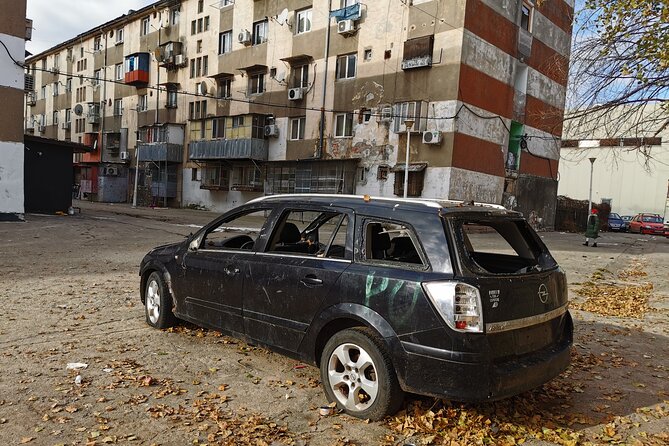
The tour lasts about 3 hours and 30 minutes, with roughly 70 minutes assigned to each of the three stops. Some of that time is spent moving between places. A person who took the tour described much of it as vehicle-based, with walking at markets and in parts of Rahova. That makes the route practical, since the stops are spread across different parts of Bucharest and beyond its central area.
Pickup is offered, but the supplied details do not state the pickup point or whether it is included in the price. Confirm the arrangements before booking. The tour is offered in English, uses a mobile ticket and is described as suitable for most participants. No further accessibility details are provided, so ask the operator if you need specific mobility accommodations.
This is a private activity, meaning only your group takes part. That can be a real advantage on a tour that raises personal and sometimes difficult questions. You can speak with your guide without competing with a larger group, and the guide can help your party understand when to pause, move on or avoid taking photographs.
What to wear, bring and keep in mind
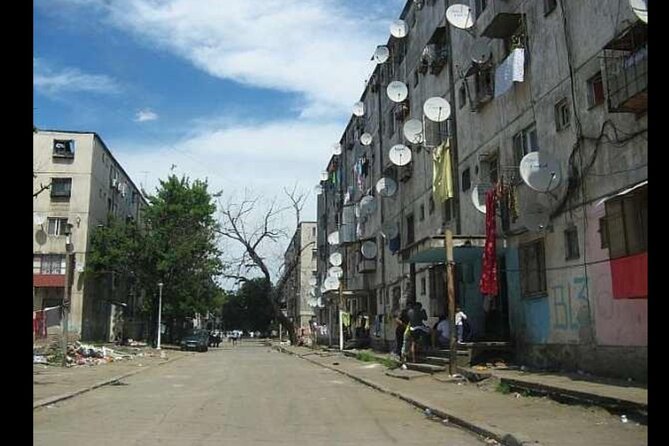
The advice is plain: dress simply, and leave jewelry and expensive items at home. That is sensible for a tour through areas the operator itself describes as troubled. You do not need to dress in a way that draws attention, and there is no reason to bring valuables you will not use.
The more important preparation is your attitude. You are entering neighborhoods where people live and work, not visiting a set built for tourists. Ask before taking pictures, especially of people, homes or private activity. One guide was described as explicitly explaining what was and was not acceptable; listen closely to those instructions.
Keep your questions curious rather than accusatory. If the conversation turns to poverty, Roma identity or local hardship, let the guide add context rather than assuming one explanation fits everyone. The most rewarding version of this tour is a conversation, not a checklist of dramatic sights.
Is $130.83 a fair price?
At $130.83 per person, this is a costly half-day activity, especially if you are traveling alone. Its value depends on the private format, the guide’s ability to provide context, and the difficulty of visiting these areas thoughtfully without local guidance. It is not priced like a standard walking tour through central Bucharest, and it does not offer a museum, monument or other conventional ticketed attraction.
For a pair or small group, privacy and a guide’s attention may justify more of the cost. Group discounts are offered, though the details are not given. Since the activity is private, the price may make more sense when shared by several people than when paid by one person.
The tour is booked, on average, 48 days ahead. That figure suggests it is worth planning early if you have a fixed travel date, but it is not a promise that every departure sells out. Free cancellation is available up to 24 hours before the start time; changes made inside that 24-hour window are not accepted, and late cancellations are not refunded.
Who will get the most from this tour?
Book it if you want to understand Bucharest beyond its central sights, are comfortable with sensitive subject matter and value a guide who can explain local context. It suits curious, respectful visitors who are willing to listen more than they photograph. The private format is especially useful if your group has specific questions or wants a quieter setting for discussion.
Think twice if you mainly want attractive architecture, easy sightseeing or a light afternoon. The neighborhoods are being presented through real social challenges, and the tour’s appeal depends on engaging with that honestly. It is not a substitute for a full account of Roma life, either. Treat it as one guided encounter, not as a complete portrait of a community.
I would book if the subject genuinely interests you and you are prepared to follow the guide’s rules. I would skip it if you are looking for a dramatic poverty spectacle or expect access to private homes. Go with humility, keep your camera down unless invited, and the tour can offer a thoughtful perspective on parts of Bucharest that most short visits leave out.
FAQ
How long is the tour?
It lasts about 3 hours and 30 minutes. The three stops are each allotted about 1 hour and 10 minutes.
Which places does the tour visit?
The route includes Ferentari, Rahova and Sintești, a village described for its large Roma homes.
Is the tour private?
Yes. Only your group takes part.
Is the tour offered in English?
Yes, English is listed as an available language.
Is pickup offered?
Yes, pickup is offered. The supplied details do not specify the pickup point.
Will I walk during the tour?
Yes. The tour includes walking at places such as markets and residential areas, alongside vehicle travel.
What should I wear or bring?
The operator advises dressing simply and avoiding jewelry and expensive items.
How much does the tour cost?
The listed price is $130.83 per person. Group discounts are also offered, but their terms are not specified.
Can I cancel for a refund?
You can cancel at least 24 hours before the start time for a full refund. Cancellations made less than 24 hours beforehand are not refunded.
Recently added around Bucharest
- Snowmobiles, Sky Lift & Winter Sports – Private Tour★ 5.0 · 9 reviews
- Private Transfer and 3H Tickets to Therme Bucharest★ 4.5 · 10 reviews
- Day Trip from Bucharest to Dracula Castle, Brasov and Peles Castle Sinaia★ 5.0 · 10 reviews
- Day Trip Through Brasov in Transylvania and Bran, Peles, and Rasnov Castles★ 4.0 · 9 reviews
- 2-Day Small-Group Tour to Dracula’s Castle, Rasnov Fortress, Peles Castle, Sighisoara and Libearty Brown Bear Sanctuary with Overnight in Brasov★ 4.5 · 9 reviews
- Slavery in Romania Myths and Truths About Gypsies★ 5.0 · 8 reviews
- The Real Story of Gypsies – Slavery in Romania★ 5.0 · 7 reviews
- Premium 8-Day Private Culinary Vacation in Romania★ 5.0 · 11 reviews