
Reviewed · BUCHAREST WALKING TOURS
The Jewish heritage of Bucharest – half day walking tour
Bucharest’s Jewish story is written into streets where old community buildings now sit beside Communist-era apartment blocks. This three-hour walk links the surviving landmarks to the Holocaust and to Jewish life under Communist rule, ending at the city’s Holocaust Memorial.
I like two things about this route: it brings together places that are easy to miss on your own, and it treats the community’s history as part of Bucharest’s story, not a side note. I also like that the guide can make room for questions, with Razvan Trancu’s conversational style and use of archival photos noted as particular strengths.
The main catch is access. The Great Synagogue and Coral Temple have limited weekday visiting hours and close for major Jewish holidays; the museum is closed Fridays. If these interiors matter to you, check conditions before booking, especially since schedules can change.
- The route connects the former Jewish quarter with its surviving religious and cultural landmarks.
- The Jewish Museum is housed in an ex-temple, adding a layer of meaning to the collection.
- The Great Synagogue and Coral Temple have separate entrance fees of 30 lei each when open.
- The walk ends at the Holocaust Memorial, after covering the history of Romanian Jewish life and the Holocaust.
- The named guide is Razvan Trancu, whose approach is described as conversational, visually supported and open to questions.
Reading the old quarter between its surviving buildings
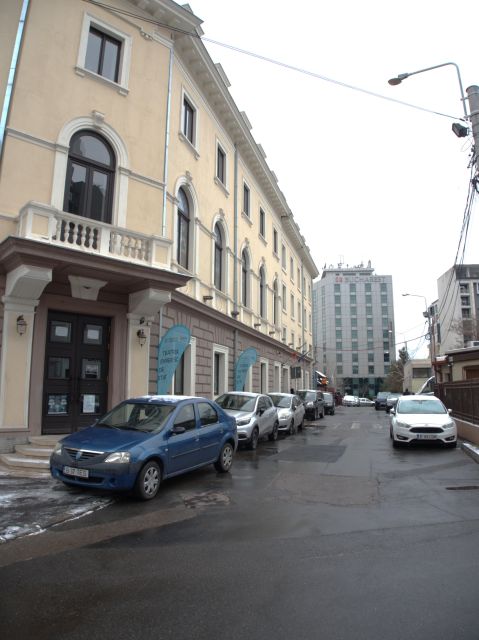
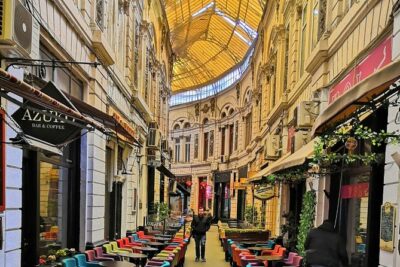
The tour starts at the entrance to Starbucks, then heads through the Old Town toward streets once associated with Bucharest’s Jewish community. The urban setting is part of the story: you’ll see a few remaining architectural traces alongside Communist apartment blocks, rather than a preserved historic district that looks much as it once did.
That contrast helps you picture how much the city has changed. A guide can explain what the surviving buildings meant within the former quarter and how Jewish culture influenced local urban and popular life. This context matters because the architecture alone cannot tell the whole story.
The Old Town introduction is scheduled for about 20 minutes. It is a short start, so expect an overview rather than a detailed survey of every street. If you have a particular interest in a site or period, ask about it while the route is still unfolding.
The Jewish Museum in a former temple
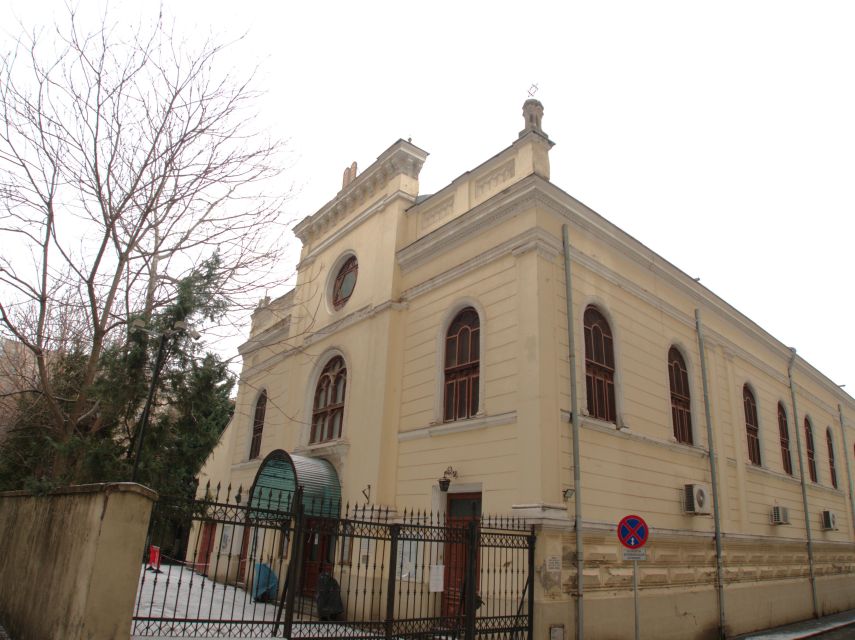
The Jewish Museum, also called the Jewish Community Museum, is a key stop, with about 30 minutes set aside for a visit and guided explanation. It is housed in an ex-temple, so the building itself helps link the community’s religious life with the objects and history presented inside.
I value this stop as a bridge between street-level landmarks and the people who shaped them. The tour’s stated scope includes the community’s long presence in Bucharest, its flourishing before the war, the Holocaust and the difficult history of Jewish life during the Communist regime. The museum provides a place to pause and take in that story beyond the facades.
The museum is closed on Fridays, so do not assume it will be part of a Friday tour. The listed information does not give a separate museum admission price, so ask the provider if you want to know whether any fee applies.
More walking tours around Bucharest:
- Bucharest: City Highlights Guided Walking Tour
★ 4.9 · 1,482 reviews - Bucharest Highlights Walking Tour
★ 5.0 · 469 reviews - Free walking tour of Brasov in English
★ 4.9 · 302 reviews
The Great Synagogue and the Holocaust’s Romanian history
The Great Synagogue is one of the tour’s most important religious stops. You’ll have roughly 30 minutes there, with the visit tied to the history of the Romanian Holocaust. The guide’s explanation is essential: it places the building within the community’s wider experience rather than treating it as an isolated architectural sight.
This is a serious part of the walk, and the subject deserves time and attention. The tour also considers the community’s history under Communist rule, offering a broader arc than a visit focused only on prewar life and wartime tragedy. If you want to understand how Jewish life in Bucharest changed across different political periods, this is one of the stops that gives the walk its purpose.
The Great Synagogue is not always open to visitors. Visiting hours are listed as Monday through Thursday from 9 a.m. to 2 p.m. and Friday from 9 a.m. to noon, but major religious holidays and safety-related decisions can affect access. When open, the entrance fee is 30 lei per person, about $6.
The Jewish State Theater and a living cultural presence
The route continues to the Jewish State Theater, with about 30 minutes assigned to the visit. Its place on the itinerary points to the cultural life of Bucharest’s Jewish community, not only its religious institutions and memorials.
Theater can show how a culture remains present in a city through language, performance and public life. Here, the stop gives the guide a chance to explain the Jewish imprint on local culture in a different setting from a synagogue or museum. The information provided does not specify whether the visit includes a performance or interior access, so think of it as a guided stop rather than a ticket to a show.
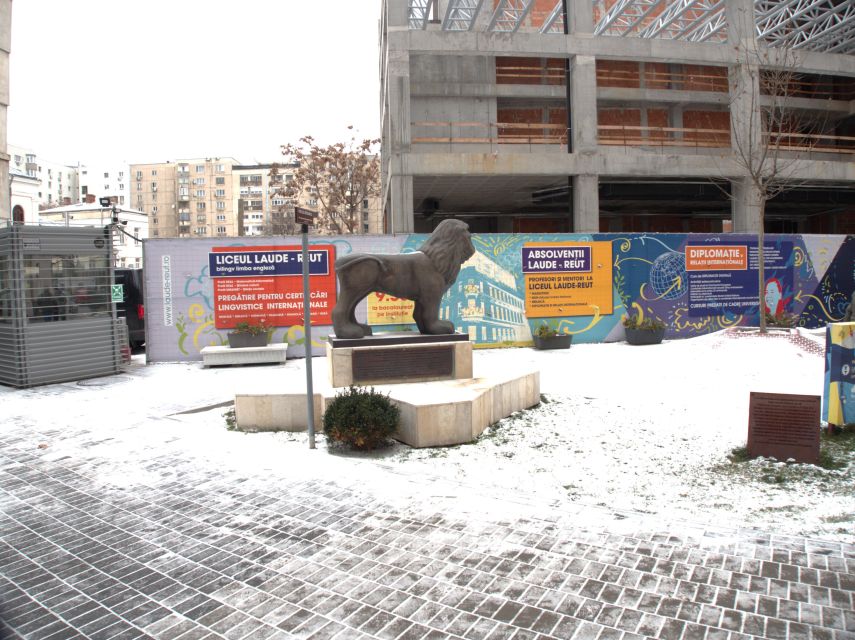
You’ll also pass the Laude-Reut Educational Complex, with around 10 minutes allocated, and Jerusalem Lion Square, a brief five-minute pass-by. These stops add texture to the route: Jewish life is not presented only as something belonging to the past, but through institutions and places associated with community identity today.
A pause at Avraham Kosher
A 30-minute break at Avraham Kosher gives the walk a practical pause and a chance to try local snacks. Food is not included in the tour price, so bring cash if you want to buy something. Personal expenses are also yours to cover.
This break may be welcome after several history-focused stops, especially in warm weather. It also offers a less formal moment to ask the guide questions or revisit a detail that stayed with you. Treat the snack stop as an optional purchase, not a meal included in the price.
The tour is three hours in total, and the listed stop times add up to slightly more than that. Some stops are short pass-bys, and timings can vary, so it is sensible to treat the schedule as a guide rather than a promise of equal time at every location.
More history tours around Bucharest:
- Bucharest: 3-Hour Dark History Tour with a Local
★ 4.9 · 301 reviews - Bucharest: Small Group History, Art & Secrets Tour
★ 4.7 · 152 reviews - Guided Walking Tour of Historical Bucharest
★ 5.0 · 84 reviews - Bucharest Jewish Heritage | Holocaust Memorial | Private Car Tour
★ 5.0 · 38 reviews
The Coral Temple’s Neo-Mudejar detail
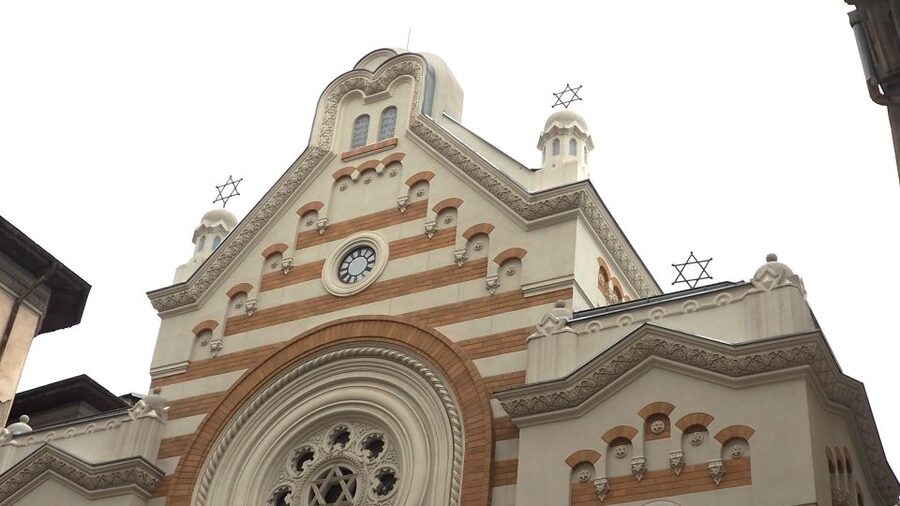
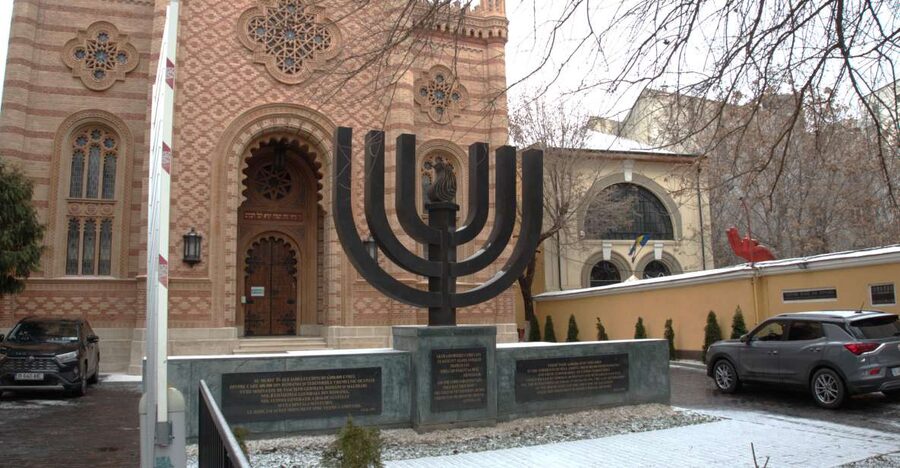
The Coral Temple is a highlight for its Neo-Mudejar style and more than 150 years of history. It has recently been restored, and the tour sets aside about 20 minutes for a visit. After the Great Synagogue and the museum, its architecture gives you another way to understand the community’s place in the city.
The visual character of the temple is a useful counterpoint to the surrounding streets and apartment blocks. It is also a reminder that the Jewish quarter’s surviving buildings are not interchangeable: each site has its own role and appearance. The guide can connect those details to the broader history already introduced along the route.
Like the Great Synagogue, the Coral Temple is closed on Rosh Hashana, Pesach, Shavuot, Yom Kippur and Sukkot. Its visiting hours are listed as Monday through Thursday from 9 a.m. to 2 p.m. and Friday from 9 a.m. to noon. Admission is 30 lei per person when it is open.
Ending at Bucharest’s Holocaust Memorial
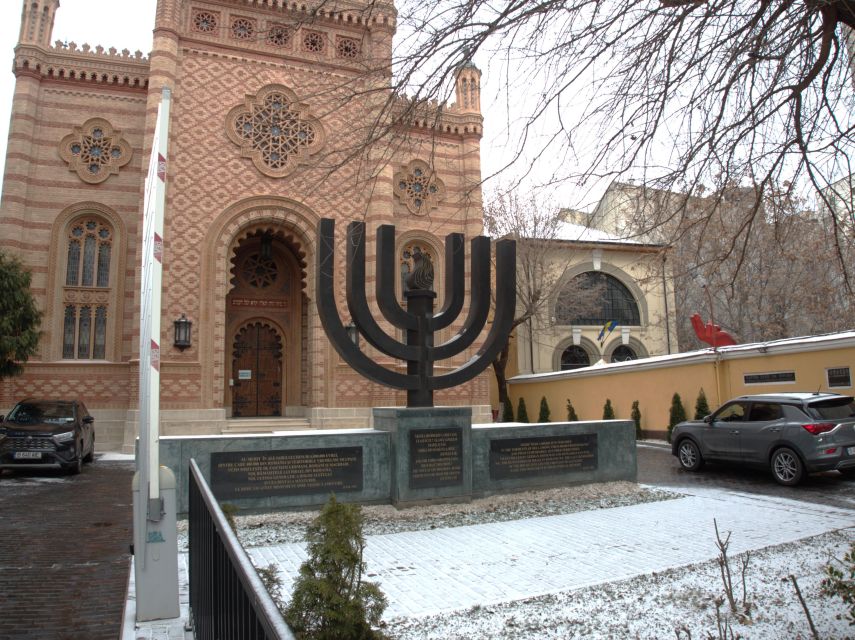
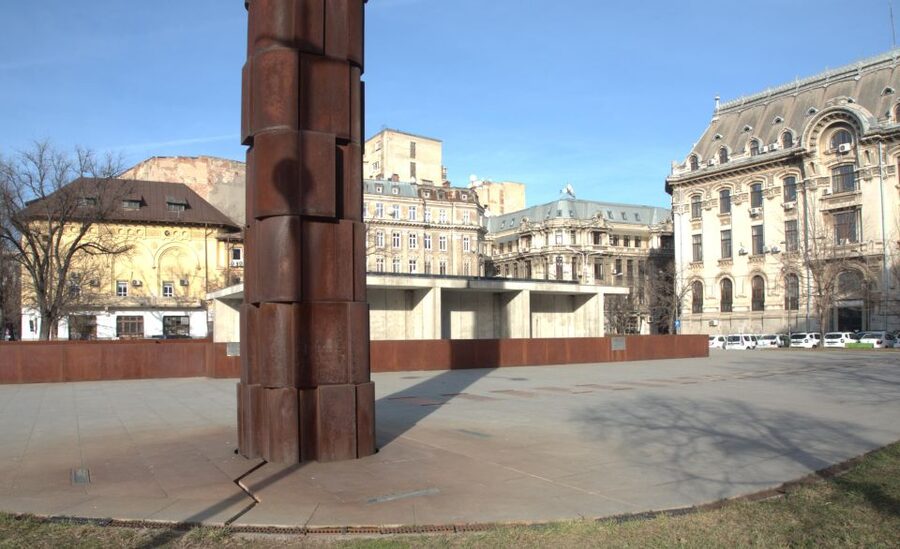
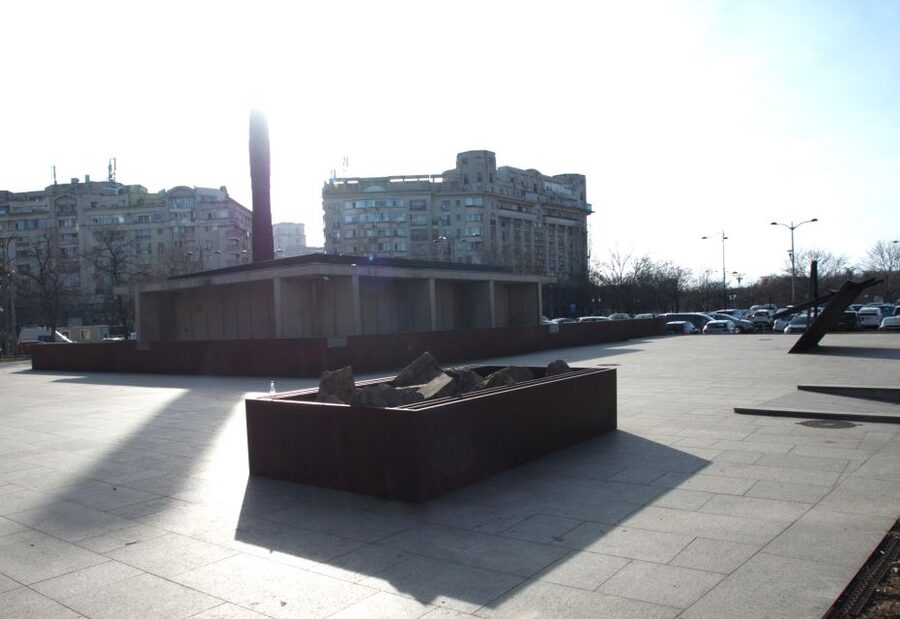
The final stop is the Holocaust Memorial, where the tour ends after about 20 minutes. It is a fitting close to a route that has followed Jewish life from community landmarks to the history of persecution and loss. The memorial gives the guide a place to bring those subjects together before you leave.
This ending is more than a last photo stop. It helps frame what you have seen in the synagogues, museum and cultural sites, and brings the Holocaust history into the present-day city. If you prefer to take time in quiet after a memorial visit, remember that the tour finishes here rather than returning to the starting point.
What the guide adds to the walk
The named provider is Razvan Trancu. If he leads your tour, the useful distinction is his conversational approach: he is described as connecting Jewish and Romanian history with geography, politics and current events, while adapting to the group’s pace and interests. That is a good fit for a subject where context matters as much as dates and buildings.
He is also described as using photos on an iPad to help illustrate his explanations, and as bringing humor and enthusiasm without reducing the weight of the subject. His English is described as fluent, and the tour is offered in English or Italian. Guide assignment can matter, so confirm who will lead if having Razvan specifically is important to you.
The walk is listed as a small-group activity, limited to seven participants. However, the price information says $318 per group for up to 12 people. Those two details do not match, so confirm the actual group limit and total price for your party before booking. At $318, the value depends on how many people share the cost: it can make sense for a group, but may feel steep for a smaller party once synagogue admission and snacks are added.
Timing, access and practical planning
This is a walking tour lasting about three hours, starting at the Starbucks entrance door and finishing at the Holocaust Memorial. It is listed as wheelchair accessible, but the information does not describe the surfaces or access conditions inside each building. If you have specific mobility needs, ask the provider about the route and interiors before booking.
The religious sites have tight visiting windows. Synagogues and temples are listed as open to visitors Monday through Thursday from 9 a.m. to 2 p.m. and Friday from 9 a.m. to noon. The museum is closed Fridays, while the Great Synagogue and Coral Temple close during major Jewish holidays. Given safety concerns and heat, sites may also alter their schedules, so check directly before you go.
Bring cash for the entrance fees and any snacks or personal purchases. The tour price does not include food, entry fees or personal expenses. English and Italian are the stated guide languages, and the activity offers free cancellation up to 24 hours before the start, with a reserve-now, pay-later option.
Who should book this Bucharest walk
This tour suits you if you want a guided introduction to Jewish Bucharest that includes architecture, community history, Holocaust remembrance and life under Communist rule. It is especially useful if you prefer a connected narrative over visiting individual sites without context. The range of stops also makes it a strong choice for anyone with a specific interest in Jewish heritage.
It may be less suitable if you want a leisurely, in-depth visit to each building. Three hours covers several locations, and the main sites can close or restrict access. If you are booking chiefly for the interiors, plan around weekday hours and verify openings first. If your main goal is a broad historical account with a memorial visit at the end, the route’s range is a clear advantage.
Should you book it?
I would book this walk if you want to understand how Jewish life shaped Bucharest and how its story changed through the Holocaust and Communist era. The most compelling features are the variety of sites and the chance to hear them linked by a guide rather than approached as separate landmarks.
Before paying, confirm the group size, the guide, and whether the Great Synagogue, museum and Coral Temple will be open on your date. Add 30 lei per person for each open synagogue or temple you visit, plus whatever you choose to spend on snacks. With those details settled, this is a focused and worthwhile way to spend half a day.
FAQ
How long is the tour?
The walking tour lasts three hours.
Where does the tour start and finish?
It starts at the entrance door of Starbucks and ends at the Holocaust Memorial.
What languages are available?
The live guide is listed as speaking English and Italian.
How much does the tour cost?
The listed price is $318 per group for up to 12 people. The activity is also described as limited to seven participants, so confirm the actual group cap and price before booking.
Are synagogue entrance fees included?
No. The Great Synagogue and Coral Temple each charge 30 lei per person, about $6, when open.
When are the synagogues and temples open to visitors?
Visiting hours are listed as Monday through Thursday from 9 a.m. to 2 p.m. and Friday from 9 a.m. to noon. They close on major Jewish holidays, and schedules can change.
Is food included?
No. Snacks, entrance fees and personal expenses are not included. The route includes a break at Avraham Kosher, where you can buy local snacks.
Is the tour wheelchair accessible?
The activity is listed as wheelchair accessible. The available information does not give further details about access inside each site.
Recently added around Bucharest
- Snowmobiles, Sky Lift & Winter Sports – Private Tour★ 5.0 · 9 reviews
- Private Transfer and 3H Tickets to Therme Bucharest★ 4.5 · 10 reviews
- Day Trip from Bucharest to Dracula Castle, Brasov and Peles Castle Sinaia★ 5.0 · 10 reviews
- Day Trip Through Brasov in Transylvania and Bran, Peles, and Rasnov Castles★ 4.0 · 9 reviews
- 2-Day Small-Group Tour to Dracula’s Castle, Rasnov Fortress, Peles Castle, Sighisoara and Libearty Brown Bear Sanctuary with Overnight in Brasov★ 4.5 · 9 reviews
- The Real Story of Gypsies – Slavery in Romania★ 5.0 · 7 reviews
- Premium 8-Day Private Culinary Vacation in Romania★ 5.0 · 11 reviews
- Slavery in Romania Myths and Truths About Gypsies★ 5.0 · 8 reviews
Bucharest Walking Tours, compared.

Ghost Stories & Romanian Mythology Walking Tour
Read our review →
Walking Tour- Delightful Bucharest (Highlights, Stories, Sights)
Read our review →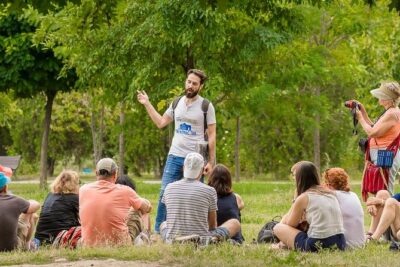
Bucharest Essential Tour: Old Town, Calea Victoriei & Communism
Read our review →Browse the lists this tour appears in