
Reviewed · BUCHAREST PRIVATE TOURS
Private 8 Day Romania UNESCO Tour
Romania’s wooden churches and painted monasteries are only part of the story on this eight-day private tour. You’ll cross the Carpathians, walk old Saxon towns, visit village workshops, and spend two nights in rural Maramureș, where local life is part of the trip rather than a view through a car window.
I like two things especially: the route links major sights with real village stops, and a private guide can explain the history as you go instead of leaving you to connect the dots alone. Horse-drawn wagon time near Sibiu, a home-cooked dinner, and visits with craftspeople give the trip texture beyond its castles and churches.
The main drawback is the pace. You cover a large part of Romania in eight days, with substantial drives between regions, and admission tickets are extra, estimated at about €85. If you prefer long stays in one place, this route may feel more like a grand circuit than a restful holiday.
- Seven nights are included, with stays in both city hotels and local pensions.
- The route reaches several UNESCO sites, including Sighișoara, Prejmer, and wooden churches in Maramureș, plus Bucovina’s painted monasteries.
- Village visits are built into the plan, including a horse-drawn wagon ride, craftsmen, a traditional household, and regional tastings.
- A private guide and vehicle make a long, multi-region route simpler to manage.
- Budget for extras: admission tickets cost about €85 per person, and most lunches and dinners are not included.
From Bucharest to Sibiu, with a village night
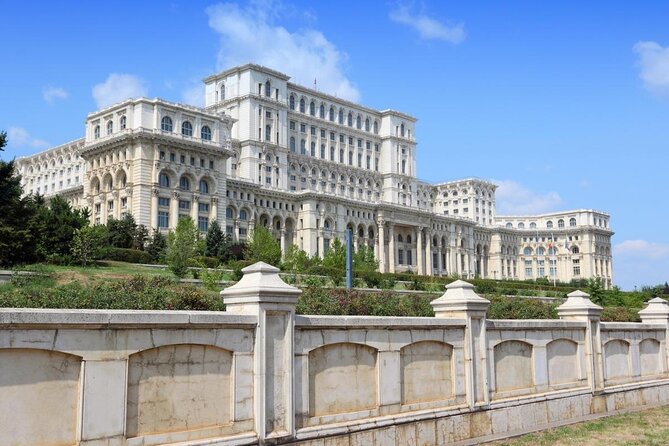
Your guide meets you at your Bucharest hotel at 9:00 a.m. The first part of the day is a panoramic look at the capital, passing landmarks such as Parliament Palace, Revolution Square, the Athenaeum, the former Royal Palace, Triumph Arch, and Victoriei Avenue. This is a useful orientation, though it is a broad introduction rather than a deep visit to each site.
The route then heads toward Cozia Monastery, a 14th-century church associated with Mircea the Old, an important Wallachian ruler. From there, you continue to Sibiu for a two-hour walk through the old center. The Big and Small Squares, Liar’s Bridge, medieval fortifications, and several churches make this one of the tour’s most rewarding town visits. The walking tour gives you time to notice the city’s Saxon character, not just its postcard views.
The day ends in Sibiel, outside Sibiu. A horse-drawn wagon ride and dinner made with local products offer a gentler, more personal contrast to the city stops. You stay in a local guesthouse, beginning a pattern that matters throughout the trip: the accommodation is not always a standard city hotel, and some nights bring you closer to rural life.
Castles, Roman ruins, and Cluj-Napoca
On day two, Corvin Castle near Hunedoara brings you into the world of medieval Transylvania. It was a residence of Transylvanian governors and is described as Romania’s largest medieval castle. Allow for the fact that admission is not included, and that an hour is a fairly brisk visit for a large historic site.
Alba Iulia shifts the focus from medieval power to a much longer timeline. The city contains Roman remains and a Vauban-style fortification system, alongside Orthodox and Catholic cathedrals. Its place in Romanian history as the city of the Union gives the stop national importance as well as architectural interest. The two-hour visit leaves room for a substantial look around, though the itinerary does not specify guided entry to individual buildings.
You finish in Cluj-Napoca, staying at the four-star Napoca Hotel or a similar property. The next morning’s walking tour covers Union Square, Museum Square, St. Michael’s Cathedral, the Orthodox Cathedral, National Theatre, and the statue of Matei Corvin. St. Michael’s, a 15th-century Gothic church, is the standout named stop. Cluj is Romania’s largest city in Transylvania, so this urban pause helps balance the quieter villages ahead.
More private tours around Bucharest:
- Castles of Transylvania: Private Day Trip from Bucharest
★ 4.5 · 248 reviews - Dracula’s Castle, Peles Castle and Brasov – Private Day Trip from Bucharest
★ 5.0 · 211 reviews - Best of Bucharest | Private Walking Tour
★ 5.0 · 199 reviews
Maramureș: timber churches and everyday traditions
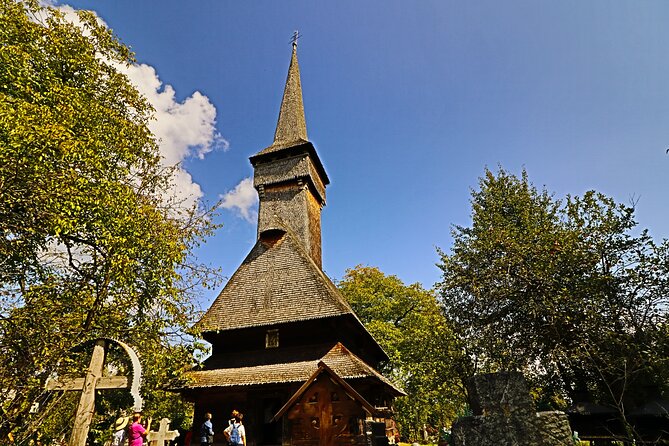
Day three takes you north to Maramureș, a region known for wooden churches and preserved customs. The first stops are the UNESCO-listed wooden churches at Șurdești and Desești. Șurdești’s church dates to 1766 and has a 54-meter tower; at Desești, you’ll see another church with painted interior decoration. These are modest buildings by scale, but their timber construction and local artistry make them memorable.
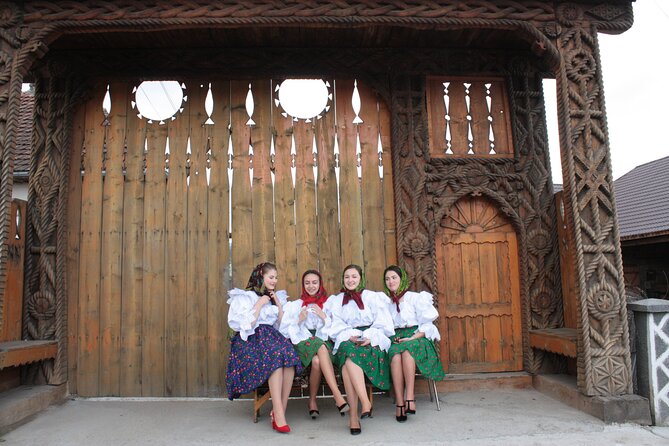
The itinerary also builds in visits to craftspeople, including a weaver and wood carver, as well as a water mill and a traditional household. The value here is context. You are not only looking at old buildings; you have chances to see how local materials and skills remain part of village identity. The exact workshops can vary, so treat these as opportunities to learn rather than a guaranteed shopping stop.
At Bârsana Monastery, wooden architecture takes on a larger, more formal scale. An optional visit to a carver’s workshop is offered. The day ends in Botiza with a household visit and, depending on the season, a stop at a sheepyard. Dinner and lodging are at a local pension. Two rural nights give you time to settle into the region instead of treating it as a quick roadside detour.
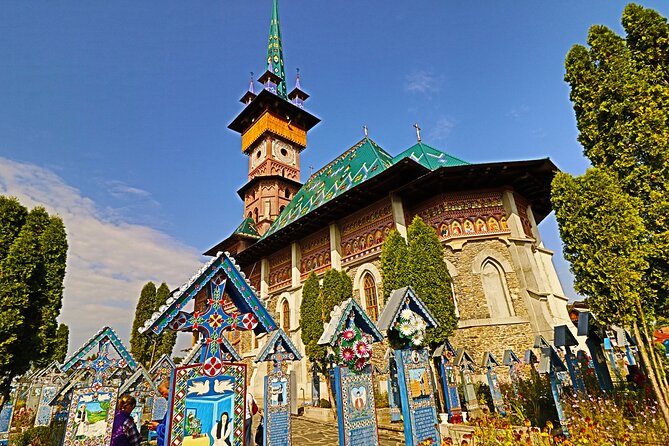
Day four begins at Săpânța’s Merry Cemetery, known for its brightly painted grave markers and short, humorous verses. It is an unusual place to think about how a community remembers the dead, and its tone is quite different from the solemnity of a monastery. Nearby, Săpânța-Peri Monastery has a towering wooden church, listed in the Guinness Book as the world’s tallest wooden church.
You pass through Sighet, with an optional visit to the Communist Prison Museum. The word optional matters: it is an additional stop, not a guaranteed part of the day. Later, the Maramureș Woman Museum in Dragomirești offers a small-scale look at local customs and domestic life. At Bogdan Vodă, another UNESCO-listed wooden church preserves painted decoration on its wood surfaces. You return to Botiza for free time and dinner at the pension.
Bucovina’s painted monasteries and old crafts
On day five, the road crosses the Carpathians toward Bucovina, with a stop in Ciocănești. The village is noted for decorated houses and painted-egg traditions, with a local museum visit available as an option. The drive itself is part of the day’s appeal, but it also means you should expect time in the vehicle between stops.
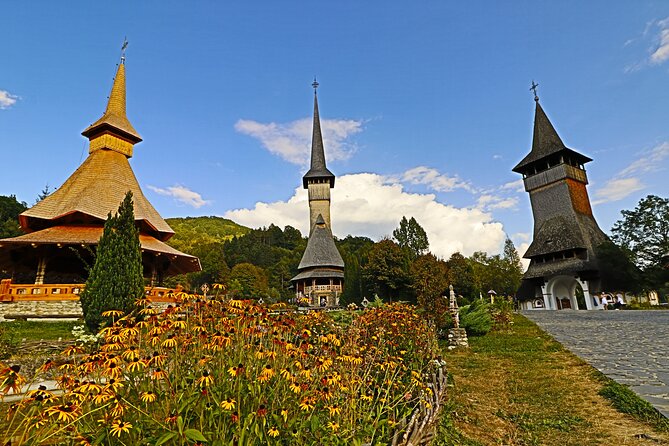
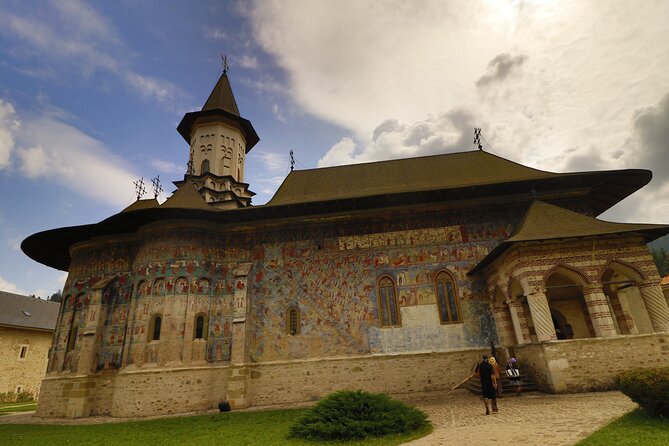
Moldovița Monastery, founded in 1532 under Prince Petru Rareș, is one of the painted monasteries that make this region famous. Its high walls and towers give it a fortified appearance. You then visit the Lucia Condrea International Egg Museum, devoted to painted-egg designs and techniques, before continuing to Sucevița Monastery. Sucevița is another fortress-like religious complex, with towers, buttresses, and covered walkways.
The sequence works well: you see large-scale religious art, then a local decorative tradition, then another major monastery. But the stops are not leisurely all-day visits. Each monastery has an allotted 45 minutes, so you will need to focus on the architecture and frescoes rather than expect a long, unhurried exploration.
At Marginea, a family workshop demonstrates traditional black pottery. This is a useful final stop because it brings the day back to living craft after several historic sites. Admission to the monasteries and museum is not included, so keep the estimated ticket budget in mind.
Voroneț, Bicaz Gorge, and Sighișoara
Day six starts at Voroneț Monastery, founded in 1488 by Stephen the Great. Its blue background color and Last Judgment fresco are the main reasons for the visit. The one-hour stop gives you a focused look at the painted exterior and interior, but again, this is a compact visit rather than a slow study.
The route then crosses back toward Transylvania by way of Red Lake and Bicaz Gorge. The gorge is one of Romania’s most dramatic natural sights, and the short stops let you take in the steep rock walls and mountain setting. Red Lake adds a change of pace from churches and towns. The itinerary allows about half an hour at each, so think of them as scenic pauses within a long transit day.
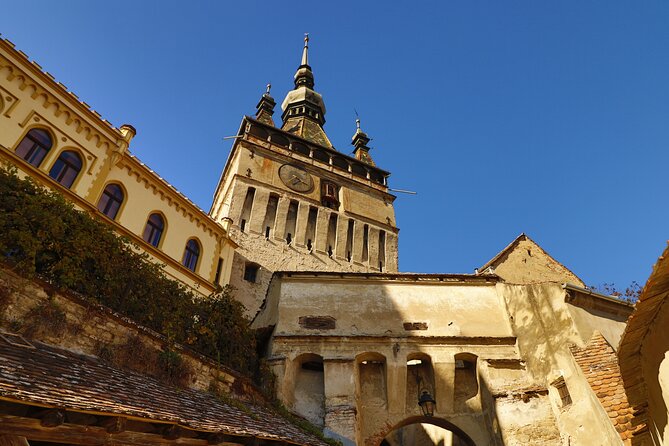
You end in Sighișoara. The following morning, a two-hour walk takes you through its UNESCO-listed medieval citadel, founded by Saxon settlers in the 13th century. This is one of the best places on the route to feel the shape of a fortified town, with its historic streets and preserved medieval character. The overnight stay makes it possible to see the center on foot rather than only through a bus window.
More Bucharest tours around Bucharest:
- Bucharest: Dracula’s Castle, Peles Castle, & Brasov Old Town
★ 4.5 · 17,858 reviews - Bucharest: Dracula Castle, Peles Castle & Brasov Old Town
★ 4.6 · 10,891 reviews - Bucharest: Dracula’s Castle, Peleș Castle & Brașov Day Trip
★ 4.5 · 5,919 reviews - Bucharest: Palace of Parliament Tickets and Guide
★ 4.3 · 3,182 reviews
Fortified churches, Brașov, and the royal castles
After Sighișoara, the drive passes through Transylvanian villages to Saschiz, where you stop to taste homemade jams, chutneys, and syrups. It is a small but welcome regional food experience, and a chance to see a local producer’s work.
Prejmer’s fortified church, a 13th-century UNESCO site, shows how religious buildings could also serve a defensive purpose. The visit lasts about 45 minutes. Later, a two-hour walking tour of Brașov covers Council Square, the Black Church, the White and Black Towers, Weaver’s Bastion, and Catherine’s Gate. The Black Church is Romania’s largest Gothic cathedral, while the bastion and towers help explain the city’s old defensive system. The church and Weaver’s Bastion have separate admission charges.
The final day pairs two famous castles. Bran Castle, built in the 14th century to control access into Transylvania, is now strongly linked with the Dracula legend. The story draws a crowd, but the historical role is the more useful lens: this was a strategic border fortress before it became a pop-culture landmark.
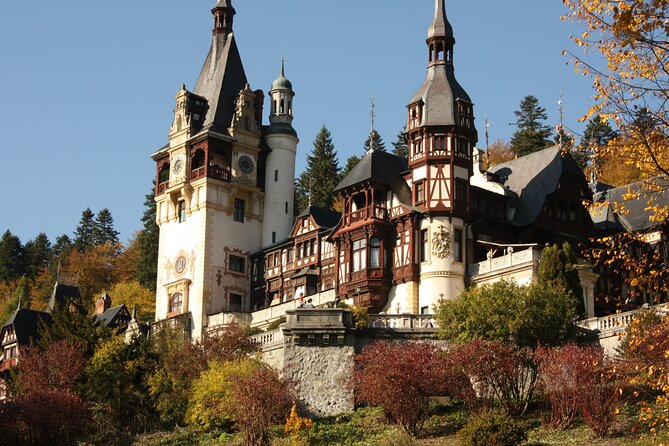
Peleș Castle in Sinaia offers a different kind of royal residence. It served as a summer home for Romania’s kings and is one of the country’s most striking former royal properties. You have about an hour and a half at each castle. Admission is extra, and the schedule ends with a return to Bucharest at roughly 4:00 p.m., with drop-off at a hotel or the airport.
What the price includes, and what it does not
At $2,315.49 per person, this is a substantial purchase, but it covers more than transport. The price includes seven nights in double or twin rooms, a private guide, a car or minibus, seven breakfasts, three dinners, the horse-drawn wagon tour near Sibiu, local craft visits, and the jam, chutney, and syrup tasting. For a route that crosses much of the country, having a dedicated vehicle and guide saves you the work of arranging separate transfers and lodging at each stop.
The cost does not include most meals, tips, or entrance tickets. Tickets are estimated at about €85 per person, so add that to your trip budget rather than treating the quoted price as all-inclusive. You will also need to cover lunches and four dinners, along with any optional visits. The private format is most valuable if you want flexibility for questions and a guide with you throughout the route, not if you are mainly seeking the cheapest way to get between towns.
The accommodation mix is part of the trip’s character. You have a city hotel in Cluj-Napoca, while the nights in Sibiel and Botiza bring you into village settings. The three included dinners are useful on rural nights, where you may have fewer meal choices close at hand. The tour does not specify the lodging names for every night, so ask the operator for current accommodation details if that matters to you.
Who should book this route
I’d choose this tour if you want a broad first look at Romania and care about history, religious art, traditional crafts, and village life as much as headline castles. It is especially appealing if Bucovina’s painted monasteries are high on your list but you also want to understand how they fit into a wider route through Transylvania and Maramureș.
It is less suitable if you want to spend several days in one city, travel at a slow pace, or keep extra costs to a minimum. The itinerary packs in many stops, and some visits last only 15 to 45 minutes. The private guide helps make the schedule more personal, but cannot remove the long drives between distant regions.
The tour has a five-star rating based on three ratings, and the strongest themes associated with it are the broad introduction to Romania, the rural stays, and the way the route extends beyond the painted monasteries. Those are exactly its best reasons to book: you get a connected picture of the country, not just a collection of famous sites.
FAQ
How long is the tour?
The tour lasts eight days and includes seven nights of accommodation.
Where does the tour start and finish?
It starts and ends in Bucharest. The listed meeting time is 9:00 a.m., with pickup at your Bucharest hotel, and the final drop-off is at an airport or hotel in Bucharest.
Is this a private tour?
Yes. It is a private activity, so only your group participates.
What transport is provided?
Transport is by car or minibus, with a private tour guide accompanying you.
How many breakfasts and dinners are included?
Seven breakfasts and three dinners are included. Other meals and services not named as included are extra.
Are admission tickets included?
No. Entrance tickets are extra, estimated at about €85 per person.
Which accommodations are included?
Seven nights in double or twin rooms are included. The tour names Napoca Hotel, or a similar four-star hotel, for the Cluj-Napoca night and local pensions for rural stays.
Does the tour include visits to local craftspeople?
Yes. Visits to local craftspeople are included, along with a horse-drawn wagon tour near Sibiu and a tasting of jam, chutney, and syrup.
Can I cancel for a full refund?
You can cancel for a full refund if you do so at least three full days before the tour’s start time. Cancellations made less than three full days before the start are not refundable.
When will my booking be confirmed?
Confirmation is provided within 48 hours of booking, subject to availability.
Recently added around Bucharest
- Snowmobiles, Sky Lift & Winter Sports – Private Tour★ 5.0 · 9 reviews
- Private Transfer and 3H Tickets to Therme Bucharest★ 4.5 · 10 reviews
- 2-Day Small-Group Tour to Dracula’s Castle, Rasnov Fortress, Peles Castle, Sighisoara and Libearty Brown Bear Sanctuary with Overnight in Brasov★ 4.5 · 9 reviews
- Day Trip from Bucharest to Dracula Castle, Brasov and Peles Castle Sinaia★ 5.0 · 10 reviews
- Day Trip Through Brasov in Transylvania and Bran, Peles, and Rasnov Castles★ 4.0 · 9 reviews
- Slavery in Romania Myths and Truths About Gypsies★ 5.0 · 8 reviews
- The Real Story of Gypsies – Slavery in Romania★ 5.0 · 7 reviews
- Premium 8-Day Private Culinary Vacation in Romania★ 5.0 · 11 reviews
Bucharest Private Tours, compared.

Castles of Transylvania: Private Day Trip from Bucharest
Read our review →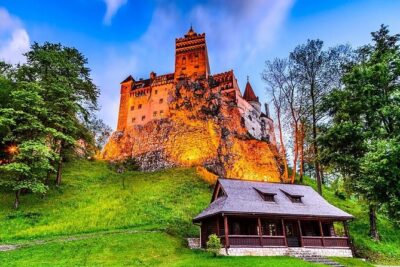
Dracula’s Castle, Peles Castle and Brasov – Private Day Trip from Bucharest
Read our review →
Bucharest Panoramic Sightseeing – Private City Tour
Read our review →
THERME “Take It Easy” Pack: Full Spa Access + Private Transfers
Read our review →
Piatra Craiului National Park Private Hiking Tour from Brasov
Read our review →
4h Bucharest Private Tour (2h by Car and 2h Walking in Old Town)
Read our review →
Discover Bucharest: Private Highlights and Traditional Food Tour
Read our review →Browse the lists this tour appears in