
Reviewed · BUCHAREST WALKING TOURS
Bucharest Must See Walking Tour
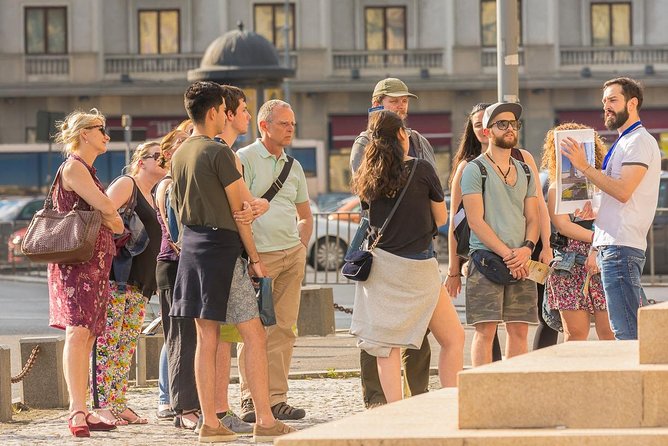
Bucharest’s story sits in its streets: royal landmarks, a square tied to the fall of communism, Ottoman-era architecture, and the vast Palace of Parliament all fit into this four-hour walk. I like that the route explains how these different periods shaped the same city, rather than treating each building as an isolated photo stop.
I also like the pause at Bucharest’s oldest cafe, where coffee or another drink comes with three Romanian cakes or pastries. The main consideration is the pace and scale of the walk: you cover many stops in four hours, and the Palace of Parliament is viewed from outside, not toured indoors.
- A compact group: The tour is limited to eight people, which can make it easier to hear the guide and ask questions.
- A citywide history lesson: Royal Bucharest, communist rule, and the 1989 Revolution all feature along the route.
- A proper pastry break: Three types of Romanian cakes or pastries and a drink are included at the oldest cafe in Bucharest.
- Old Town beyond the main lanes: The walk includes Macca-Villacrosse Passage, Manuc’s Inn, Stavropoleos Monastery, and Romania’s most famous bookshop.
- A monumental finale: See the Palace of Parliament and hear how its construction reshaped central Bucharest.
- A practical format: The tour lasts about four hours, is listed as wheelchair and stroller accessible, and ends in University Square or another central location by arrangement.
Bucharest in Four Hours, From Royal Grandeur to Communist Power
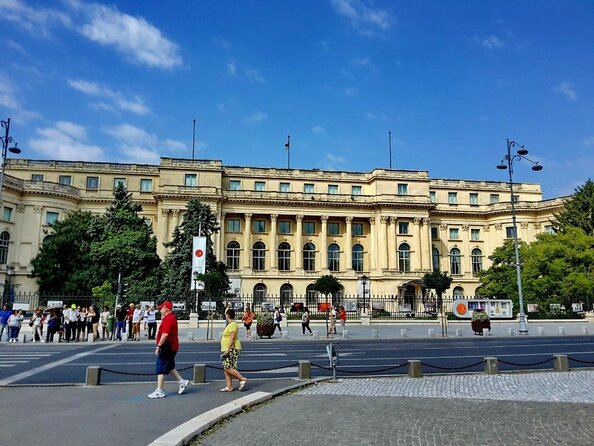
This walk is built around a useful idea: to understand Bucharest, follow its changing centers of power. The route begins at the Romanian Athenaeum, passes royal buildings and the former Communist Party headquarters, then threads through Old Town before ending with a view of the Palace of Parliament.
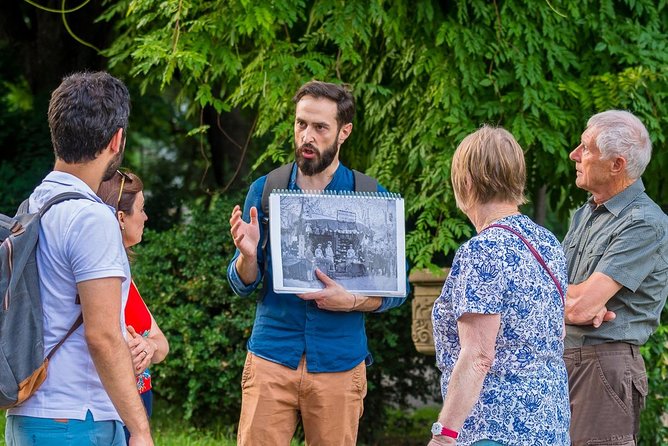
That range gives you more than a checklist of landmarks. You hear how monarchy, war, Ottoman influence, commerce, and communist rule left their marks on the city. The guide’s role matters here, because many stops are best understood through the stories attached to them. Stefania is one guide associated with the tour, and her personable approach has been praised for bringing the city’s history to life.
The group is capped at eight, a welcome size for a long walking tour. With eleven stops and about four hours on foot, you will want comfortable shoes and enough energy for a substantial city walk. It is listed as wheelchair and stroller accessible, though the Old Town section includes cobblestone streets, so consider your comfort with those surfaces.
The Athenaeum and the Royal Story on Calea Victoriei
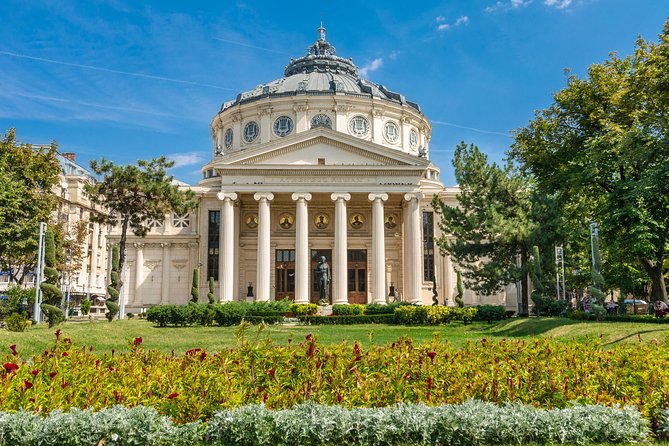
The Romanian Athenaeum is an apt starting point. This concert hall is widely regarded as one of Bucharest’s most beautiful buildings, and the tour sets aside about 15 minutes to introduce its story. Admission is not included, so the stop is an exterior introduction rather than a visit inside.
From there, the route moves toward the equestrian statue of King Carol I. The statue provides a natural place to hear about Romania’s kings and the world wars, with the royal period giving you a frame for the architecture nearby. You get about 15 minutes here, enough for context and a look around without turning the stop into a long lecture.
Calea Victoriei is the thread connecting several of these landmarks. The tour walks along this famous historical street, stopping at the former Royal Palace and Revolution Square. The palace’s change of role over time and the nearby monuments help make the city’s shifts in power visible at street level.
The route allocates about 30 minutes to Calea Victoriei and its landmarks, alongside another 30 minutes at Revolution Square. These are closely connected parts of the walk, so expect the guide to build the story from one stop into the next rather than treat them as unrelated visits.
More walking tours around Bucharest:
- Bucharest: City Highlights Guided Walking Tour
★ 4.9 · 1,482 reviews - Bucharest Highlights Walking Tour
★ 5.0 · 469 reviews - Free walking tour of Brasov in English
★ 4.9 · 302 reviews
Revolution Square and the End of Ceaușescu’s Rule
Revolution Square brings the royal story into sharp contrast with communist Romania. Here you see the former headquarters of the Communist Party, a building tied to Nicolae Ceaușescu’s rule and its collapse. The guide discusses the dictator’s rise and fall, the oppression of the communist period, and the 1989 revolution.
The square is especially valuable if you want more than dates and names. It gives a physical setting to a major political turning point, including the revolution that was broadcast live. Allow roughly half an hour for this part of the route, which should leave room for explanation and questions.
This is one of the tour’s strongest sections, but it is also a reminder that Bucharest’s history is not always light. You will hear about dictatorship and the damage inflicted on ordinary people and the city itself. If you prefer a walk focused only on architecture or food, this one gives more weight to recent political history.
Coffee and Romanian Cakes at the Oldest Cafe
Around the middle of the walk, you stop near University Square at a historic cafe and cake shop described as the oldest in Bucharest. The 30-minute break includes three types of Romanian cakes or pastries, plus water, coffee, tea, or juice. It is a welcome sit-down after a busy first half and a chance to try local sweets without needing to plan a separate cafe visit.
This stop adds real value because it is more than a quick snack handout. The cafe’s old decor and relaxed atmosphere give you a change of pace, while the pastries introduce a small but memorable part of local food culture. Lunch is not included, so do not treat the tasting as a meal if you know you will need something more substantial.
The break also gives you a moment to absorb what you have seen. If you are curious about a royal building or the revolution, this is a good time to ask the guide a follow-up question before the walk turns toward Old Town.
Old Town’s Inns, Bookshop, and Covered Passage
Old Town changes the feel of the tour. Its cobblestone streets pass former Oriental inns, 19th-century merchant houses, and imposing palaces. The walk takes about 30 minutes and includes key sights in the quarter, as well as an interior visit to Romania’s most famous bookshop.
The mix of buildings helps explain Bucharest’s past as a meeting point of different influences. The old inns recall trade and travel, while the merchant houses and palaces point to a later period of wealth and urban growth. The route is compact, but the details make more sense when the guide connects them to the city’s wider history.
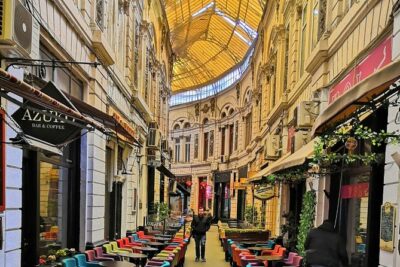
Macca-Villacrosse Passage offers a different view of the commercial center. Built in the late 19th century, this covered passage was part of a group of downtown spaces modeled after Parisian passages. The tour gives it about 15 minutes, enough to appreciate its architecture and hear how trade and finance once shaped this part of town.
The passage is one of the route’s more distinctive stops because it shows Bucharest borrowing ideas from elsewhere while developing a character of its own. It also makes a good contrast with the older Ottoman-influenced buildings nearby. You are still walking through active central streets, not visiting a museum, so the appeal lies in seeing how these places fit into the city.
More Bucharest tours around Bucharest:
- Bucharest: Dracula’s Castle, Peles Castle, & Brasov Old Town
★ 4.5 · 17,858 reviews - Bucharest: Dracula Castle, Peles Castle & Brasov Old Town
★ 4.6 · 10,891 reviews - Bucharest: Dracula’s Castle, Peleș Castle & Brașov Day Trip
★ 4.5 · 5,919 reviews - Bucharest: Palace of Parliament Tickets and Guide
★ 4.3 · 3,182 reviews
Manuc’s Inn and Stavropoleos Monastery
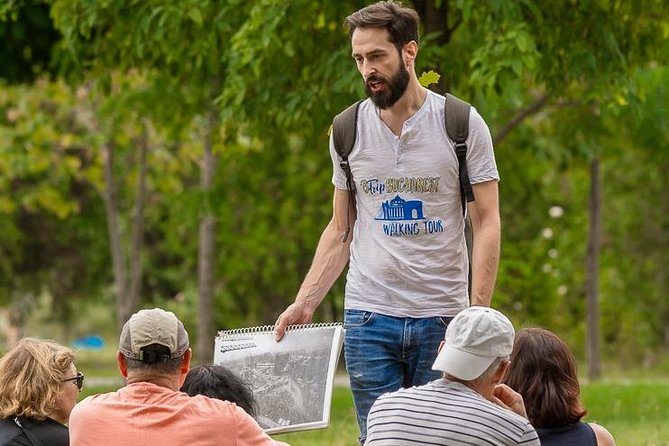
Manuc’s Inn is one of the few surviving Oriental-style structures from Bucharest’s Ottoman-influenced period. Once a caravanserai, it takes you back to the early 1800s and gives the guide a chance to explain how the city’s connections with the Ottoman Empire shaped its buildings. The stop is about 15 minutes and admission is free.
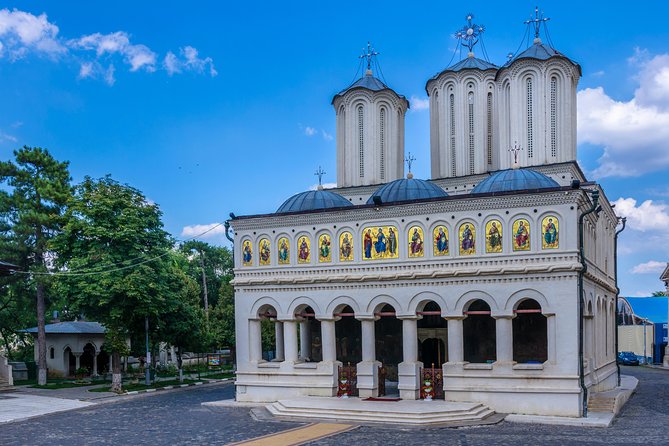
A short walk brings you to Stavropoleos Monastery, described as the city’s most beautiful church and one of its few active monasteries. It is a place of quiet amid the city center, and its Romanian architecture gives the route a striking change of mood. The visit is also about 15 minutes, with no admission charge listed.
Together, these stops show why Old Town is more than a pleasant cluster of streets. Manuc’s Inn points to trade and travel; the monastery offers a glimpse of religious life and local architectural tradition. The brief timings mean you should not expect an extended visit at either site, but they give the walk welcome variety.
The National Bank and Bucharest’s Money
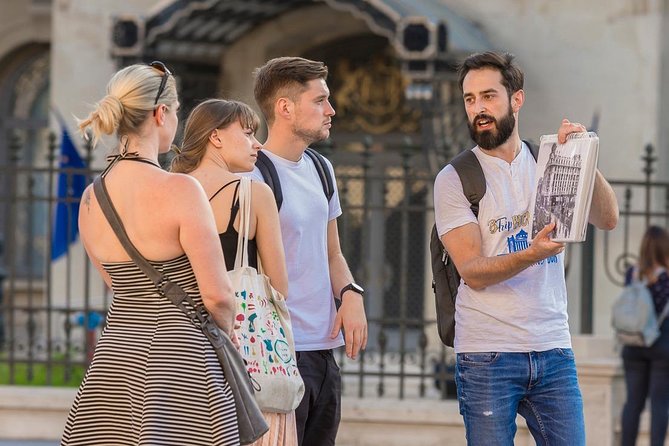
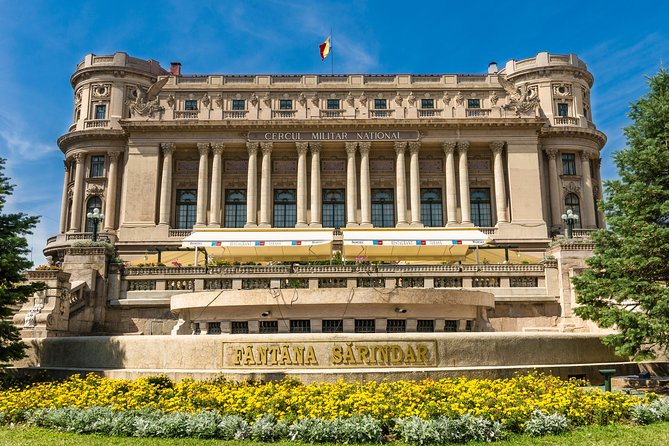
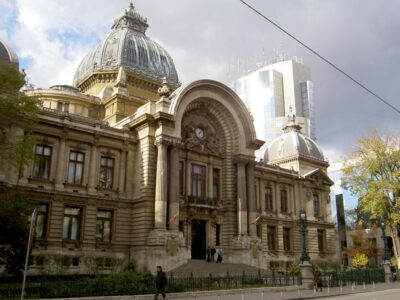
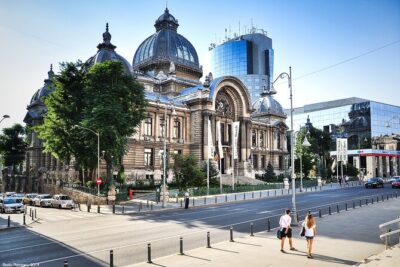
The National Bank of Romania’s palace dates to the 1880s and is a strong example of French architecture. The guide uses this stop to discuss the history of Romanian currency and the way locals think about prices. It is a useful topic for anyone who wants to understand the country beyond its monuments, especially if you are arriving with questions about money and everyday life.
The stop lasts about 15 minutes. Admission is not included, so expect to see the building from outside rather than enter the bank. Its stately facade also fits into the tour’s larger theme: Bucharest’s public buildings reveal the ambitions and priorities of the people who governed it.
The Palace of Parliament, Seen From Outside
The Palace of Parliament is the route’s biggest physical landmark and its most sobering story. It is known as Europe’s largest administrative building, built under Ceaușescu’s direction during the communist era. From outside, you can take in its sheer size while the guide explains how more than 20,000 homes were destroyed in the central part of Bucharest to make way for the regime’s construction plans.
This is an exterior stop, not an inside tour, and admission is not included. That distinction matters if you are hoping to see the building’s interior rooms. The value here is the scale of the structure and the account of what its construction cost the city.
The story is not only about demolition. The guide also points to older houses and churches that survived behind or among Ceaușescu’s new construction. That detail adds a human scale to an otherwise overwhelming monument: the city was altered, but parts of its earlier life endured.
The Palace stop lasts about 30 minutes. It makes a fitting final chapter to a walk that began with royal architecture, passed through revolution, and then traced the communist state’s ambition to remake the capital.
Price, Pace, and Who Should Book
The listed price is $0.00, which would make the tour exceptional value if that is the final amount charged. Confirm the price shown when you book, since the supplied price alone does not explain whether any payment or gratuity is expected. The included cafe tasting, drink, and city map add practical value, while lunch and admission to the Athenaeum or National Bank are not included. The Palace is seen from outside.
A small group and a four-hour route suit first-time visitors who want a broad introduction before exploring more on their own. It is also a good fit if you enjoy walking and want a guide to connect buildings with the political history behind them. Families may appreciate that strollers are allowed, and the tour is listed as wheelchair accessible.
The main trade-off is density. Eleven stops in four hours make for a full outing, and some sites receive only 15 minutes. If you want to linger inside major buildings, spend a long time in museums, or focus mainly on food, you may prefer to use this as an orientation walk and plan separate visits afterward.
The tour normally ends at University Square, though the end point can be adjusted to another spot in central Bucharest. It is close to public transportation, and the group limit of eight helps keep the walk manageable. Book it if you want a grounded overview of Bucharest’s royal, communist, and Old Town stories, with a pastry pause built in. Skip it if your ideal city day is slow, indoors, or centered on a single attraction.
FAQ
How long does the Bucharest Must See Walking Tour last?
It lasts about four hours.
Where does the tour start?
The meeting point is Strada Benjamin Franklin 10, near the Romanian Athenaeum.
Where does the tour end?
It normally ends at University Square. The end point can be changed to another spot in central Bucharest by arrangement.
How many people can join the tour?
The maximum group size is eight travelers.
Is the Palace of Parliament visited inside?
No. The tour views the Palace of Parliament from outside.
What food and drinks are included?
The cafe break includes three types of Romanian cakes or pastries, plus water, coffee, tea, or juice.
Is lunch included?
No. Lunch is not included.
Is the tour wheelchair and stroller accessible?
Yes. The tour is listed as wheelchair and stroller accessible.
What is the cancellation policy?
You can cancel at least 24 hours before the start time for a full refund. Cancellations made less than 24 hours before the start time are not refunded.
Recently added around Bucharest
- Snowmobiles, Sky Lift & Winter Sports – Private Tour★ 5.0 · 9 reviews
- Private Transfer and 3H Tickets to Therme Bucharest★ 4.5 · 10 reviews
- Day Trip from Bucharest to Dracula Castle, Brasov and Peles Castle Sinaia★ 5.0 · 10 reviews
- Day Trip Through Brasov in Transylvania and Bran, Peles, and Rasnov Castles★ 4.0 · 9 reviews
- 2-Day Small-Group Tour to Dracula’s Castle, Rasnov Fortress, Peles Castle, Sighisoara and Libearty Brown Bear Sanctuary with Overnight in Brasov★ 4.5 · 9 reviews
- The Real Story of Gypsies – Slavery in Romania★ 5.0 · 7 reviews
- Premium 8-Day Private Culinary Vacation in Romania★ 5.0 · 11 reviews
- Slavery in Romania Myths and Truths About Gypsies★ 5.0 · 8 reviews
Bucharest Walking Tours, compared.
Ghost Stories & Romanian Mythology Walking Tour
Read our review →
Walking Tour- Delightful Bucharest (Highlights, Stories, Sights)
Read our review →
Bucharest Essential Tour: Old Town, Calea Victoriei & Communism
Read our review →Browse the lists this tour appears in