
Reviewed · BUCHAREST FOOD TOURS
Taste Bucharest: A Food Lover’s Tour of Markets & Neighbourhoods
Bucharest’s food story makes the most sense away from the postcard center, among neighborhood churches, old houses, tram tracks, and market stalls. This five-hour tour links those places with a generous tasting of Romanian staples at Obor Market. I like the combination of local food and city history, and the chance to travel by tram instead of spending the whole day on foot.
I also like that the small group is capped at 12, so you can ask questions and keep up with your guide without being swept along in a crowd. One thing to know before booking: this is a tasting tour, not a meal of hot Romanian classics. Expect cheeses, spreads, cured meats, vegetables, and mici, but soup or cabbage rolls are not promised.
- Start at the National Theatre: Hear about the Romanian Revolution and street fighting before heading into the older neighborhoods.
- See more than the center: Walk past Neo-Romanian architecture, Batiștei Church, the Armenian Quarter, and Bucharest’s oldest documented house.
- Ride a tram to Obor: Public transport connects the central streets with one of the city’s major traditional markets.
- Come hungry for a long tasting: Peasant spreads, cheeses, meats, seasonal produce, mici, and a doughnut may all feature.
- Drinks are included: Expect a tuica sample and usually up to three beers, or soft drinks, coffee, or tea.
- Plan for an active half-day: The route covers about 6 kilometers on foot, along with a short tram ride.
A food tour that also explains Bucharest
This is a good fit if you want a first introduction to Bucharest that goes beyond the central boulevards. The food gives the day its flavor, but the route also supplies context: the National Theatre and Revolution, historic residential streets, Orthodox and Armenian heritage, Communist-era transport, and the daily commerce of Obor Market.
The tour lasts about five hours, with a maximum of 12 people in the small-group format. A private option is also offered. The smaller size matters here because the guide is doing two jobs at once: interpreting the city and explaining what is on the table. You have room to ask about a building, a dish, or a Romanian custom without needing to shout over a large group.
Guides named on past departures include Angelica, Bogdan, Mihaela, Julian, Andrea or Andreea, Alex, Daniel, and Elena. You cannot count on a particular guide when you book, but the guide’s personality is a large part of the experience. The best fit for this tour is someone who enjoys a conversational history lesson as much as a full plate.
From the National Theatre to the old streets
The meeting point is the Ion Luca Caragiale National Theatre on Bulevardul Nicolae Bălcescu. The first stop is more than a convenient landmark. Your guide introduces the Romanian Revolution and the street battles that shaped Bucharest, setting up the political history you will encounter as the route moves through the city.
That opening is brief, about 15 minutes, but it gives the rest of the walk a useful frame. If you arrive early, find the theatre entrance and confirm the precise meeting point from your booking details. The tour ends at Saint George Square, near Unirea Square, so do not assume you will finish back at the theatre.
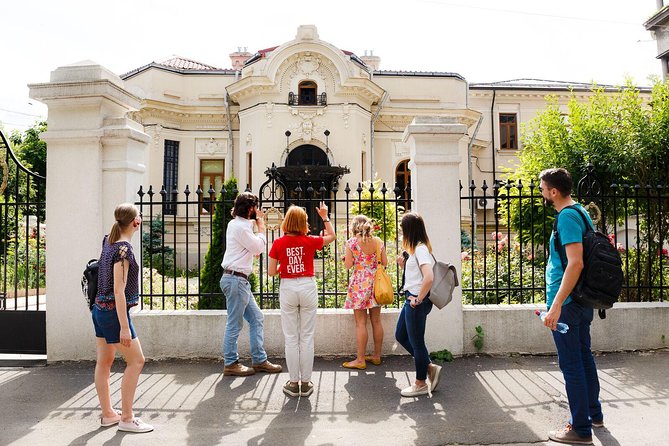
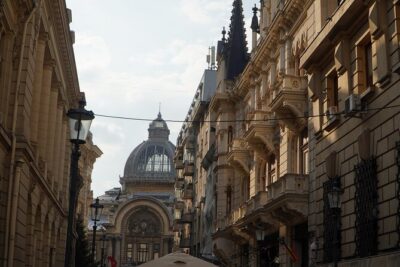
From the theatre, the route heads to Strada Batiștei. Here the focus shifts to 19th-century Neo-Romanian architecture and the history of the former American embassy. The city’s buildings are part of the meal, in a way: the guide helps you read streets that could otherwise look like a jumble of architectural eras.
Next comes Batiștei Church, a Romanian Orthodox landmark. This is a short stop, around 15 minutes, so expect an introduction to the church’s history and design rather than an extended visit. The value is in seeing how the city’s religious and architectural heritage sits within ordinary neighborhood life.
The route continues into the Armenian Quarter, including a visit to Bucharest’s oldest documented house. This is the longest central-city history stop, at about an hour. It gives the tour time to move beyond names and dates and explore the area’s varied architecture and communities. One practical consideration: if you prefer a food tour with only brief commentary between tastings, this may feel like a lot of history. The walking and cultural stops are an essential part of the outing, not a short prelude to lunch.
More food tours around Bucharest:
- Street Food’n’Culture Tour
★ 5.0 · 209 reviews - Discover Bucharest: Private Highlights and Traditional Food Tour
★ 5.0 · 86 reviews - Private Bucharest: History & Food with Traditional Meal
★ 5.0 · 34 reviews
A tram ride toward Obor Market
After the central neighborhoods, you take a tram along Calea Moșilor toward Obor. The ride marks a change of scene, taking you into Communist-era Bucharest and giving your feet a short rest. It also offers a glimpse of everyday public transport, rather than a transfer in a tour vehicle.
Public transport is part of the experience, not just a way to cover distance. The route is about 6 kilometers on foot overall, with a short tram ride included. Wear comfortable shoes, and be ready for a full half-day of standing and walking. Most people can participate, but the tour is active.
The order of stops or the exact route can change on the day. Food choices can shift too, depending on the season and what is fresh and available. Treat the published sequence as a guide to the day, not a promise that every stop or tasting will unfold in precisely the same way.
Obor Market, where the tasting takes shape
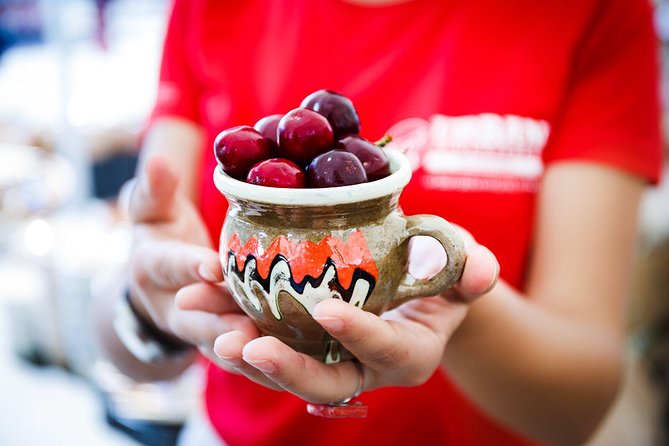
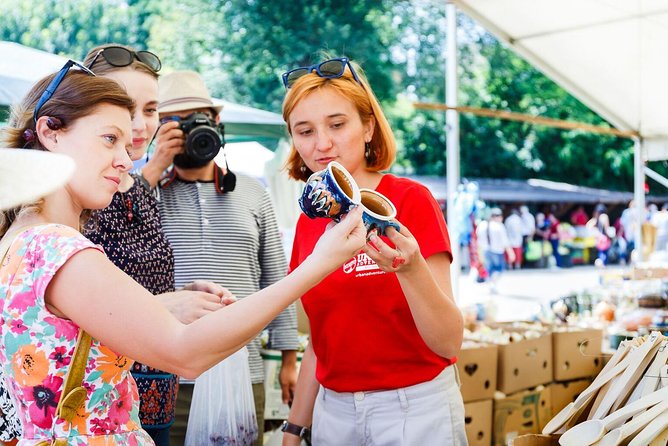
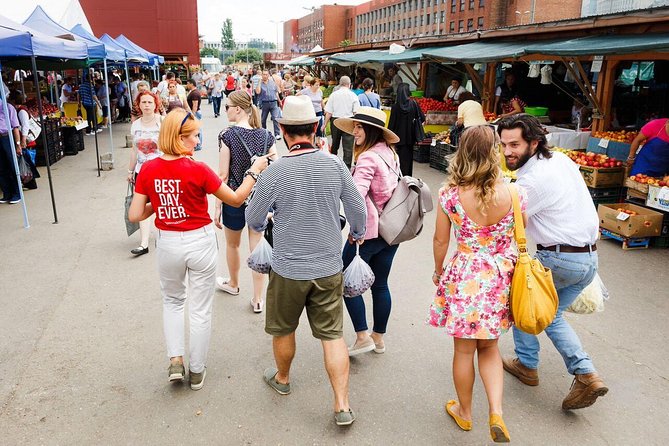
Obor Market is the heart of the food portion, with about an hour and 40 minutes set aside for exploring and eating. It is a working market, not a stage set. Expect counters and stalls selling produce and traditional goods, along with the smells and bustle of a place where locals shop. Your guide helps make sense of the sections and may point out foods you would be unlikely to identify, let alone order, on your own.
The tasting is usually a varied peasant platter: aubergine dip, zacusca, whipped beans, fish roe, telemea and burduf cheeses, sausages, smoked bacon, cracklings, red onion, tomatoes, and toast. There may also be cow, sheep, and goat cheeses, plus seasonal produce. Depending on the time of year, that might mean wild strawberries, wild garlic, spicy pickles, watermelon, or grapes.
A serving of mici, Romania’s grilled skinless sausages, is another expected highlight, usually eaten with mustard. Some guides have been able to help the group get straight to a table for mici rather than wait in a long line, but that should be seen as a helpful possibility, not a guarantee. A Wallachian doughnut often makes a sweet finish.
The food is generous, and the range of spreads, cheeses, and meats helps you sample several Romanian flavors at once. But it is worth setting the right expectation. You are not promised a sequence of cooked dishes, and the menu does not specify cabbage rolls or soup. If you are hoping for a sit-down meal built around hot traditional food, this may not be the tour for you. If you are curious about ingredients, market culture, and snack-sized tastes, the format makes more sense.
The guide may shop for seasonal produce during the market visit and use it in the tasting. That small detail connects the meal to the market around you, rather than making it feel like a fixed restaurant menu. Exact dishes vary, so go with an appetite for trying what is available rather than a checklist of specific foods.
Tuica, beer, and sensible expectations
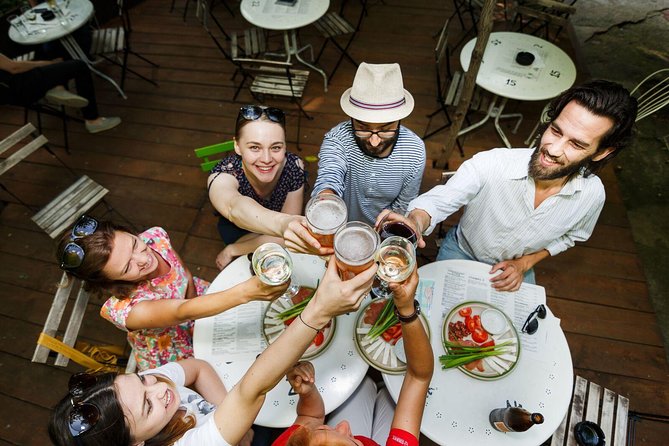
Romanian drinks are part of the experience. You can usually expect a shot of tuica, a fruit brandy, and up to three beers. If you do not drink alcohol, soft drinks, coffee, or tea are listed as alternatives. All food and drink samples are included in the tour price, though anything extra you order is not.
The drinks add another local angle, but they are not a reason to underestimate the walking. You will be moving between neighborhoods and standing in the market, so pace yourself and drink water when you can. The tour description does not promise a particular beer, brandy, or soft drink, and availability can vary.
Dietary needs need advance notice. If you have allergies, sensitivities, or follow a vegetarian, vegan, or gluten-free diet, contact the operator at least 24 hours before the tour. The team will try to accommodate you, but choices may be limited. Since many of the typical tastings center on dairy, meat, fish roe, bread, or shared platters, do not assume a full alternative menu will be available.
More food and drink stops around Bucharest:
- Wine Tasting in Bucharest
★ 5.0 · 183 reviews - Bucharest Beer and Culture Tour with a Local
★ 5.0 · 47 reviews - Bucharest: Private Wine Tasting Experience
★ 5.0 · 44 reviews - Traditions in Bucharest: Village Museum and Wine Tasting Tour
★ 5.0 · 27 reviews
What the $102.79 price buys you
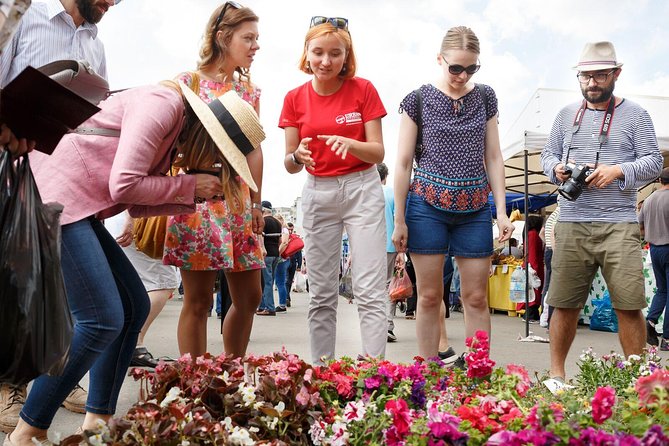
At $102.79 per person, this is not the cheapest way to sample a few Romanian snacks. The value comes from combining a guided neighborhood walk, historical interpretation, public transport, market time, and a substantial set of food and drink tastings in five hours. You are paying for a local guide to connect the places and the food, not simply for a plate at Obor.
That value depends on what you want from the day. If you would happily spend an hour browsing a market and want a local to explain what you are seeing, the price is easier to justify. If your main goal is a hot lunch or a restaurant-focused food crawl, you may find the history and walking take up too much of the day.
The included samples can add up to a filling meal, but portions and exact selections depend on the day. Additional food and drinks are not included, and tips for the guide are also extra. With a maximum group size of 12, you get a more personal setting than a large coach tour, while still sharing the experience with other people.
The guide is part of the meal
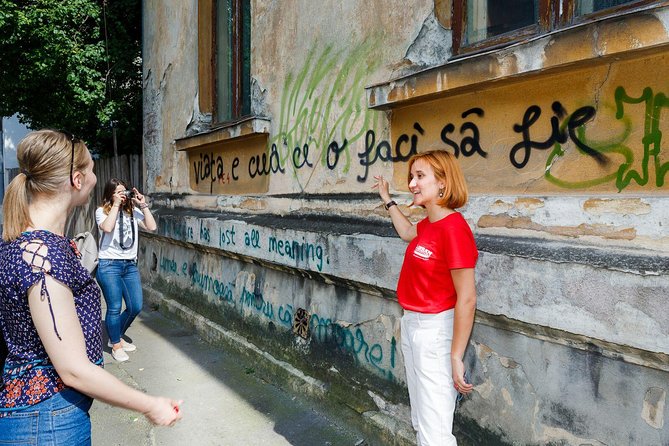
A strong guide makes the day feel like a city visit rather than a procession of tastings. Past tours have been led by guides including Angelica, who is praised for explaining dishes and Bucharest’s history; Bogdan, who connects local food with Romanian culture; and Mihaela, whose neighborhood knowledge and easy manner have helped make the route personal. Julian, Alex, Andrea, Daniel, and Elena have also led departures.
The guide’s style can shape the balance between history and food. That is a plus if you enjoy conversation and questions, but it also means the historical sections may run long for someone who wants to get straight to the next tasting. One solo departure even continued longer than advertised, but you should not book expecting extra time. The stated duration is approximately five hours.
Small groups help the guide respond to the people on the day. They also make the market stops easier to manage than they would be with a large crowd. Still, the market is a public place, and the group moves through it at a shared pace.
Who should book this Bucharest tour?
I would choose this tour if you have several hours to spare, enjoy learning through food, and want to see neighborhoods beyond the central sights. It is especially useful early in a Bucharest stay: you get a first map of the city, a taste of Romanian staples, and ideas for what to seek out later. It can also suit a short visit if you want one structured outing that combines history, architecture, public transport, and market food.
It is less suitable if you have limited mobility, dislike several kilometers of walking, want a tour with little historical commentary, or need a guaranteed menu of hot dishes. The exact tastings change with the season, and dietary alternatives may be restricted. Bring comfortable shoes, arrive hungry, and tell the operator about food needs at least 24 hours ahead.
For a traveler who wants more than a restaurant meal, I think the mix is the point: the route puts Romanian food in the neighborhoods and market where it belongs. Book it if you are curious about both what Bucharest eats and how the city has changed. Skip it if your priority is a fixed menu of cooked specialties.
FAQ
How long is the tour?
The tour lasts approximately five hours.
Where does the tour start and finish?
It starts at the Ion Luca Caragiale National Theatre, at Bulevardul Nicolae Bălcescu 2. It ends at Saint George Square, near Unirea Square.
How much walking is involved?
The route covers approximately 6 kilometers on foot and includes a short tram ride.
What food is usually included?
Typical tastings may include Romanian cheeses, cured meats, sausages, dips, produce, mici with mustard, and a Wallachian doughnut. Exact items vary by season and availability.
Which drinks are included?
The tour usually includes a shot of tuica and up to three beers. Soft drinks, coffee, or tea are listed as nonalcoholic alternatives.
Can dietary requirements be accommodated?
Tell the operator about allergies, sensitivities, or dietary needs at least 24 hours in advance. The team will try to help, but options may be limited.
What is the cancellation policy?
You can cancel for a full refund up to 24 hours before the experience starts. Changes or cancellations made less than 24 hours before the start time are not accepted for a refund.
Recently added around Bucharest
- Snowmobiles, Sky Lift & Winter Sports – Private Tour★ 5.0 · 9 reviews
- Private Transfer and 3H Tickets to Therme Bucharest★ 4.5 · 10 reviews
- Day Trip from Bucharest to Dracula Castle, Brasov and Peles Castle Sinaia★ 5.0 · 10 reviews
- Day Trip Through Brasov in Transylvania and Bran, Peles, and Rasnov Castles★ 4.0 · 9 reviews
- 2-Day Small-Group Tour to Dracula’s Castle, Rasnov Fortress, Peles Castle, Sighisoara and Libearty Brown Bear Sanctuary with Overnight in Brasov★ 4.5 · 9 reviews
- Slavery in Romania Myths and Truths About Gypsies★ 5.0 · 8 reviews
- The Real Story of Gypsies – Slavery in Romania★ 5.0 · 7 reviews
- Premium 8-Day Private Culinary Vacation in Romania★ 5.0 · 11 reviews
Bucharest Food Tours, compared.
Discover Bucharest: Private Highlights and Traditional Food Tour
Read our review →
Private Bucharest: History & Food with Traditional Meal
Read our review →


Private Tour – Food, Culture, History & Traditions
Read our review →Browse the lists this tour appears in