
Reviewed · BUCHAREST TOURS
11-Day Romania Tour from Bucharest with Transylvania & Bucovina
Romania’s best-known castle may have Dracula’s name attached to it, but this 11-day tour shows you much more than Bran. You’ll travel from Bucharest through Transylvania and Bucovina to Maramureș, stopping at medieval towns, painted monasteries, and mountain villages along the way. I like the private format, which gives your group its own guide and vehicle, and the wide range of places included, from the Palace of Parliament to the Mocănița steam train.
The main consideration is the pace. You’ll cover a lot of ground, with some long drives and several days of back-to-back sights. Admission fees and most meals are extra, so budget for those on top of the $2,367.30 per person price.
At a glance
- A private 11-day route: Only your group participates, with an English-speaking guide and driver.
- Ten nights of accommodation: Breakfast is included on ten days; hotels may change based on availability.
- A broad view of Romania: The route links Bucharest, Transylvania, Bucovina, Maramureș, Cluj-Napoca, and Sibiu.
- A mix of famous and local sights: Expect Bran Castle and Peles Castle, alongside village churches, black pottery, and painted eggs.
- Several memorable mountain stops: Bicaz Gorge, Red Lake, and the Mocănița steam railway add variety to the historic towns.
- Budget for extras: Entrance tickets, lunch, dinner, drinks, and souvenirs are not included.
Bucharest begins with a bold contrast
Your first day pairs the immense Palace of Parliament with the intimate streets of Bucharest’s Old Town. The Palace, built under Communist Party leader Nicolae Ceausescu, is described as the world’s second-largest administrative building after the Pentagon. Its interiors are known for crystal chandeliers, marble, mosaics, oak paneling, gold leaf, and stained glass. The planned visit lasts about 90 minutes, but admission is extra.
The Village Museum offers a very different introduction. Set beside Lake Herastrau, this open-air collection brings together around 50 buildings representing Romania’s rural architecture. You have about an hour there, followed by a guided walk through Lipscani, the historic center. That sequence helps you see two sides of the capital: the scale of the communist era and the older streets that are being reshaped as a city neighborhood.
These first-day visits are not just a checklist. The museum gives context for the rural traditions you’ll encounter later, while the Old Town walk helps you get your bearings. Check in advance whether the Palace or museum has any changes to visiting arrangements, since the supplied schedule does not list opening days or ticket costs.
More Transylvania trips around Bucharest:
- Transylvania and Dracula Castle Full Day Tour from Bucharest
★ 4.5 · 1,589 reviews - Castles of Transylvania: Private Day Trip from Bucharest
★ 4.5 · 248 reviews - 2-Day Medieval Transylvania with Brasov,Sibiu and Sighisoara Tour from Bucharest
★ 4.5 · 145 reviews
Sinaia and Brașov bring the mountain towns into focus
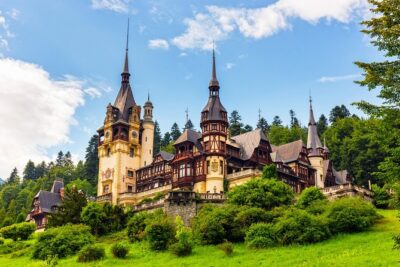
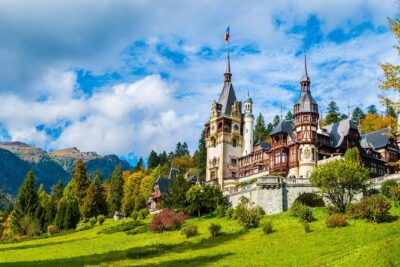
On day two, you leave Bucharest for Sinaia, stopping at the Orthodox Monastery before visiting Peles Castle. The monastery dates to the end of the 17th century and was the first major construction in the area that became the mountain resort. Peles, set against the Carpathians, is celebrated for its German Renaissance design. Plan on about 20 minutes at the monastery and 90 minutes at the castle, with entrance tickets not included at either.
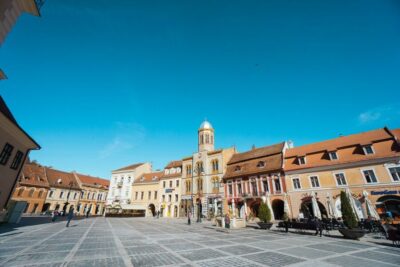
The day finishes in Brașov, where a two-hour walking tour takes in Council Square, the Black Church, Ecaterina’s Gate, the White and Black Towers, and other historic landmarks. Brașov’s mix of Gothic, Baroque, and Renaissance buildings makes it a good place to slow down after the castle visit. The schedule gives you a guided overview, not a full day to explore on your own, so keep that in mind if you want extra time in town.
Bran Castle is more than a Dracula photo stop
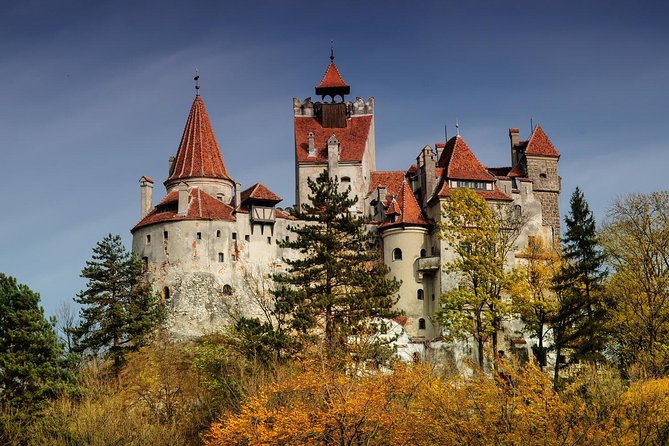
Day three brings you to Bran Castle, the stop most closely tied to the Dracula story. The castle is a medieval residence dating from the 14th century, while the Dracula legend draws on the life of Vlad the Impaler, a Wallachian ruler known for resisting Ottoman power and enforcing harsh punishments. The tour description makes an important distinction: the popular story and the historical figure are related in the public imagination, but they are not the same thing.
You have about two hours at Bran, with admission extra. That should let you explore the castle at a useful pace, though the visit may feel busy if you linger over every room. Nearby, Râșnov Citadel offers another hour of history and a panoramic view. Built to shelter local people and their livestock during invasions, the fortress helps explain how communities used high ground for protection.
Biertan and Sighișoara reveal Saxon Transylvania
On day four, Biertan’s fortified church gives you a close look at a historic religious complex that has kept much of its original fabric from the late 15th and early 16th centuries. Its setting and architecture earned it UNESCO World Heritage status. The visit lasts about an hour, with time suggested for a stroll through the village. That village walk matters: it turns the stop from a quick church visit into a glimpse of the settlement around it.
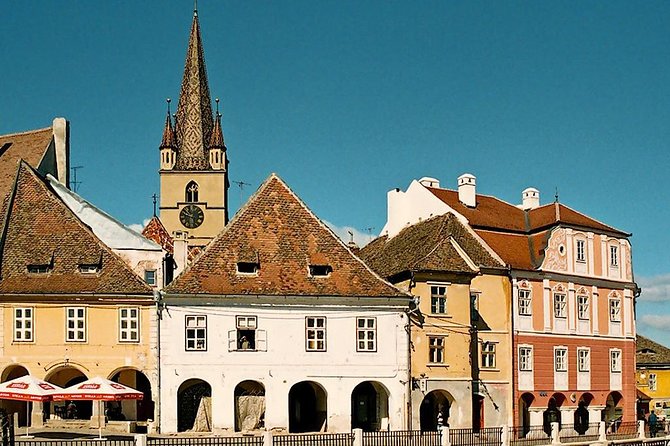
Sighișoara follows, with two hours to explore a fortified medieval town founded by German craftsmen and merchants known as Transylvanian Saxons. The Clock Tower and History Museum, Church on the Hill, covered stairways, central square, and the house associated with Dracula are among the listed sights. The old streets are a highlight, but the short visit means you’ll need to choose where to spend your time rather than expect to see everything in depth.
More Bucharest tours around Bucharest:
- Bucharest: Dracula’s Castle, Peles Castle, & Brasov Old Town
★ 4.5 · 17,858 reviews - Bucharest: Dracula Castle, Peles Castle & Brasov Old Town
★ 4.6 · 10,891 reviews - Bucharest: Dracula’s Castle, Peleș Castle & Brașov Day Trip
★ 4.5 · 5,919 reviews - Bucharest: Palace of Parliament Tickets and Guide
★ 4.3 · 3,182 reviews
The road to Bucovina passes through dramatic rock country
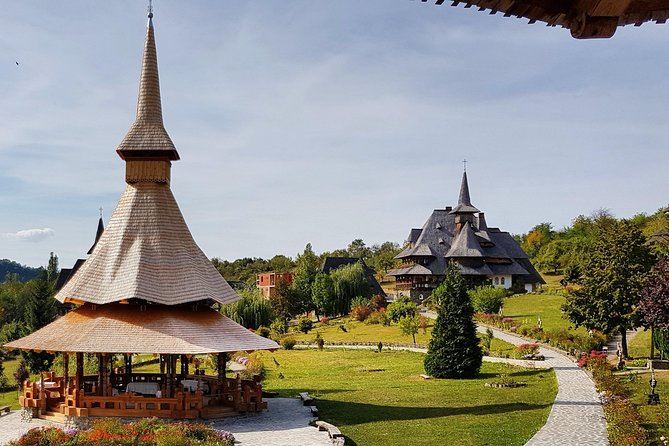
Day five is a transfer day with worthwhile stops. The route crosses Bicaz Gorge, where a narrow road winds between limestone cliffs that rise about 1,000 feet. The listed photo stop is only 15 minutes, so treat it as a brief pause to take in the scenery, not a hike or extended visit.
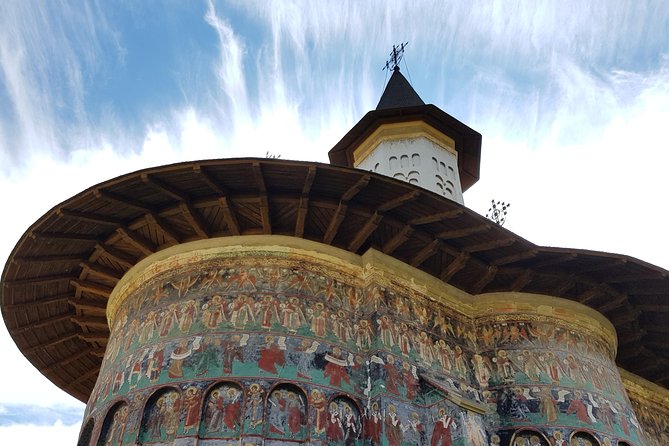
Red Lake gives you about an hour, including time for lunch at a restaurant overlooking the water and a walk nearby. Its name comes from reddish mineral deposits carried into the lake by Red Creek. After the mountain scenery, you’ll reach Voroneț Monastery, one of Bucovina’s celebrated painted churches. Its exterior frescoes include a Last Judgment scene, and the blue pigment known as Voroneț blue is a signature feature. The visit is around 40 minutes, and admission is extra.
Bucovina’s painted churches reward close attention
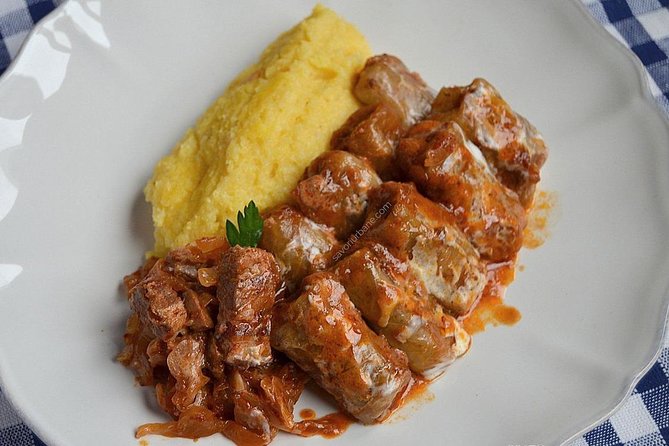
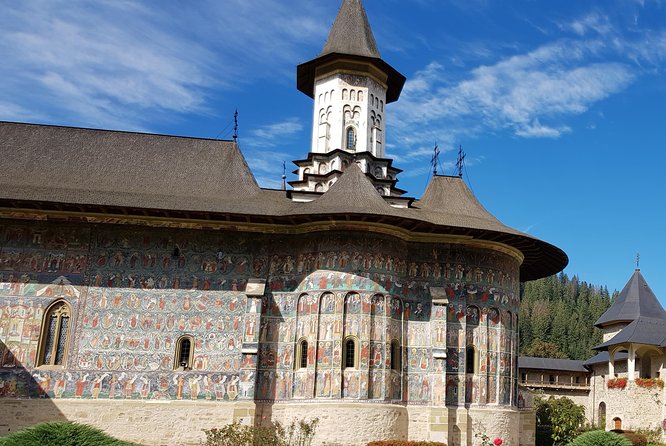
Day six is devoted to the region’s painted monasteries and crafts. You’ll visit Humor, Sucevița, and Moldovița monasteries, each with about 30 minutes scheduled. Their exterior frescoes depict religious figures and scenes, including images of heaven and hell. The time at each site is brief, but seeing several gives you a chance to compare their colors and details rather than treating one church as the whole story.
The schedule also includes Marginea, a village known for black pottery made by local artisans, and the Painted Eggs Museum. The museum has more than 3,000 decorated eggs, including examples made from a range of bird and other animal eggs. Its owner, Professor Letiția Orșivschi, explains the meanings of Bucovina’s painted symbols during the visit. The museum stop lasts about 40 minutes. Together, these stops offer something beyond church architecture: a look at crafts that remain part of local identity.
Maramureș keeps rural traditions close
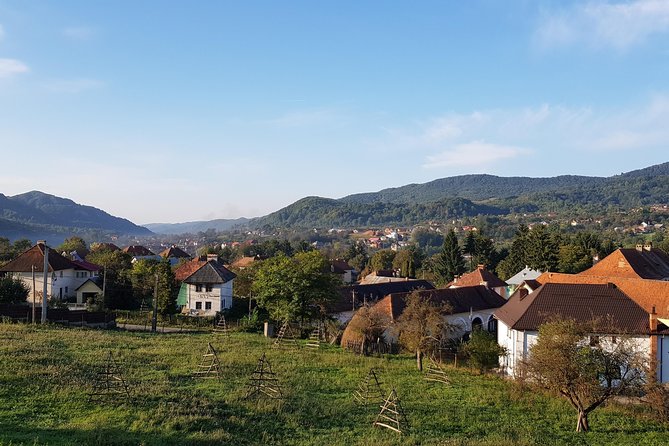
Day seven takes you north into Maramureș, a region known for wooden churches, small villages, and rural traditions. The journey itself is described as scenic, though the exact drive time is not specified. You’ll visit Bârsana Monastery, with its two-level wooden church, then the wooden churches at Rozavlea and Ieud. Ieud Deal is identified as the oldest, dating to the 14th century. The visits range from 30 to 40 minutes, except for the broader wooden-church stop, which has two hours scheduled.
This is a day for looking carefully at timber construction and the way religious buildings fit into village life. Entrance fees are not included at some stops, so keep a little extra in your daily budget. The schedule’s phrase UNESCO site applies to the named wooden churches, but it does not specify which individual buildings require a ticket.
A steam train and a cemetery with a different outlook
On day eight, the Mocănița steam train offers a change of pace. The narrow-gauge railway runs through the Vaser Valley from Vișeu de Sus, with about three hours allocated for the ride. The train follows a route once used to reach settlements farther up the valley, and its stops can include loading firewood and taking on water. The ticket is extra. Since the schedule does not spell out the full timetable or seasonal operation, confirm the train arrangements before you travel.
Later, Săpânța’s Merry Cemetery turns a cemetery visit into something unexpectedly personal. Blue wooden crosses carry carved scenes and verses about the lives of the people buried there, sometimes capturing their flaws as well as their virtues. You have around 40 minutes. The nearby Săpânța-Peri Monastery, with its exceptionally tall wooden church, adds another short stop. Together, these visits reveal a local approach to memory that is unlike the more solemn monuments elsewhere on the route.
Cluj-Napoca and Sibiu make for a full city day
Day nine pairs Cluj-Napoca and Sibiu, with about 90 minutes scheduled in each. In Cluj-Napoca, the tour focuses on Union Square, St. Michael’s Church, the Opera House, the historic center, and the Orthodox Cathedral. St. Michael’s, a Gothic church dating to the 15th century, anchors the main square. The visit is a compact introduction rather than an extensive city tour.
Sibiu’s old center offers medieval walls, narrow streets, and large squares framed by historic buildings. The listed sights include the Evangelical Church, Bridge of Lies, Brukenthal Museum, Stairs Passage, and Holy Trinity Cathedral. A 90-minute walk gives you a feel for the city’s Germanic character, but not time to visit every museum or linger over a long meal. If a particular attraction matters to you, ask your guide how the schedule can accommodate it.
Curtea de Argeș closes the loop
On day ten, you visit Curtea de Argeș, once the capital of Wallachia. The two-hour walking tour includes the Princely Church and Old Court ruins, the Episcopal Church, and Olari Church, a painted church from Moldavia built in Wallachian territory. It’s a fitting final sightseeing day after the long northern route, though the supplied schedule does not detail the drive from Sibiu or where the tenth night is spent.
Day eleven is reserved for transfer to Bucharest Airport, with about 30 minutes listed for the ride. Round-trip airport transfers are included, and pickup is offered. The tour begins at 9:00 am, but the information does not specify the first-day meeting location beyond the hotel pickup arrangement.
What the $2,367.30 price covers
The price is $2,367.30 per person. It includes transportation in an air-conditioned car or van, an English-speaking licensed guide and driver, assistance throughout the tour, round-trip airport transfers, ten nights of accommodation, and ten breakfasts. For an 11-day private trip, the main value is the combination of transport, lodging, and a guide who can connect far-flung stops without asking you to organize each transfer yourself.
The price does not include food and drinks beyond breakfast, entrance tickets, or souvenirs. Those extras matter on a route with several castles, monasteries, and museums. Before booking, ask for a clear estimate of admission costs and confirm what type of accommodation is planned. Hotels can change depending on availability, with a similar hotel provided.
The tour is private, so only your group participates. That can make it easier to ask questions, set the pace within the day’s schedule, and travel with family. It is also listed as family-friendly, but the long drives and repeated visits to historic sites may suit older children better than very young ones. A current valid passport is required on the day of travel.
Past tour accounts name guides including Chris, Christian, and Gabriel Florea, and praise the organization, flexibility, and thoughtful planning. The tour information does not promise a particular guide, so ask who is assigned if that matters to you. Those names are useful context, not a guarantee.
Should you book this Romania tour?
I’d consider this tour if you want to see several regions of Romania without handling the transport and overnight planning yourself. Its best feature is the range: Bucharest’s communist-era architecture, Transylvanian towns, Bucovina’s frescoes, Maramureș’s wooden churches, and a steam train all fit into one private trip.
The trade-off is the pace and the extra costs. You’ll spend plenty of time on the road, some stops are short, and admission fees and most meals come out of your pocket. Book it if you value a private guide, broad coverage, and a ready-made route. If you prefer slow mornings, long museum visits, or several free days in each town, plan a shorter route with fewer regions instead.
FAQ
Is this a private tour?
Yes. Only your group participates, with an English-speaking licensed guide and driver.
How long is the tour?
The tour lasts 11 days and includes ten nights of accommodation.
What time does the tour start?
The listed start time is 9:00 am.
Are airport transfers included?
Yes. Round-trip airport transfers are included, and hotel pickup and drop-off are offered.
Are meals included?
Ten breakfasts are included. Other food and drinks are not included.
Are entrance tickets included?
No. Admission tickets for attractions are generally not included. Check the cost of each stop when planning your extra budget.
What transport is provided?
Transportation is by comfortable, air-conditioned car or van.
Do I need a passport?
Yes. A current valid passport is required on the day of travel.
What is the cancellation policy?
You can cancel for a full refund if you do so at least three full days before the experience’s start time. Changes or cancellations made less than three full days before the start time are not accepted or refunded.
Recently added around Bucharest
- Snowmobiles, Sky Lift & Winter Sports – Private Tour★ 5.0 · 9 reviews
- Private Transfer and 3H Tickets to Therme Bucharest★ 4.5 · 10 reviews
- Day Trip from Bucharest to Dracula Castle, Brasov and Peles Castle Sinaia★ 5.0 · 10 reviews
- Day Trip Through Brasov in Transylvania and Bran, Peles, and Rasnov Castles★ 4.0 · 9 reviews
- 2-Day Small-Group Tour to Dracula’s Castle, Rasnov Fortress, Peles Castle, Sighisoara and Libearty Brown Bear Sanctuary with Overnight in Brasov★ 4.5 · 9 reviews
- Slavery in Romania Myths and Truths About Gypsies★ 5.0 · 8 reviews
- The Real Story of Gypsies – Slavery in Romania★ 5.0 · 7 reviews
- Premium 8-Day Private Culinary Vacation in Romania★ 5.0 · 11 reviews
Bucharest Tours, compared.
Dracula’s Castle, Peles Castle, & Brasov Old Town
Read our review →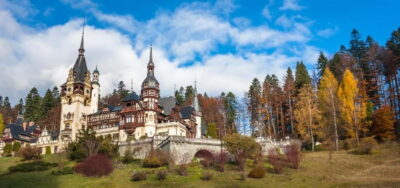
Dracula’s Castle, Peleș Castle & Brașov Day Trip
Read our review →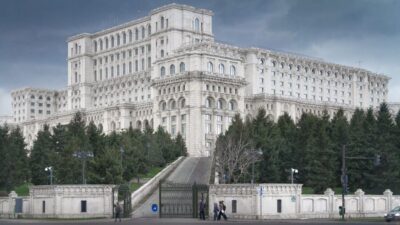
Bucharest to Dracula Castle, Peles Castle and Brasov Guided Tour
Read our review →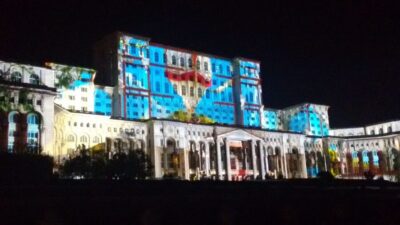
Transylvania and Dracula Castle Full Day Tour from Bucharest
Read our review →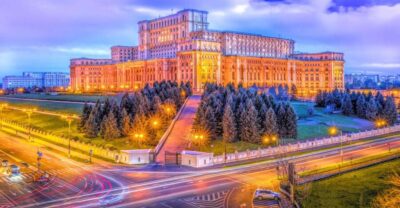
Browse the lists this tour appears in